
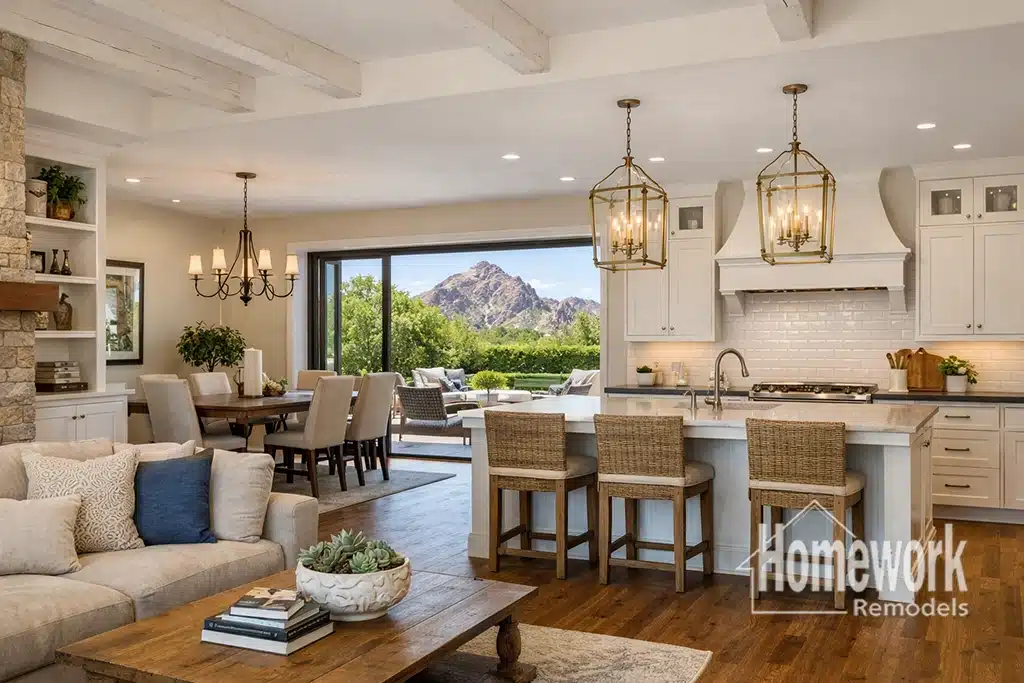
Arcadia Kitchen Remodeling: Which Layout Changes Actually Add Value—and Which Don’t
Kitchen remodels in Arcadia tend to start with a clear goal: make the space better. Homeowners want more openness, better flow to the backyard, improved functionality, and finishes that match the neighborhood’s expectations. What often gets overlooked is that not all kitchen layout changes actually add value—either to daily life or to the home itself.
In Arcadia, where many homes are ranch-style with generous lots and strong indoor–outdoor connections, layout decisions matter more than surface upgrades. The difference between a kitchen that feels transformative and one that merely looks new usually comes down to structure, proportion, and flow.
Why Arcadia Kitchens Are Different
Many Arcadia homes were built between the 1950s and 1970s with practical but compartmentalized layouts. Kitchens were often closed off from living spaces and oriented inward rather than toward the backyard.
Because these homes sit on larger lots, there is temptation to expand aggressively or remove multiple walls. The core decision tension is scale versus coherence—just because space is available doesn’t mean it should be consumed indiscriminately.
Removing Walls Isn’t Automatically Valuable
Wall removal is one of the most common requests in Arcadia kitchen remodels. While opening the kitchen can dramatically improve light and connection, removing the wrong walls can undermine function.
Some walls support roof loads, while others provide necessary separation between prep, dining, and circulation zones. Removing all boundaries often leads to oversized islands, awkward furniture placement, and blurred pathways.
Homeowners considering wall removal benefit from understanding what is involved in removing load-bearing walls in Phoenix-area homes before assuming openness equals improvement.
Kitchen-to-Backyard Connection Drives Real Value
In Arcadia, kitchens that connect seamlessly to outdoor living areas consistently outperform those that don’t. Door placement, sightlines, and prep-to-patio flow matter more than sheer square footage.
Expanding a kitchen inward while ignoring the backyard often misses the opportunity Arcadia lots provide. Sometimes relocating doors or reorienting work zones adds more value than enlarging the kitchen footprint.
The decision tension is interior expansion versus exterior connection. Exterior connection usually wins.
Island Size Is Often Overestimated
Large islands are popular—but bigger is not always better. Oversized islands can block circulation, limit flexibility, and reduce usable perimeter workspace.
In Arcadia kitchens, islands should support prep, seating, and traffic without dominating the room. Proper proportion preserves flow and adaptability.
The decision tension is statement-making versus daily usability. Daily usability endures.
Appliance Placement Matters More Than Appliance Cost
High-end appliances are common in Arcadia remodels, but placement often matters more than brand. Poorly positioned appliances disrupt workflow and force inefficient movement.
Separating prep, cooking, and cleanup zones creates kitchens that feel effortless rather than impressive. This zoning often delivers greater satisfaction than premium upgrades alone.
Expanding the Kitchen Isn’t Always the Best Move
Because Arcadia homes often have space to expand, homeowners may default to additions. However, expanding the kitchen without addressing layout inefficiencies can amplify problems rather than solve them.
Sometimes reconfiguring existing space produces better results than adding square footage. Expansion should serve function—not compensate for poor planning.
Storage and Circulation Must Stay in Balance
Arcadia kitchens often double as gathering spaces. Storage solutions that intrude into circulation paths quickly feel burdensome.
Walkways should remain clear and intuitive, even when the kitchen is busy. Preserving this balance supports both entertaining and everyday life.
Kitchens Don’t Exist in Isolation
Kitchen layout decisions affect adjacent rooms, ceiling treatments, and structural rhythm throughout the home. A kitchen that ignores its context can feel disconnected—even if beautifully finished.
Whole-home planning ensures that kitchen improvements align with the rest of the house. Homeowners benefit from understanding how whole-home remodeling in Phoenix evaluates kitchens as part of an integrated system.
Why Design-Build Clarifies Value-Driven Choices
Design-build remodeling allows kitchen layout ideas to be tested against structure, systems, budget, and long-term goals simultaneously.
Rather than guessing which changes will add value, homeowners gain clarity early. This prevents expensive revisions and ensures that investment aligns with how the home is actually used.
Learning how the design-build remodeling process works helps Arcadia homeowners make confident, informed decisions.
The Core Decision Tension: Bigger Kitchen or Better Kitchen
In Arcadia, value is rarely created by size alone. Kitchens that respect proportion, flow, and connection consistently outperform those that chase scale.
Better kitchens live better—and hold their value longer.
A Note for Homeowners…
Many of the questions raised in this article—around planning, cost, timing, and long-term outcomes—are part of a broader remodeling system that most homeowners aren’t shown upfront.
Our Core Guides were created to explain why remodeling often feels unpredictable and what actually brings clarity and stability before construction begins.
Let’s Design an Arcadia Kitchen That Truly Works
If you are planning a kitchen remodel in Arcadia, thoughtful layout decisions make all the difference. With neighborhood-specific experience and an integrated design-build approach, it is possible to create a kitchen that enhances daily life and long-term value.
We invite you to schedule a free remodeling consultation to explore layout strategies that fit your home and lifestyle.