
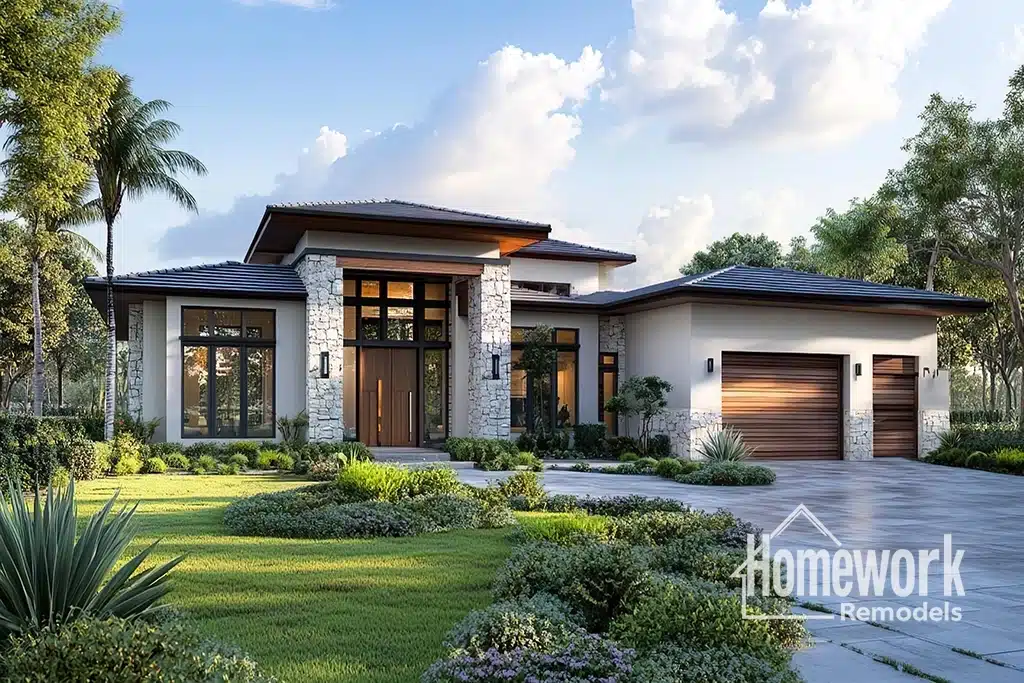
Where to Begin with a Whole-Home Remodel in Tempe
Deciding to pursue a whole-home remodel is rarely spontaneous. Most Tempe homeowners arrive at this point after living with frustration for years—tight layouts, disconnected rooms, outdated systems, or a house that no longer supports how they live today. The challenge isn’t recognizing that change is needed. The challenge is knowing where to begin.
In Tempe, this question carries extra weight. The city’s housing stock spans post-war ranch homes, mid-century neighborhoods, 1970s and 1980s subdivisions, and infill areas near ASU that have seen decades of piecemeal updates. Starting a whole-home remodel the right way means understanding your home as a system—not a collection of isolated rooms.
Start by Understanding Why You’re Remodeling
The most successful remodels begin with purpose, not inspiration photos.
Homeowners often say they want:
- A new kitchen
- An open floor plan
- More light
But those are solutions, not reasons.
The real drivers are usually deeper:
- Daily congestion that makes the home feel smaller than it is
- Lack of flexibility for work-from-home or growing families
- Poor connection between indoor and outdoor living
- Mechanical systems that struggle to keep up with Arizona heat
Clarifying why you’re remodeling gives every later decision context and prevents scope drift.
Recognize When the Problem Is the Whole House
Many Tempe homeowners attempt room-by-room upgrades before considering a whole-home remodel. A kitchen renovation may improve one space but expose problems elsewhere—awkward circulation, mismatched ceiling heights, or adjacent rooms that suddenly feel dated.
These frustrations are common in Tempe homes built between the 1950s and 1980s, where original layouts favored separation over flow. When multiple spaces stop working together, the issue is rarely cosmetic. It’s organizational and structural.
A whole-home remodel becomes the right path when:
- Improvements in one room make others feel worse
- Systems upgrades can’t be isolated
- The layout no longer reflects modern living patterns
Define Priorities Before Defining Rooms
Whole-home remodeling works best when homeowners resist the urge to start with individual rooms.
Instead, begin by mapping how you move through the house:
- Where do you enter and drop belongings?
- Where does the household naturally gather?
- Which paths feel cramped or indirect?
- Which rooms feel underused?
These patterns reveal where layout changes will have the greatest impact. Designing around movement, sightlines, and daily routines leads to better outcomes than designing around square footage alone.
Establish a Budget Framework—Not a Guess
Budgeting early doesn’t mean locking in a final number. It means creating boundaries that inform planning.
In Tempe, older homes frequently require:
- Electrical upgrades to meet current demand
- HVAC improvements for comfort and efficiency
- Plumbing modifications tied to layout changes
- Structural reinforcement for open-concept designs
Addressing these realities upfront prevents surprises later. A realistic budget framework aligns expectations with scope and allows design decisions to be evaluated honestly.
Evaluate Structural Possibilities Early
Structural evaluation is one of the most critical early steps—and one of the most overlooked.
Many whole-home remodels involve reconfiguring walls to improve flow or bring in light. Understanding which walls are structural, how roof and ceiling loads are carried, and what engineering may be required sets realistic boundaries for design exploration.
Projects that involve removing load-bearing walls safely in Tempe homes require planning long before demolition begins. Structural decisions shape everything that follows, from ceiling heights to mechanical routing.
Consider Permitting and City Requirements From the Start
Tempe remodels are governed by city permitting and inspections that directly affect timeline and sequencing.
Early planning should account for:
- Permit review timelines
- Inspection stages tied to structural and system work
- Any zoning or neighborhood constraints
Starting with a clear permitting strategy helps homeowners plan realistically for construction duration and living arrangements.
Think About How You’ll Live During Construction
Whole-home remodeling affects daily life.
Some homeowners remain in the house through phased construction. Others choose temporary relocation. Both approaches require planning.
Early discussions should address:
- Which spaces will be unavailable and when
- Noise and dust management
- Work-from-home needs
- Pet and family logistics
Planning for livability during construction reduces stress and preserves momentum.
Understand the Value of an Integrated Process
Whole-home remodels involve interconnected decisions. Design choices affect structure, structure affects cost, and cost affects scope.
This is where a coordinated design-build remodeling process becomes especially valuable. Instead of designing in isolation and pricing later, homeowners gain clarity as ideas are evaluated against real-world constraints in real time.
Early integration reduces rework, limits change orders, and keeps the project aligned with original goals.
Prepare for the Scale of the Project
A whole-home remodel is not fast—but it can be deeply rewarding.
Homeowners who start with planning rather than demolition experience:
- Greater confidence
- Better budget control
- Fewer regrets
Mentally preparing for the process—understanding that progress comes in phases—helps homeowners stay grounded and engaged.
Begin With Strategy, Not Square Footage
Knowing where to begin is not about choosing the first room to remodel. It’s about choosing the right sequence.
When goals are clear, structure is understood, budgets are grounded, and planning is intentional, a whole-home remodel in Tempe becomes a strategic investment rather than a leap of faith.
Let’s Plan Your Whole-Home Remodel With Clarity
If you’re considering a whole-home remodel in Tempe and want to understand your options before committing to construction, planning comes first. You can schedule a free consultation with our design-build team to explore next steps with confidence.