
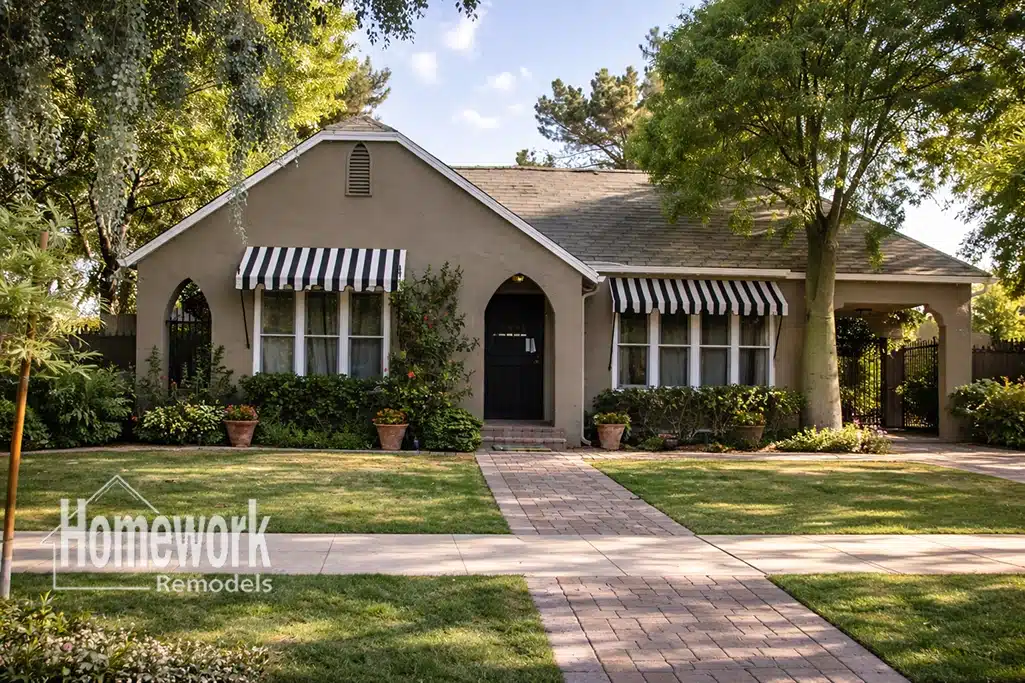
F.Q. Story Homes: Creating a True Primary Bedroom in a Small Footprint
In F.Q. Story Historic District homes, the idea of a “primary bedroom” often feels aspirational. These early twentieth-century houses were designed with modest bedrooms, limited closets, and shared bathrooms. Privacy and storage were secondary concerns compared to efficiency and compactness. Today’s homeowners, however, want sleeping spaces that feel restorative, organized, and distinctly private.
The challenge is that additions are rarely practical in F.Q. Story. Creating a true primary bedroom means redefining what “primary” means within a small footprint.
Why Primary Bedrooms Were Never Part of the Original Plan
F.Q. Story homes were built at a time when bedrooms served a single purpose: sleep. Dressing areas, sitting spaces, and en-suite bathrooms were uncommon. Closets were shallow or absent altogether.
Modern expectations—private baths, generous storage, and personal retreat—place pressure on rooms that were never meant to stretch.
The core decision tension is primary suite expectations versus original scale.
Why Additions Rarely Solve the Problem
Lot sizes in F.Q. Story are tight, and rear yard depth is limited. Even when zoning allows an addition, the cost, disruption, and loss of outdoor space often outweigh the benefit.
For many homeowners, expanding outward simply isn’t the right answer.
Redefining “Primary” Starts With Priorities
In small homes, a primary bedroom doesn’t need excess space—it needs the right features. Privacy, storage, and adjacency to a bathroom often matter more than square footage.
Clarifying which elements define “primary” helps guide smart reconfiguration decisions.
Closet Strategy Drives Comfort
One of the biggest shortcomings in F.Q. Story bedrooms is storage. Reworking closets—relocating them, enlarging them, or integrating built-ins—often delivers more improvement than enlarging the room itself.
Better storage reduces clutter and makes rooms feel calmer and more intentional.
Bathroom Adjacency Matters More Than Size
Creating or improving access to a nearby bathroom often transforms a bedroom’s usability. In some cases, reassigning bathroom access or reconfiguring shared baths delivers a sense of privacy without adding space.
These changes require careful planning to avoid compromising other bedrooms.
Reallocating Square Footage Pays Dividends
Oversized hallways, redundant storage areas, or underused secondary rooms often hold the key to a better primary bedroom.
By redistributing square footage rather than adding it, homeowners gain comfort without altering the home’s footprint.
The decision tension shifts from expansion to optimization.
Structural Walls Define What Can Change
Some interior walls provide structural support. Removing or shifting them may introduce beams or posts that intrude into limited bedroom space.
Before changing layouts, homeowners should understand what is involved in removing load-bearing walls in Phoenix historic homes. Structural clarity helps focus efforts where they will have the most impact.
Light, Orientation, and Calm Matter
Primary bedrooms benefit from good light and quiet orientation. Improving window placement, adding sound insulation, or reorienting doors can dramatically improve comfort.
These changes often outperform square-footage gains in small homes.
Fewer Rooms Can Mean Better Living
In some cases, reducing the number of bedrooms slightly allows one room to become truly primary. While this can feel counterintuitive, it often improves daily life and resale appeal for the right buyer.
Quality can outweigh quantity.
Whole-Home Balance Prevents New Friction
Primary bedroom changes ripple outward, affecting circulation, storage, and other bedrooms. Evaluating these impacts holistically avoids solving one problem while creating another.
Homeowners who understand how whole-home remodeling in Phoenix approaches tradeoffs tend to achieve better results.
Why Design-Build Is Essential for Small-Footprint Solutions
Design-build remodeling allows homeowners to explore multiple reconfiguration options early, testing layouts against structural limits and budget realities.
In F.Q. Story homes, this integration is critical. It reveals which changes deliver real comfort—and which simply add complexity.
Learning how the design-build remodeling process works supports confident decision-making when space is limited.
The Core Decision Tension: Bigger Bedroom or Better Experience
In F.Q. Story, the best primary bedrooms aren’t defined by size. They’re defined by clarity, privacy, and thoughtful use of space.
When priorities are aligned and layouts are optimized, small bedrooms can feel genuinely restorative—without expanding the home beyond its historic footprint.
Let’s Create a Primary Bedroom That Truly Works for You
If you’re considering improvements to a bedroom in an F.Q. Story Historic District home, thoughtful reconfiguration can deliver privacy and comfort without additions. With neighborhood-specific experience and a design-build approach, the path forward becomes clear.
We invite you to schedule a free remodeling consultation to explore primary bedroom strategies tailored to your home.