
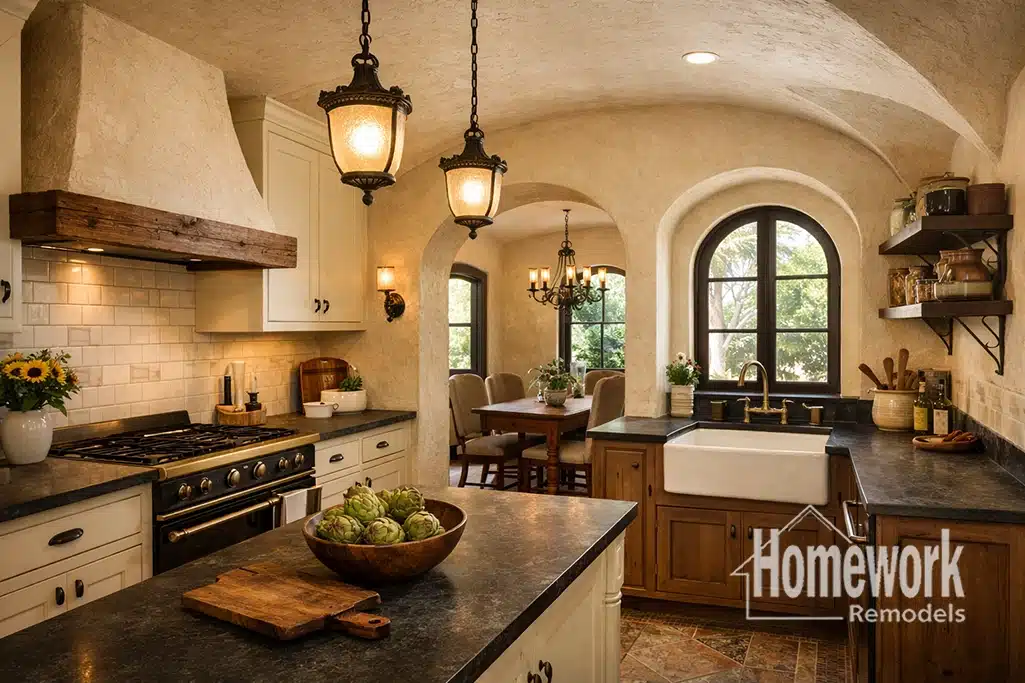
Encanto Kitchens: Modern Storage Solutions for Homes Built Without Pantries
Many kitchens in the Encanto Palmcroft Historic District share the same quiet limitation: they were never designed to store food the way modern households do. When these homes were built in the 1920s and 1930s, daily shopping was frequent, appliances were minimal, and pantries simply weren’t part of the plan. Storage existed, but only for what was immediately needed.
Today’s homeowners arrive with very different expectations. Bulk buying, small appliances, specialty cookware, and entertaining all demand storage capacity that historic kitchens were never meant to support. The challenge is adding that storage without compromising the architectural rhythm that makes Encanto Palmcroft kitchens so appealing.
Why Encanto Kitchens Lack Pantry Space by Design
Encanto kitchens were intentionally compact. Walls were aligned with windows, circulation paths were tight, and cabinetry was minimal. Storage was distributed throughout the house rather than concentrated in the kitchen.
Trying to force a traditional pantry into this footprint often clashes with the original layout logic.
The core decision tension is modern storage needs versus historic kitchen proportions.
Why Simply Adding Cabinets Often Fails
When storage feels tight, the instinct is to add cabinets wherever they fit. In historic kitchens, this approach often leads to overcrowding, blocked windows, and visual heaviness.
More cabinets don’t automatically mean better storage—especially when they disrupt light, circulation, or proportion.
Vertical Storage Offers Opportunity—With Limits
Encanto kitchens often have generous ceiling height, making vertical storage tempting. Taller cabinetry can add capacity, but it must be handled carefully to avoid overwhelming the space.
The most successful designs balance vertical reach with visual breathing room, often using varied cabinet heights or open elements.
Hidden Storage Preserves Character
Some of the best storage gains come from places homeowners don’t immediately see. Toe-kick drawers, pull-out pantries disguised as cabinets, and appliance garages quietly add function without altering the kitchen’s appearance.
Hidden solutions support modern living while keeping the kitchen visually authentic.
When a Pantry Works—and When It Doesn’t
In some Encanto homes, a small pantry can be carved from adjacent space, such as a service hallway or secondary room. In others, forcing a pantry compromises circulation or adjacent rooms.
The decision hinges on what the home can give up without creating a new problem elsewhere.
Distributed Storage Reduces Kitchen Pressure
Historic homes often benefit from redistributing storage rather than concentrating it. Built-ins in dining rooms, breakfast nooks, or nearby hallways can absorb overflow without burdening the kitchen itself.
This approach respects the original kitchen footprint while meeting modern needs.
Storage Choices Affect Workflow
Storage placement influences how a kitchen functions. Poorly placed storage increases steps and congestion, especially in compact layouts.
Thoughtful organization—placing items where they’re used—often matters more than total storage volume.
Structural Walls Shape Storage Options
Some walls that appear ideal for cabinetry or pantries are structural. Altering them may require beams or posts that intrude into limited space.
Before pursuing major changes, homeowners should understand what’s involved in removing load-bearing walls in Phoenix historic homes. Structural awareness often refines storage strategies early.
Cost Control Comes From Precision
Adding storage indiscriminately can escalate costs quickly. Custom cabinetry, altered layouts, and finish continuity all add complexity.
Targeted storage solutions—chosen with intention—often deliver better value and usability.
Storage Decisions Ripple Through the Home
Kitchen storage choices affect adjacent rooms, circulation, and daily routines. Evaluating these impacts holistically prevents solving one problem while creating another.
Homeowners who approach planning through whole-home remodeling in Phoenix principles tend to achieve more balanced outcomes.
Why Design-Build Is Ideal for Historic Kitchens
Design-build remodeling allows homeowners to explore multiple storage strategies—vertical, hidden, distributed—before committing to construction.
In Encanto Palmcroft kitchens, this integration ensures storage solutions respect both lifestyle needs and historic character.
Learning how the design-build remodeling process works helps homeowners avoid overbuilt or underperforming kitchens.
The Core Decision Tension: More Storage or Better Balance
In Encanto kitchens, the goal isn’t maximum storage—it’s the right storage in the right places.
When storage is thoughtfully integrated, kitchens feel functional, calm, and true to their historic roots—without pretending they were built for modern pantries.
Let’s Design Storage That Fits Your Home’s History—and Your Life
If you’re planning a kitchen remodel in the Encanto Palmcroft Historic District, smart storage solutions can dramatically improve daily life without compromising character. With neighborhood-specific experience and a design-build approach, clarity comes early.
We invite you to schedule a free remodeling consultation to explore storage strategies tailored to your home.