
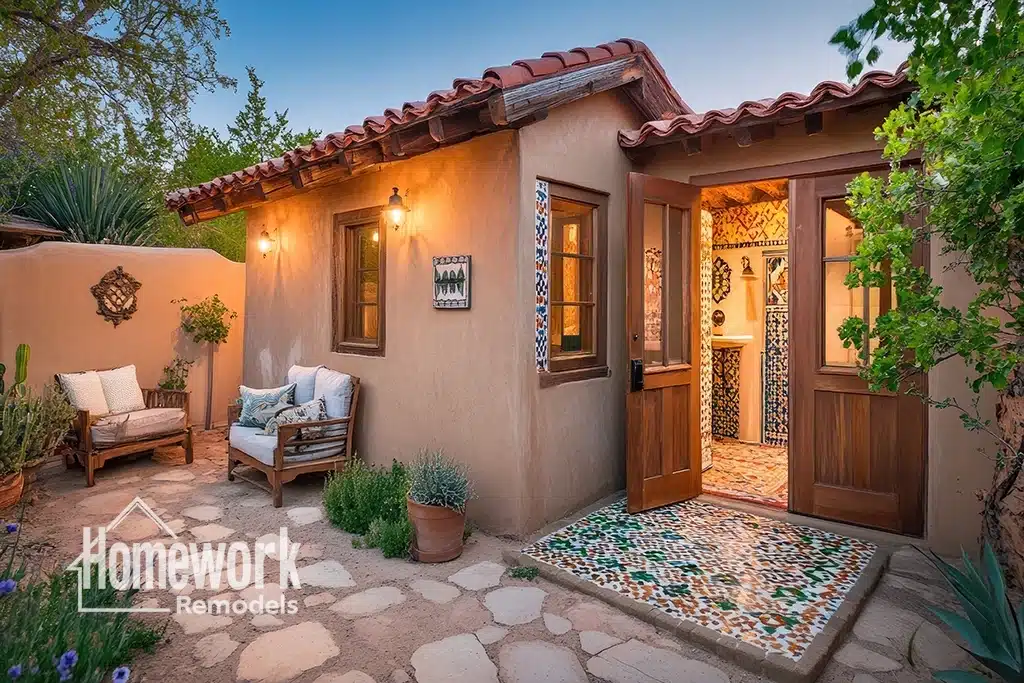
Backyard casitas have moved from novelty to necessity for many homeowners. In Scottsdale, casitas are increasingly used to support visiting family, multigenerational living, long-term guests, and flexible work-from-home needs. Yet the difference between a casita that feels welcoming and one that feels awkward often comes down to design decisions made early.
Designing a backyard casita is not simply about adding square footage. It is about balancing independence and connection, comfort and privacy, present needs and future flexibility—all within the constraints of an existing property.
Why Casitas Are Different From Other Additions
Casitas occupy a unique role on a property. Unlike interior remodels or primary additions, they must function as semi-independent living spaces while remaining visually and functionally connected to the main home.
This dual role creates design challenges:
- Guests want privacy, not proximity
- Homeowners want convenience, not intrusion
- The structure must feel intentional, not secondary
Casitas succeed when they are treated as complete living environments—not leftover space.
Start With the Intended Use—Then Expand the View
Most homeowners begin casita planning with a single use in mind: parents visiting, adult children returning home, or extended guests.
Smart planning asks a second question: How might this space be used five or ten years from now?
Casitas that age well often support multiple scenarios:
- Guest suite
- Home office or studio
- Caregiver or multigenerational housing
- Long-term rental (where permitted)
Designing for flexibility protects the investment.
Placement Shapes the Experience
Where a casita sits on the property matters as much as how it is designed.
Placement influences:
- Privacy for both the main home and the casita
- Noise transfer
- Natural light and heat exposure
- Outdoor space usability
In Scottsdale lots, thoughtful orientation can reduce heat gain while improving comfort and independence.
Casitas placed too close to the main home often feel intrusive. Those placed too far can feel disconnected. Balance is key.
Entry and Circulation Set the Tone
How guests arrive at the casita shapes their experience immediately.
Successful casitas typically include:
- A clear, independent entry
- Logical pathways that don’t cross private areas
- Subtle separation from main-house routines
Guests should feel welcomed—not like they are navigating someone else’s home.
Right-Sizing the Interior
Casitas do not need to be large to be comfortable. They need to be well-proportioned.
Effective casita layouts prioritize:
- Clear circulation
- Comfortable sleeping areas
- Functional kitchenette or kitchen zone
- Thoughtful storage
Oversized casitas can feel inefficient and expensive to build. Right-sized spaces feel intentional and easy to live in.
Kitchens and Kitchenettes That Actually Work
Many casitas fail at the kitchen level. Either the space is under-equipped, forcing guests back into the main house, or overbuilt relative to actual use.
Casita kitchens work best when they:
- Support light cooking and independence
- Use compact, efficient appliances
- Balance openness with storage
The goal is autonomy—not duplication of the main kitchen.
Bathrooms Designed for Comfort and Longevity
Casita bathrooms should feel generous and accessible.
Design considerations include:
- Walk-in showers rather than tubs
- Good lighting and ventilation
- Storage for daily use
Because casitas are often used by older family members or long-term guests, accessibility features add comfort without compromising aesthetics.
Acoustic and Visual Privacy Matter More Than You Think
Privacy issues are the most common casita complaint.
Sound transfer, window alignment, and outdoor sightlines all influence comfort. Strategic window placement, landscaping, and wall assemblies reduce unwanted overlap between households.
Privacy designed into the structure feels natural. Privacy added later feels defensive.
Outdoor Space as an Extension of the Casita
Outdoor areas often make small casitas feel larger.
Private patios, shaded seating, or garden access give guests a sense of ownership and retreat. These spaces also help regulate interior temperatures in Scottsdale’s climate.
Outdoor design should support use—not just appearance.
Climate Considerations for Casitas
Casitas are subject to the same heat challenges as the main home—but often with less buffer.
Key climate strategies include:
- Shading and roof design
- Proper insulation
- Efficient HVAC sizing
Casitas that are uncomfortable seasonally tend to go unused.
Utilities and Infrastructure Planning
Casitas require careful coordination of:
- Electrical capacity
- Plumbing connections
- Drainage and venting
Early planning prevents costly retrofits. Infrastructure decisions influence layout flexibility and long-term use options.
This is why casitas benefit from being designed within a coordinated casita and guest house remodeling approach in Scottsdale.
Zoning and Permitting Shape Design Choices
Local regulations influence casita size, placement, and use.
Understanding these constraints early allows design creativity within clear boundaries. Waiting until design is complete to address permitting often leads to redesign.
Knowledge of local requirements protects timelines and budgets.
Matching the Main Home Without Mimicking It
Casitas should complement the main home—not copy it exactly.
Successful design strategies include:
- Repeating rooflines or materials selectively
- Aligning scale and proportion
- Simplifying details rather than duplicating them
The casita should feel related, not identical.
Storage and Daily Practicality
Guests bring belongings. Casitas without storage feel temporary.
Including closets, cabinets, and utility storage supports longer stays and flexible use. Storage does not need to be extensive—but it must be intentional.
Practicality supports comfort.
Planning for the Unknown
The most valuable casitas are those that adapt.
By planning for flexibility—electrical capacity, layout openness, and durable finishes—homeowners preserve options without committing to a single future scenario.
Flexibility is not indecision; it is foresight.
Why Process Matters for Casita Design
Casitas intersect architecture, zoning, utilities, and lifestyle planning. Without coordination, small oversights become major obstacles.
A thoughtful design-build remodeling process allows these factors to be addressed together—before construction begins.
Process turns complexity into clarity.
Casitas That Feel Like Home
The best casitas do not feel like additions. They feel like places people want to stay.
When privacy, comfort, and flexibility are balanced, casitas support family connection without sacrificing independence.
That balance is the true measure of success.
Let’s Design a Casita That Supports How You Live
If you’re considering a backyard casita and want a space that welcomes family and guests without disrupting daily life, early planning makes the difference. You can schedule a free consultation with our design-build team to explore casita design options tailored to your Scottsdale property.