
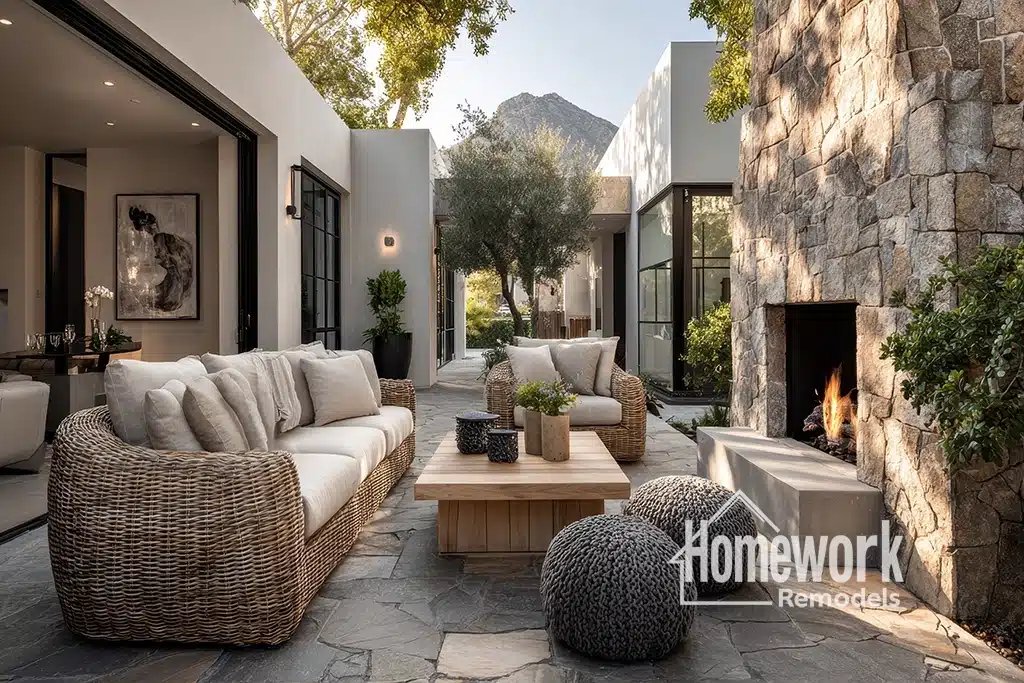
Outdoor kitchens are no longer treated as luxury extras. For many homeowners, they are central to how the home is used—especially in Scottsdale, where outdoor living can extend for much of the year. Yet the difference between an outdoor kitchen that feels like a natural extension of the home and one that feels underused often comes down to planning decisions made well before construction begins.
Turning a patio into a true living space requires more than adding a grill and counter. It requires understanding climate, daily habits, circulation, and long-term maintenance—then designing around how people actually gather and move.
Why Outdoor Kitchens Fail More Often Than They Succeed
Many outdoor kitchens look impressive on day one but see limited use over time. Common reasons include:
- Exposure to excessive heat or wind
- Poor relationship to the indoor kitchen
- Insufficient shade or lighting
- Materials that age poorly outdoors
These issues are rarely caused by budget. They are caused by incomplete planning.
Start With How the Space Will Be Used
Before discussing appliances or finishes, homeowners benefit from clarifying how the outdoor space will function.
Questions worth answering early include:
- Will cooking be primary or occasional?
- Is the space for entertaining groups or daily use?
- Will it be used during daytime, evening, or both?
Outdoor kitchens designed around real use patterns feel intuitive rather than forced.
Relationship to the Indoor Kitchen Matters
Outdoor kitchens that feel disconnected from the main kitchen often go unused.
Proximity matters for:
- Food prep and transport
- Serving flow
- Cleanup efficiency
Outdoor kitchens located too far from indoor support spaces create friction. Those that align naturally with interior circulation feel like extensions—not destinations.
Shade Is Not Optional
Shade determines whether an outdoor kitchen is usable in Scottsdale’s climate.
Effective shade strategies include:
- Roof extensions or pergolas
- Integrated shade structures
- Strategic orientation
Without shade, surfaces overheat and comfort disappears. Shade should be planned structurally, not added as an afterthought.
Appliance Selection for Desert Conditions
Not all outdoor-rated appliances perform equally in extreme heat.
Choosing appliances suited to desert conditions means considering:
- Heat tolerance
- Ventilation requirements
- Serviceability
High-quality appliances cost more initially but often perform better long-term when exposed to sun and temperature swings.
Countertops and Finishes That Last Outdoors
Outdoor materials experience greater stress than interior finishes.
Materials that typically perform well include:
- Porcelain slabs
- Sealed concrete
- Certain natural stones
Avoid finishes that fade, crack, or retain excessive heat. Comfort underfoot and to the touch matters more than dramatic appearance.
Storage That Actually Works Outside
Outdoor kitchens require storage—but it must be weather-resistant and thoughtfully placed.
Effective outdoor storage:
- Protects from dust and moisture
- Supports cooking workflow
- Minimizes visual clutter
Overbuilding storage often leads to unused cabinets. Right-sizing keeps the space functional.
Lighting Extends Usability
Outdoor kitchens used only during daylight miss much of their potential.
Layered lighting strategies include:
- Task lighting at cooking zones
- Ambient lighting for seating areas
- Low-level lighting for circulation
Good lighting turns patios into evening living spaces rather than daytime-only amenities.
Seating and Circulation
Cooking zones and seating zones should support conversation without interference.
Designing for:
- Clear walkways
- Comfortable distances
- Visual connection
prevents congestion and improves social flow.
Outdoor kitchens should invite interaction—not isolate the cook.
Wind, Orientation, and Comfort
Wind exposure affects flame stability, smoke movement, and overall comfort.
Orientation decisions can reduce wind issues naturally—often without adding walls or screens. Understanding site conditions early avoids reactive solutions later.
Utilities and Infrastructure Planning
Outdoor kitchens require coordination of:
- Gas or electrical service
- Water supply and drainage
- Structural support
Retrofitting utilities after design is complete often increases cost and limits options.
Integrating outdoor kitchens as part of a broader whole-home remodeling approach in Scottsdale allows infrastructure to be planned efficiently.
Weather Protection and Longevity
Even in mild climates, outdoor kitchens benefit from protection.
Features that extend lifespan include:
- Covered structures
- Drainage planning
- Durable hardware
Protection reduces maintenance and keeps the space looking intentional rather than weathered.
Outdoor Kitchens and Open-Concept Living
Outdoor kitchens work best when they complement interior open-concept layouts.
When patios align visually and physically with indoor living areas—sometimes after evaluating open-concept remodeling strategies—the boundary between inside and out softens naturally.
This continuity increases everyday use.
Avoiding the “Showpiece Trap”
Some outdoor kitchens are designed to impress rather than function.
Oversized grills, rarely used appliances, or exotic finishes may look impressive but add complexity. Outdoor kitchens that prioritize usability tend to be enjoyed far more.
Function sustains value.
Maintenance Expectations
Outdoor spaces require more upkeep than interior rooms.
Materials and layouts that simplify cleaning and maintenance protect enjoyment over time. High-maintenance designs often fall out of favor quickly.
Low effort encourages regular use.
Planning Makes the Difference
Outdoor kitchens touch architecture, structure, utilities, and lifestyle design. Without coordination, compromises accumulate.
A thoughtful design-build remodeling process brings these elements together early—before construction locks in decisions.
Planning transforms patios into places people actually live.
When Outdoor Kitchens Feel Natural
The best outdoor kitchens don’t announce themselves. They feel like obvious extensions of the home—comfortable, functional, and inviting.
When shade, flow, and materials align, patios become living spaces rather than occasional backdrops.
That is outdoor living done right.
Let’s Design an Outdoor Kitchen You’ll Actually Use
If you’re considering an outdoor kitchen and want a space that supports how you entertain and relax—without constant maintenance—early planning matters. You can schedule a free consultation with our design-build team to explore outdoor kitchen design strategies tailored to your Scottsdale home.