
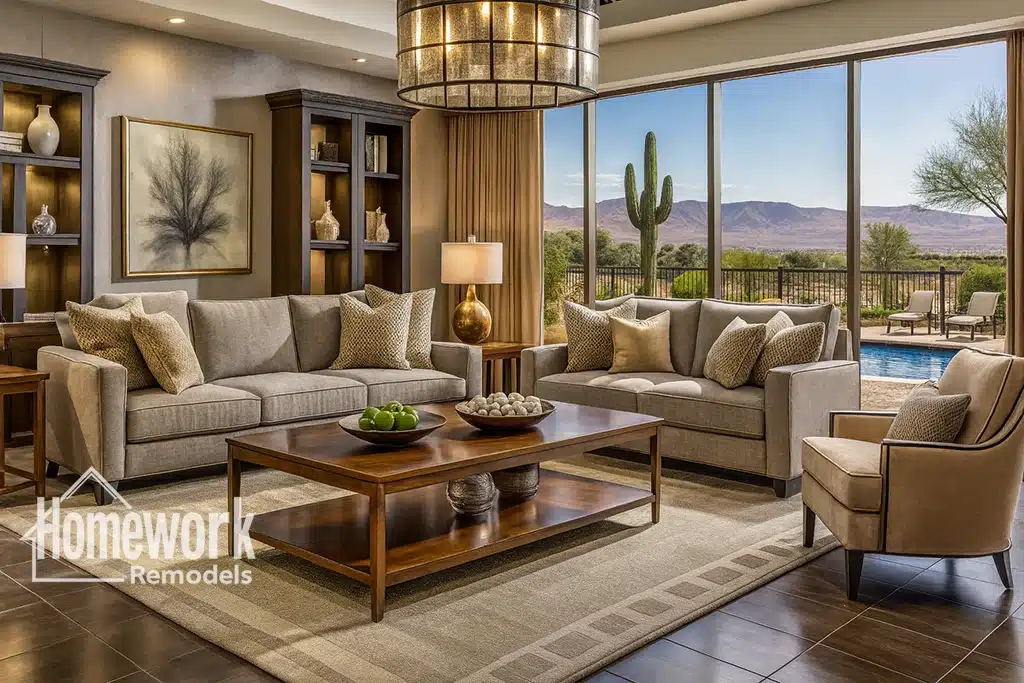
Sustainability looks different in the desert. In Tempe, green remodeling isn’t about copying strategies from cooler or wetter regions—it’s about responding intelligently to heat, sun, water scarcity, and long cooling seasons.
Homeowners who approach sustainability with a desert-first mindset tend to achieve better comfort, lower operating costs, and fewer unintended consequences. Those who apply generic “green” ideas often discover that good intentions don’t always translate into good performance.
Desert Sustainability Starts With Heat Management
In Tempe, heat is the dominant environmental force shaping how homes perform. Sustainable remodeling therefore begins with reducing heat gain before focusing on generation or technology.
Effective strategies prioritize:
- Controlling solar exposure
- Limiting heat transfer through the building envelope
- Managing thermal mass thoughtfully
When heat is managed well, mechanical systems work less—and comfort improves immediately.
The Core Decision: Symbolic Green vs. Performance Green
Homeowners often face a defining tension: Do we pursue visible green features—or invest in less visible upgrades that perform better?
Solar panels, reclaimed materials, and eco-labels can feel reassuring. But in desert climates, performance-driven choices—air sealing, insulation, shading—often deliver greater impact with less visual change.
Performance-first decisions tend to age better than symbolic ones.
Passive Strategies Do the Heavy Lifting
Passive design strategies are especially powerful in the desert. These approaches reduce energy demand without relying on complex systems.
Key passive strategies in Tempe include:
- Thoughtful window placement and sizing
- Exterior shading and overhangs
- Deep-set openings that reduce glare
- Orientation-aware layouts
When passive strategies are integrated early, they quietly improve comfort every day.
Water Efficiency Is a Primary Sustainability Metric
Water is as critical as energy in desert sustainability. Green remodeling in Tempe must address both interior and exterior water use.
Inside the home, efficiency comes from fixtures that reduce consumption without sacrificing usability. Outside, landscape design and irrigation strategy often matter more than plant selection alone.
Reducing water demand supports both environmental responsibility and long-term cost control.
Mechanical Efficiency Must Match the Climate
High-efficiency mechanical systems are only sustainable if they’re appropriate for the climate and the home’s layout.
Oversized systems cycle inefficiently. Undersized systems struggle to maintain comfort. Zoned systems, variable-speed equipment, and well-designed ductwork often provide the best balance in Tempe homes.
Sustainability here means right-sizing—not simply upgrading.
Materials Should Withstand Desert Conditions
Green materials must perform in intense sun, temperature swings, and frequent indoor-outdoor use. Durability is a sustainability issue.
Materials that degrade quickly under UV exposure or require frequent replacement undermine environmental goals. Long-lasting finishes often deliver better lifecycle performance—even if their initial eco-credentials seem modest.
Longevity is one of the most overlooked green strategies.
Airtight Homes Need Fresh-Air Planning
Improving efficiency often means tightening the building envelope. In the desert, this can improve cooling performance—but it also raises questions about indoor air quality.
Sustainable remodeling must balance airtightness with intentional ventilation. Fresh air, filtration, and moisture control all play a role in creating healthy, efficient homes.
Efficiency without air quality planning can backfire.
Landscaping Is Part of the Energy Strategy
Exterior design influences interior performance. Shade trees, trellises, and landscape placement affect how much heat reaches the home.
Low-water landscapes that also provide shade often outperform decorative planting alone. When landscape and architecture work together, sustainability gains compound.
Outdoor decisions are energy decisions.
Avoiding “Green Theater”
Some green upgrades look impressive but contribute little to actual performance. In desert climates, these missteps are common when strategies are borrowed from other regions without adaptation.
True sustainability in Tempe favors:
- Measured improvements over dramatic gestures
- Systems thinking over isolated features
- Comfort and performance over optics
Green remodeling should be felt more than seen.
Planning Makes Sustainability Practical
The most sustainable remodels aren’t the ones with the longest feature lists—they’re the ones with the clearest priorities.
Coordinating envelope improvements, systems, layout, and materials during planning prevents conflicts and maximizes return. This coordination is easier when sustainability is treated as a guiding framework rather than a checklist.
For homeowners evaluating how these strategies fit into broader decisions, grounding planning within the context of home remodeling in Tempe, AZ can help align goals and tradeoffs.
Desert-Smart Sustainability Lasts Longer
Homes designed for their environment perform better over time. In Tempe, that means respecting heat, managing water, and designing for long cooling seasons.
Green remodeling that responds directly to desert realities delivers benefits that compound quietly—year after year.
Let’s Plan Your Remodel with Clarity
If you’re considering green remodeling in Tempe, the most valuable first step is a clear, pressure-free conversation. Understanding how desert conditions affect comfort, efficiency, and long-term performance before design begins helps ensure sustainability choices truly serve your home.
If you’d like to explore your options, you can schedule a free remodeling consultation with our design-build team. We’ll help you evaluate strategies, constraints, and next steps so you can move forward with clarity.