
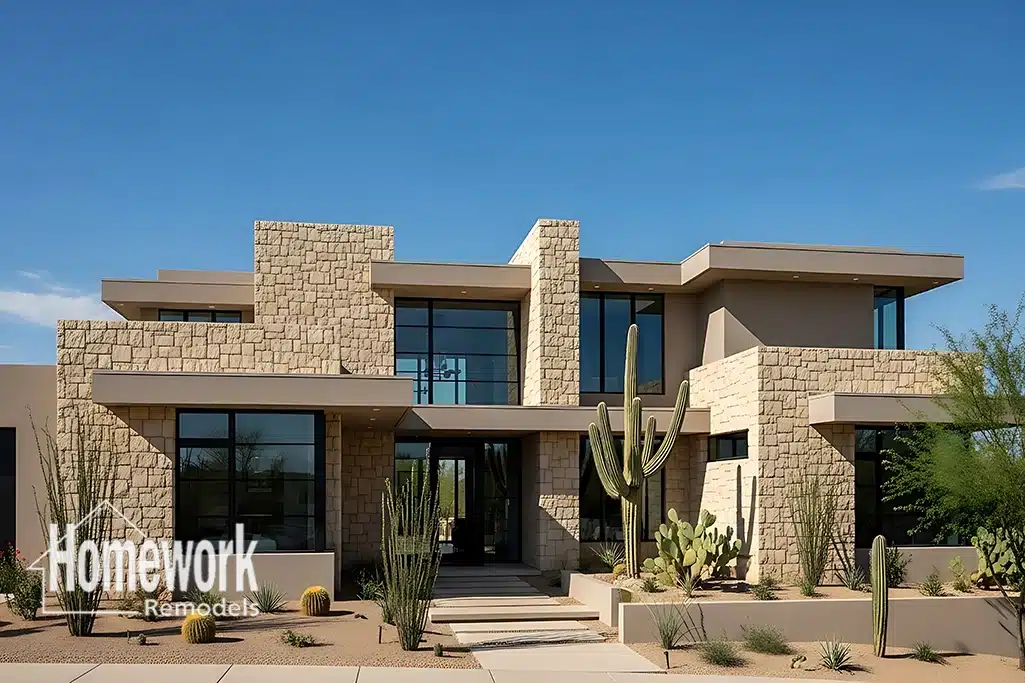
How Local Architecture Inspires Modern Design
Modern design does not appear in a vacuum. In Arizona, the most successful contemporary homes draw directly from what already exists—regional forms, desert conditions, and decades of architectural response to climate and land. When modern design ignores this lineage, it often feels imported. When it listens, it feels inevitable.
Across the Valley, homeowners are rediscovering that the strongest modern designs are not the most radical. They are the ones inspired by local architecture, translated thoughtfully for current lifestyles.
Why Place Still Shapes Design
Arizona’s architectural history is pragmatic. Early homes were shaped by heat, sun, and scarcity of water. Deep overhangs, thick walls, shaded courtyards, and horizontal massing were not stylistic choices—they were survival strategies.
Modern design that succeeds here honors those lessons. It adapts them using current materials and technology rather than discarding them in favor of generic trends.
Homes that respond to place feel grounded. Those that don’t often feel uncomfortable or short-lived.
Regional Forms That Endure
Several architectural forms continue to influence modern design in Arizona:
- Ranch homes, with their low profiles and lateral layouts
- Mid-century modern homes, emphasizing structure, daylight, and flow
- Desert contemporary forms, using mass and void to manage climate
These forms persist because they work. Modern design builds on them rather than replacing them.
Horizontal Emphasis Over Vertical Drama
Arizona’s landscape is wide and expansive. Successful local architecture reflects that horizontality.
Modern homes inspired by local precedent favor elongated forms, low rooflines, and strong connections to the ground. Vertical drama is used sparingly and intentionally.
This emphasis creates calm rather than spectacle—a quality homeowners increasingly value.
Courtyards as Organizing Elements
Courtyards are a recurring feature in regional architecture, and their influence is growing again.
Modern designs use courtyards to:
- Control light and airflow
- Create privacy without enclosure
- Anchor indoor-outdoor living
Rather than relying on expansive glazing alone, courtyards provide moderated openness that performs well in desert conditions.
Material Honesty Matters
Local architecture traditionally used materials honestly—stucco, stone, wood—chosen for durability and availability.
Modern design continues this ethic by favoring materials that age well and require minimal maintenance. Texture replaces ornament. Proportion replaces decoration.
Homes that embrace material honesty feel more authentic and less trend-dependent.
Open Plans With Purpose
Arizona homes have always balanced openness with shelter. Modern open plans inspired by local architecture maintain this balance.
Instead of removing every wall, designers create visual connections aligned with circulation and light. Spaces remain defined, yet connected.
Evaluating options for removing load-bearing walls safely early helps ensure openness supports, rather than undermines, architectural intent.
Light as a Design Constraint
Arizona light is intense. Traditional architecture managed it carefully through orientation, overhangs, and filtered openings.
Modern design that draws from this precedent treats light as a constraint to shape, not a resource to maximize indiscriminately. Shading devices, deep reveals, and controlled glazing improve comfort and longevity.
Homes that manage light well feel timeless regardless of style.
Indoor-Outdoor Living, Reconsidered
Local architecture has long blurred indoor and outdoor boundaries, but always with intention. Modern design builds on this by refining transitions rather than erasing them.
Covered patios, sliding openings, and aligned floor planes extend living areas without exposing interiors to heat or glare. Outdoor rooms become functional spaces rather than visual gestures.
This integration is central to whole-home remodeling in Scottsdale, where exterior and interior planning occur together.
Structural Logic as Design Language
In many Arizona homes, structure is visible and expressive. Beams, columns, and roof planes communicate how the house stands.
Modern design influenced by this tradition allows structure to inform aesthetics rather than hiding it. This honesty creates clarity and confidence in the design.
When structure is respected, homes feel coherent even as layouts evolve.
Technology Serving Architecture, Not Replacing It
Modern systems—HVAC, glazing, automation—enhance comfort, but they should not dictate form.
Homes that use technology to support architectural principles tend to age better than those that rely on technology to compensate for poor design decisions.
Coordination through a thoughtful design-build remodeling process ensures performance upgrades reinforce, rather than fight, architectural intent.
Avoiding the “Anywhere House”
One risk of modern design is sameness. Without regional inspiration, homes can feel interchangeable—comfortable anywhere, distinctive nowhere.
Drawing from local architecture prevents this. It gives modern homes an identity rooted in place rather than fashion.
Design That Belongs
Modern design in Arizona is strongest when it feels like a continuation, not a disruption. It borrows freely from the past—not to imitate, but to inform.
Homes that respect local architectural intelligence feel settled from day one. They don’t need time to grow into their surroundings—they already belong.
Let’s Design a Home That Reflects Its Place
If you’re planning a remodel and want modern design that feels grounded in Arizona’s architectural heritage, early planning can help translate local inspiration into livable spaces. To explore design approaches tailored to your home and setting, you can schedule a free consultation with our design-build team and move forward with confidence.