
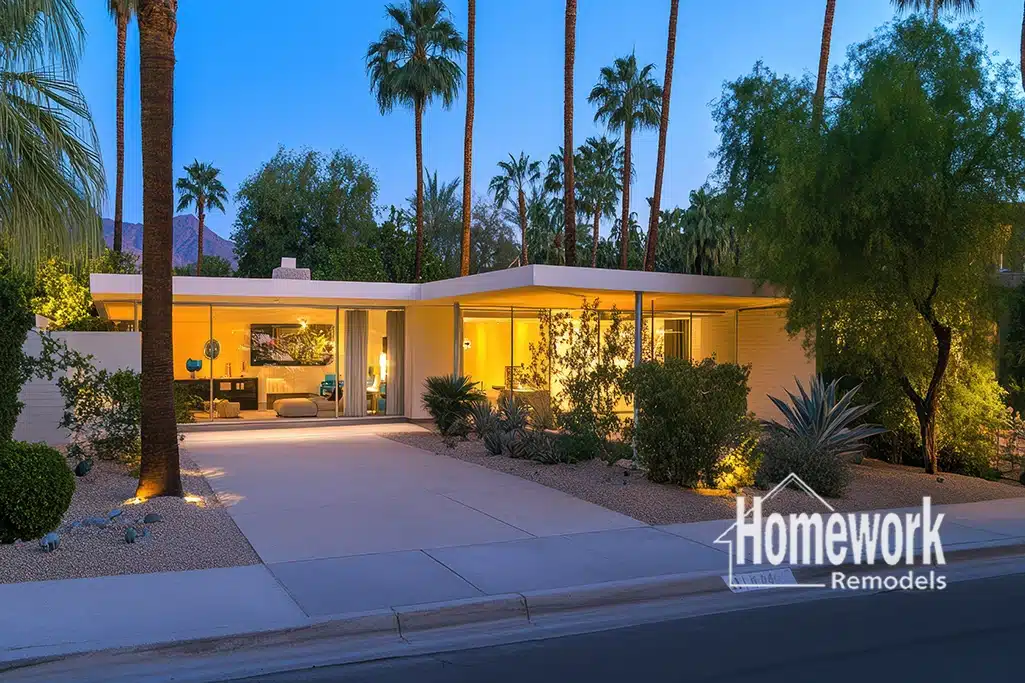
Mid-Century Modern Homes: When Modernizing Too Fast Erases the Architecture
Mid-century modern homes were never meant to be “updated” quickly. Designed with restraint, proportion, and intentional simplicity, these homes rely on relationships—between structure and landscape, light and shadow, openness and enclosure. When homeowners rush modernization, those relationships are often the first casualties.
The desire to modernize is understandable. Systems age, layouts feel dated, and finishes no longer serve daily life. But in mid-century homes, speed is rarely an ally. Fast decisions frequently erase architectural DNA that cannot be reconstructed once it’s gone.
Why Mid-Century Homes Invite Over-Correction
Mid-century homes often feel understated compared to contemporary builds. Their quiet confidence can be misread as incompleteness—something waiting to be “fixed.”
The core decision tension is contemporary convenience versus architectural integrity.
Original Layouts Were Purposefully Calibrated
Rooms in mid-century homes were not arbitrarily sized. Ceiling heights, window placement, and circulation were carefully tuned to human scale and landscape orientation.
When walls are removed indiscriminately, that calibration disappears.
Over-Opening Can Flatten Spatial Experience
Mid-century design relies on compression and release—moving from lower, intimate spaces into brighter, open ones. Fully opening the plan removes contrast and makes the home feel monotonous rather than expansive.
Openness without hierarchy feels bland.
Windows Are Not Just Holes in Walls
Clerestory windows, ribbon windows, and carefully framed views are defining features of mid-century homes. Replacing them with oversized glazing or standard window packages often destroys light balance and privacy.
Window decisions must respect original intent.
Materials Carry Visual Weight
Mid-century materials—wood paneling, terrazzo, concrete, brick—anchor the home visually. Removing them too quickly in favor of trendy finishes erases depth and authenticity.
Modern doesn’t have to mean generic.
Structural Systems Shape Design Possibilities
Many mid-century homes rely on post-and-beam or specialized framing systems. Removing walls without understanding load paths can force visible beams or posts that disrupt clean lines.
Before altering structure, homeowners should understand what’s involved in removing load-bearing walls in Phoenix homes. Structural clarity protects design integrity.
Kitchens Are Especially Vulnerable
Modern kitchens often demand scale and visual dominance. In mid-century homes, oversized islands, heavy cabinetry, or aggressive lighting can overwhelm adjacent living spaces.
Restraint maintains balance.
Speed Increases Regret
Fast remodels tend to lock in early assumptions. Once walls are removed, ceilings altered, or materials discarded, reversal is difficult or impossible.
Slowing down preserves options.
Landscape Connection Is Easily Broken
Mid-century homes were sited intentionally. Rushed additions or window changes can sever the indoor–outdoor dialogue that defines the architecture.
Homes should remain grounded in their environment.
Modern Systems Can Be Integrated Thoughtfully
Electrical, HVAC, and insulation upgrades are often necessary—but they don’t require architectural compromise. Careful routing and concealment preserve clean lines.
Performance and preservation can coexist.
Whole-Home Thinking Prevents Fragmentation
Mid-century homes function as unified compositions. Piecemeal upgrades disrupt cohesion and create visual noise.
Homeowners who apply whole-home remodeling in Phoenix principles maintain continuity while improving function.
Why Design-Build Is Critical for Mid-Century Modernization
Design-build remodeling allows homeowners to evaluate modernization options holistically—testing layouts, structural feasibility, and material impact before construction begins.
In mid-century homes, this integration ensures updates feel intentional rather than rushed.
Learning how the design-build remodeling process works replaces reactionary updates with informed decisions.
The Core Decision Tension: Fast Updates or Enduring Design
Mid-century modern homes reward patience.
When modernization is approached thoughtfully, these homes evolve gracefully—retaining their architectural soul while supporting modern living. When rushed, what’s lost can’t be replaced.
Let’s Modernize Without Losing the Architecture
If you’re planning a remodel for a mid-century modern home, slowing down may be the smartest first step. With architecture-aware experience and a design-build approach, clarity comes early.
We invite you to schedule a free remodeling consultation to explore modernization strategies that respect both design and daily life.