
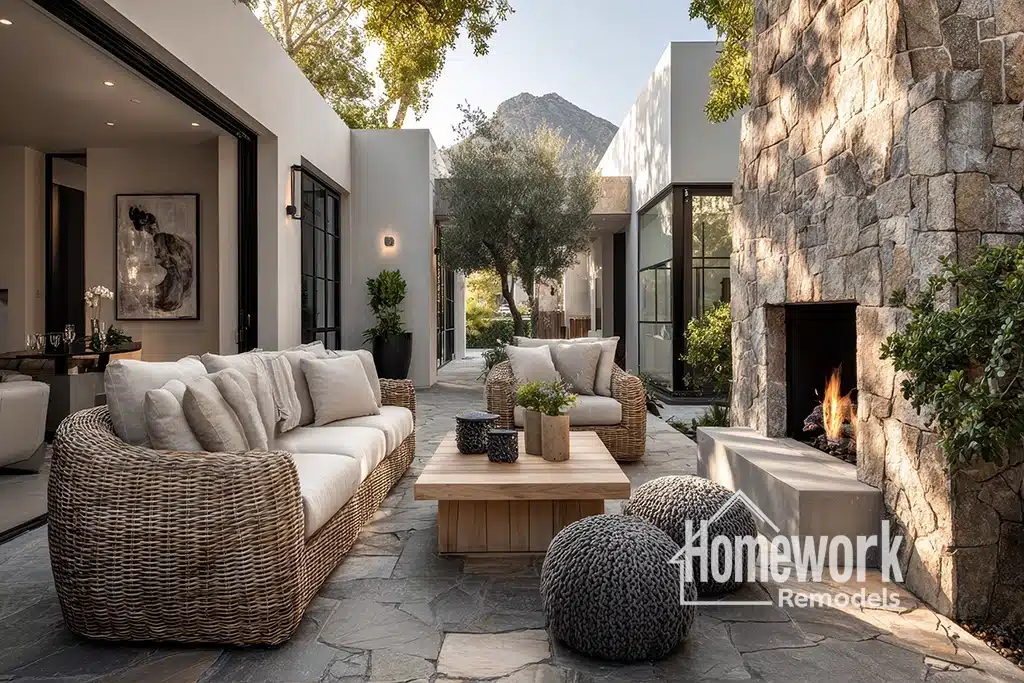
Integrating Outdoor Spaces into Urban Living
Urban living in Tempe brings energy, convenience, and proximity—but it also compresses space. Lots are tighter, neighbors are closer, and outdoor areas must work harder to deliver comfort and privacy. In this context, integrating outdoor spaces into daily living isn’t a luxury—it’s a necessity.
The most successful urban homes in Tempe don’t treat outdoor areas as accessories. They treat them as extensions of the interior—spaces designed with the same care, proportion, and usability as rooms inside the home.
Urban Outdoor Spaces Must Be Intentional
In suburban settings, outdoor areas can rely on size. In urban neighborhoods, they must rely on design.
Small patios, side yards, balconies, and courtyards can be highly effective—but only when they’re purposeful. Without clear intent, these spaces often become underused buffers rather than active living areas.
Urban integration begins by asking how the space will actually be used: morning routines, evening meals, quiet breaks, or social gatherings. Design decisions should follow function, not the other way around.
The Core Decision: Openness vs. Privacy
Urban outdoor design revolves around a central tension: How open should this space feel—and how protected does it need to be?
Too much openness can feel exposed. Too much enclosure can feel claustrophobic. The balance depends on adjacency, elevation, and daily patterns of use.
Successful designs use layered strategies—screens, walls, planting, and orientation—to create comfort without isolation. Privacy is achieved without shutting the space down.
Transitions Matter More Than Square Footage
In urban homes, the transition between inside and outside often matters more than the size of the outdoor space itself.
Flush thresholds, aligned floor heights, and clear sightlines make outdoor areas feel like part of the home rather than an afterthought. Poor transitions—steps, misaligned doors, or visual barriers—can make even generous spaces feel disconnected.
When indoor-outdoor transitions are handled well, small spaces feel expansive.
Climate Awareness Shapes Daily Use
Tempe’s climate plays a defining role in how outdoor spaces function. Heat, sun angle, and seasonal variation all influence usability.
Urban outdoor spaces benefit from shade structures, overhangs, and thoughtful orientation. Morning and evening use should be prioritized over midday exposure, especially during warmer months.
Designing for comfort—not just appearance—ensures outdoor spaces are used regularly rather than occasionally.
Kitchens and Living Areas Set the Relationship
The way interior spaces connect to the outdoors determines how integrated the experience feels. Kitchens that open to patios support casual dining and entertaining. Living areas that extend outward feel larger and more flexible.
This doesn’t require full openness everywhere. Strategic connections—rather than continuous exposure—often deliver better comfort and privacy in urban settings.
For homeowners considering layout changes to support this integration, understanding how broader planning decisions affect flow can be helpful. The Home Remodeling in Tempe, AZ hub provides context for coordinating indoor and outdoor improvements holistically.
Urban Courtyards Create Calm
Courtyards are particularly effective in Tempe’s urban neighborhoods. By turning inward, they create private outdoor rooms shielded from noise and visibility.
These spaces work well for dining, lounging, or quiet reflection—and they often improve interior light and ventilation as well.
Courtyards demonstrate how outdoor integration isn’t always about openness. Sometimes it’s about focus.
Materials Should Work Harder Outside
Urban outdoor materials experience heavy use. Foot traffic, sun exposure, and frequent transitions demand durability.
Materials that weather gracefully—natural stone, sealed concrete, treated wood, and metal accents—often outperform delicate finishes. Maintenance expectations should be considered as carefully as appearance.
When outdoor materials are chosen thoughtfully, spaces remain inviting without constant upkeep.
Lighting Extends Use Into the Evening
Urban outdoor living often happens after the sun goes down. Lighting therefore plays a critical role.
Layered lighting—ambient, task, and accent—supports both function and atmosphere. Over-lighting flattens spaces; under-lighting limits usability.
Good lighting allows outdoor spaces to feel like real rooms, usable well into the evening.
Urban Outdoor Living Supports Long-Term Value
Homes that integrate outdoor spaces effectively tend to feel more complete. Buyers and long-term owners respond to homes where every square foot—inside and out—has a purpose.
In urban Tempe neighborhoods, where space is at a premium, this integration often differentiates homes more than raw square footage.
Outdoor spaces designed for daily life tend to age better than those designed for occasional use.
Integration Requires Early Planning
Outdoor integration works best when it’s considered early. Waiting until the end of a remodel to “add something outside” often leads to compromises in layout, structure, or comfort.
Design-build planning allows outdoor spaces to be coordinated with interior layouts, systems, and transitions—creating a cohesive result rather than a layered one.
Urban Living Feels Better When It Breathes
Well-integrated outdoor spaces give urban homes room to breathe. They support routines, provide relief from density, and enhance daily experience without requiring more land.
In Tempe, where climate and lifestyle encourage outdoor living, these spaces aren’t optional—they’re essential.
Let’s Plan Your Remodel with Clarity
If you’re thinking about integrating outdoor spaces into your urban Tempe home, the most valuable first step is a clear, pressure-free conversation. Understanding how your home, lot, and lifestyle interact before design begins helps avoid costly surprises and ensures decisions feel confident—not rushed.
If you’d like to explore your options, you can schedule a free remodeling consultation with our design-build team. We’ll help you evaluate possibilities, constraints, and next steps so you can move forward with clarity.