
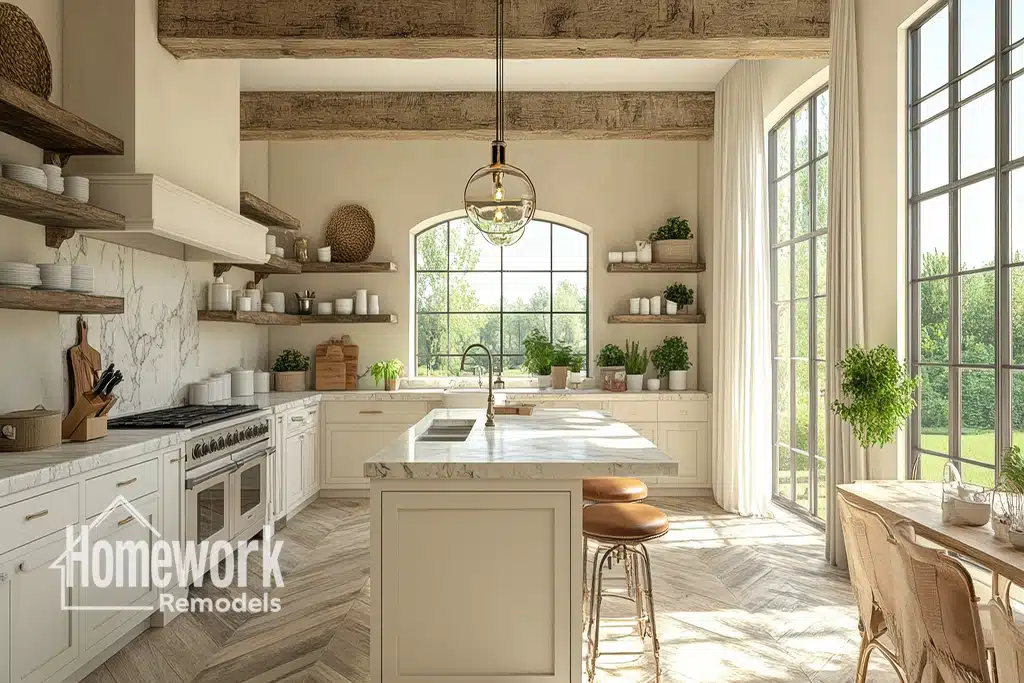
Kitchen lighting is one of the most underestimated elements in home remodeling. Many kitchens are well-appointed with quality cabinetry and finishes, yet still feel uncomfortable or awkward to use because lighting was treated as an afterthought rather than a system.
In Scottsdale, lighting decisions carry additional weight. Intense natural light, high contrast, and open floor plans all influence how artificial lighting performs throughout the day. Kitchens that rely on a single lighting source—usually recessed ceiling lights—often feel harsh at night and inadequate during detailed tasks.
The kitchens that function best use layered lighting: multiple light sources working together to support how the space is actually used.
Why One-Source Lighting Fails Kitchens
A single lighting layer tries to do too much. Recessed ceiling lights are expected to illuminate work surfaces, define the room, and create ambiance—tasks they are not designed to handle alone.
Common issues include:
- Shadows on countertops caused by overhead placement
- Glare reflecting off stone or quartz surfaces
- Flat, overly bright nighttime conditions
These problems are amplified in Scottsdale homes, where strong daylight creates dramatic shifts between day and evening lighting needs.
Layering allows each light source to do one job well.
The Three Core Lighting Layers
Effective kitchen lighting relies on three distinct layers, each serving a different purpose.
Task lighting supports work.
Ambient lighting establishes overall comfort.
Accent lighting adds depth and visual interest.
When these layers are planned together, kitchens feel easier to use and more pleasant to spend time in.
Task Lighting: Precision Where It Matters
Task lighting is the most critical—and most commonly overlooked—layer.
Under-cabinet lighting, toe-kick lighting near prep areas, and targeted fixtures above work zones eliminate shadows and improve safety. In Scottsdale kitchens, where natural light may shift dramatically during the day, consistent task lighting becomes essential in the evening.
Task lighting should be:
- Bright but not glaring
- Focused directly on work surfaces
- Independently controllable
When task lighting is properly planned, homeowners often find they need less overall brightness.
Ambient Lighting: Setting the Baseline
Ambient lighting provides general illumination that makes the kitchen feel usable and welcoming.
This layer often includes recessed lights, surface-mounted fixtures, or indirect lighting that reflects off ceilings or walls. The goal is even distribution—not intensity.
In desert homes, ambient lighting must work with natural light rather than compete with it. Warm color temperatures help balance the cooler daylight tones common in Scottsdale interiors.
Ambient lighting should make the kitchen feel comfortable before any accent lighting is added.
Accent Lighting: Creating Depth and Mood
Accent lighting is what transforms a kitchen from functional to inviting.
This layer highlights architectural features, cabinetry, shelving, or transitions between spaces. It adds visual depth and softens the room after dark.
Accent lighting often includes:
- Cabinet interior lighting
- Above-cabinet uplighting
- Integrated shelf lighting
These features are subtle, but they dramatically improve how a kitchen feels in the evening.
How Natural Light Changes the Equation
Scottsdale kitchens often receive abundant natural light—sometimes too much.
Large windows, open concepts, and indoor-outdoor connections create bright daytime environments but also increase contrast. Without thoughtful artificial lighting, kitchens can feel dim once the sun sets.
Layered lighting ensures continuity. The kitchen transitions smoothly from day to night without feeling like a different room.
Open-Concept Kitchens Require More Planning
Open layouts complicate lighting because the kitchen no longer exists in isolation.
Lighting must coordinate with adjacent living and dining areas. Bright task lighting should not overpower nearby seating zones. Accent lighting helps visually separate spaces without walls.
When open layouts involve structural changes, early coordination—especially when evaluating options for removing load-bearing walls safely—allows lighting to be integrated rather than patched in later.
Lighting Zones Improve Daily Comfort
One of the most effective strategies in kitchen lighting is zoning.
Separating controls for prep areas, islands, dining zones, and accent features allows homeowners to adjust lighting based on activity. Bright for cooking. Soft for evening gatherings.
Zoning prevents the all-or-nothing lighting scenarios that make kitchens feel inflexible.
Color Temperature Matters More Than Fixture Style
Many homeowners focus on fixture appearance and overlook color temperature.
In kitchens, color temperature affects:
- How food appears
- How finishes read
- Overall comfort
Warmer tones generally feel better in Scottsdale homes, especially at night. Mixing temperatures unintentionally can make a kitchen feel disjointed.
Consistency across layers creates cohesion.
Lighting and Materials Work Together
Lighting reveals materials. Glossy surfaces reflect more light, while textured or matte finishes absorb it.
Kitchen lighting should be selected alongside countertops, cabinetry, and flooring—not afterward. This coordination prevents glare and uneven brightness.
This is one reason lighting decisions benefit from being part of a broader whole-home remodeling in Scottsdale plan rather than an isolated choice.
Why Retrofitting Rarely Works Well
Adding lighting after a remodel is complete is often expensive and limiting.
Wiring paths are restricted. Fixture placement becomes compromised. Controls may not integrate cleanly.
Planning lighting early allows infrastructure to support the design instead of constraining it.
Energy Efficiency Without Compromise
Modern LED technology allows layered lighting to be both efficient and comfortable.
Well-designed systems often use less energy overall because lights are targeted and zoned. Dimming capabilities further reduce consumption without sacrificing usability.
Efficiency is a byproduct of good design—not a separate goal.
Lighting That Supports Long-Term Living
The best kitchen lighting does not call attention to itself. It simply works—day after day.
Layered lighting adapts as routines change, supports different activities, and makes kitchens feel calm rather than overstimulating.
Homes that feel good to live in often succeed because these invisible systems were thoughtfully planned.
Let’s Design Kitchen Lighting That Works Every Day
If you’re planning a kitchen remodel and want lighting that supports both function and atmosphere, early planning can clarify the right approach. You can schedule a free consultation with our design-build team to explore lighting strategies tailored to your Scottsdale home.