
Phoenix · Mid-century modern kitchen
A Compact Kitchen with Mid-Century Simplicity
White flat-front cabinets, gray work surfaces, and a wood-topped prep table bring a simple palette to a kitchen connected to the dining room.
Phoenix, Arizona
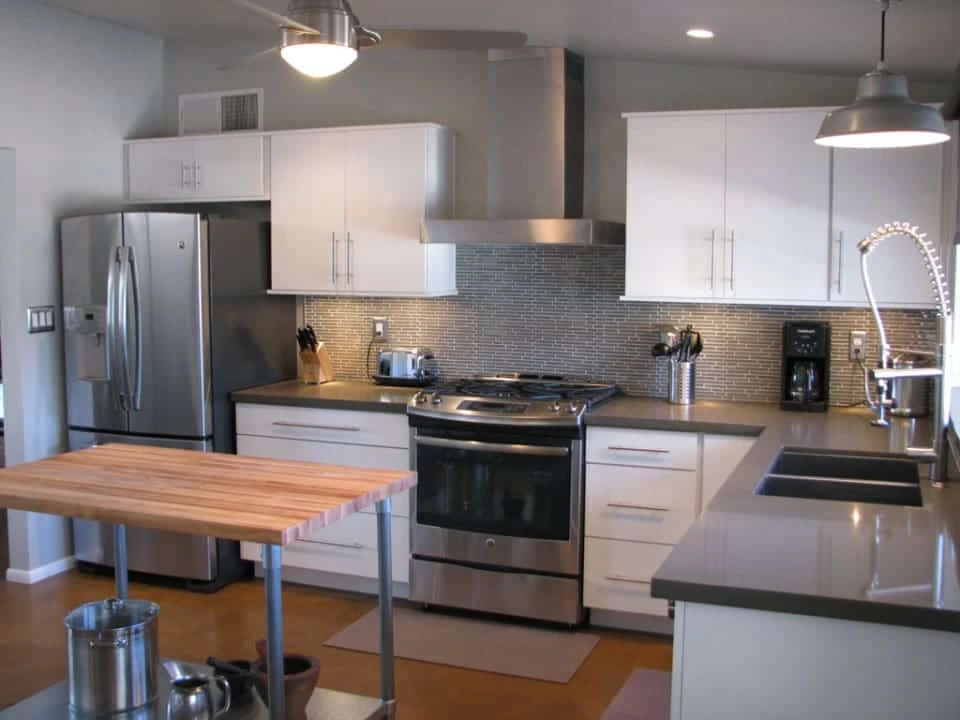
This kitchen keeps its main elements close together, with a small prep table at the center and the dining area just beyond.
The completed Phoenix remodel pairs white cabinetry with gray counters and stainless steel appliances. The cabinet fronts have a simple profile, and their long metal pulls repeat the horizontal lines of the drawers below. A narrow mosaic backsplash adds texture along the perimeter.
The room’s character comes from that combination of straightforward forms and warmer details. The wood-topped prep table gives the center of the kitchen a different surface from the surrounding counters. Beyond it, the dining table remains part of the view through the adjoining rooms.
The cooking wall
A compact arrangement around the range
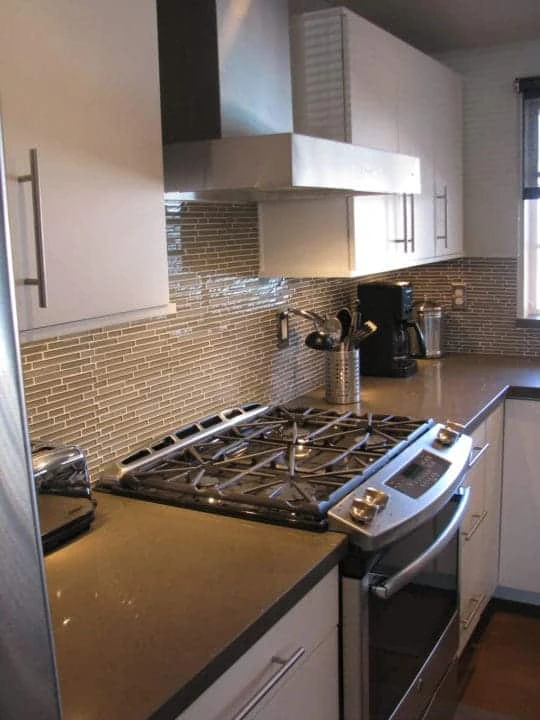
The stainless steel gas range sits between short stretches of counter, with drawers and base cabinets below. A broad metal hood rises between the upper cabinet runs. Its plain shape relates to the flat cabinet fronts, keeping this wall visually simple despite the number of elements it contains.
The gray work surfaces continue around the perimeter, while the mosaic backsplash supplies a finer pattern behind them. White upper cabinets keep the wall lighter than the counters beneath. The refrigerator sits at the end of the run, close to the cooking area.
The wood-topped prep table adds a separate work surface within reach of the range. Its open lower shelf provides a visible place for cookware without adding a full cabinet base at the center of the room.
At the window
A sink with daylight over the work surface
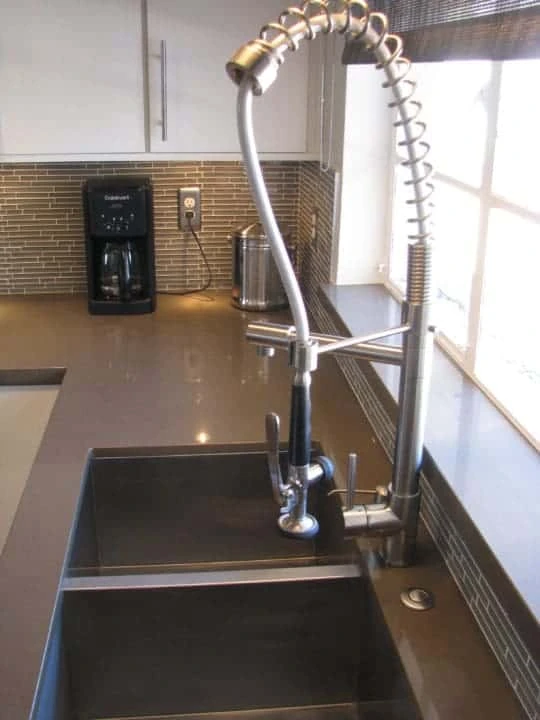
The sink occupies the counter beneath the window. Its two undermount bowls sit below the gray surface, with a tall spring-coil faucet above. Daylight reaches directly across the sink and adjacent work area.
The backsplash returns along this wall, linking the sink to the cooking area. Metal hardware and the faucet repeat the appliance finish, while a hanging light provides another distinct element above the perimeter.
The counter returns along the side of the room, keeping another preparation surface close to the sink. Together with the small central table, it offers different places to work within the compact layout.
The adjoining rooms
A view that includes the dining table
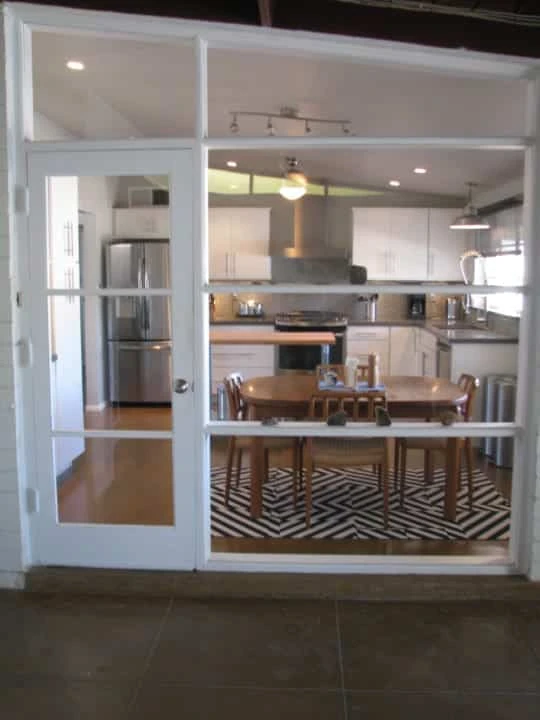
From outside the kitchen and dining area, glazed doors and a transom frame a view toward the table and kitchen beyond. The doorway gives the adjoining rooms a visible relationship even when viewed from farther away.
Within the kitchen, the small wood-topped prep table contrasts with the fixed perimeter cabinets. Its open metal base leaves the center of the room visually lighter than a large cabinet island would. The dining table supplies a separate place to sit nearby.
That distinction between preparation space and dining space allows each piece to have a clear purpose. The kitchen can remain compact while the adjoining room provides a place to sit and share a meal.
Planning a similar project
A kitchen that belongs with the rest of the home
For a Phoenix mid-century home, the kitchen plan should account for more than cabinet style. The size of a prep surface, the placement of appliances, and the relationship to dining all affect how the room works within the house.
Our kitchen remodeling services begin with those relationships. The Mid-Century Modern Remodeling Guide explores the wider architectural considerations. If the work extends into adjoining spaces, see our approach to whole-home remodeling.
Start with the way you use your kitchen
Tell us where preparation feels crowded, what needs a place to be stored, and how the kitchen should connect with the rest of your home. Our design-build process brings those priorities into the design and construction plan. The Path to Remodeling Clarity™ can help you prepare for the conversation.
Plan Your Phoenix Kitchen with Homework Remodels
Discuss your home, your kitchen, and the changes that would make daily use more comfortable.