
Remodeling Knowledge Center
An educational resource that helps homeowners navigate remodeling with confidence.
Explore the Complete Remodeling Journey
The Remodeling Knowledge Center organizes homeowner education into six connected stages, helping you move from early planning questions to confident remodeling decisions.

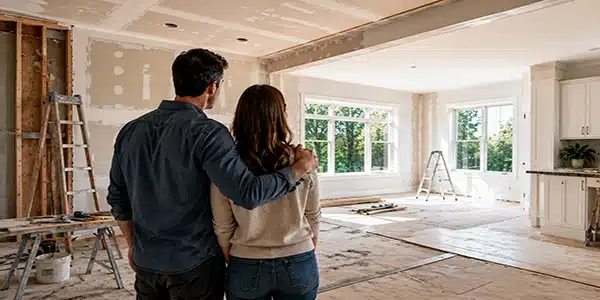
Purpose of the Remodeling Knowledge Center
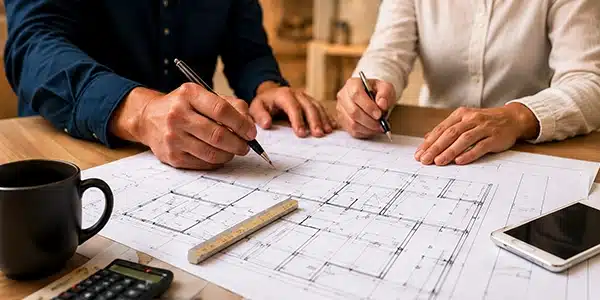
Remodeling is about far more than construction. Every successful project begins with planning, priorities, budgeting, design decisions, and a clear understanding of goals before construction ever starts.
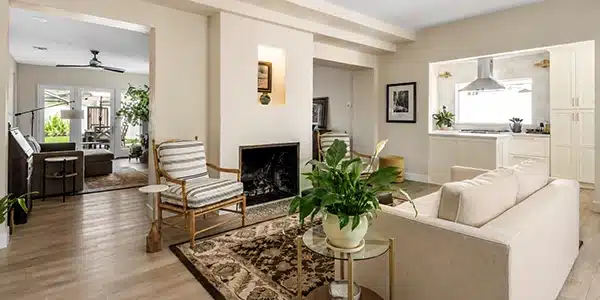
The Remodeling Knowledge Center was created to help homeowners understand those relationships. Rather than functioning as a collection of isolated articles, it organizes remodeling knowledge into a connected learning journey that explores planning, design, budgeting, remodeling opportunities, specialized topics, professional relationships, and project preparation.
Whether you are exploring possibilities, solving a specific problem, or preparing for a future project, the goal remains the same: helping you make informed decisions with greater confidence.
How to Use This Knowledge Center
Most homeowners begin with a specific question, but successful remodeling projects often involve decisions that extend beyond a single room or project type. A kitchen remodel may lead to conversations about entertaining, circulation, or whole-home planning. A home addition may raise questions about budgeting, permitting, and long-term flexibility.
For that reason, the Remodeling Knowledge Center is organized as a connected learning ecosystem rather than a traditional directory. You can explore the journey sequentially or begin with the topic most relevant to your current goals. Each section connects to additional resources that provide deeper exploration when you are ready to continue learning.
The more homeowners understand how remodeling decisions influence one another, the more confidence they gain in the decisions that follow.
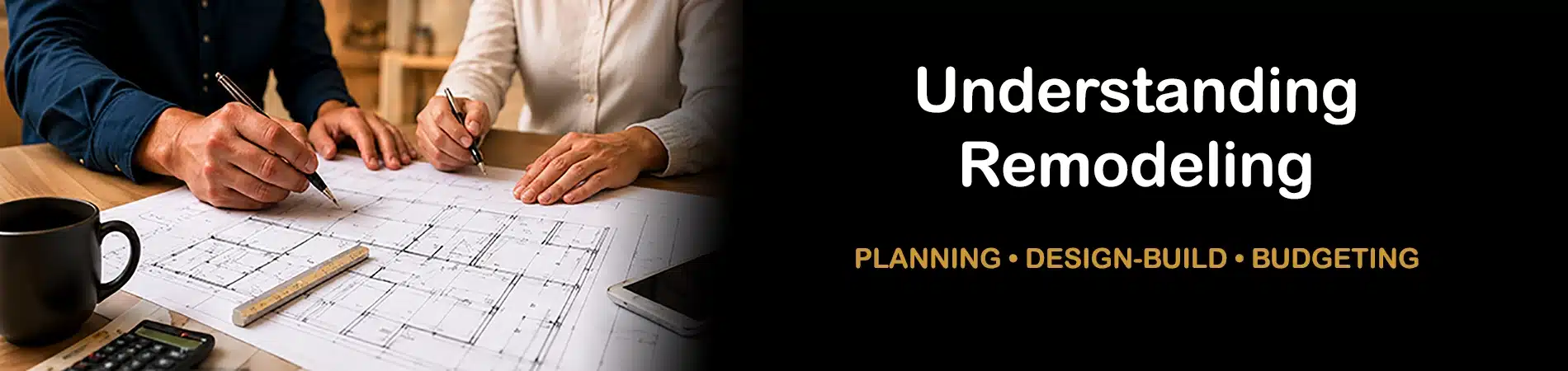
Part 1 — Understanding Remodeling
Every remodeling project eventually produces visible results, but the quality of those results is often determined long before construction begins. Beautiful kitchens, comfortable bathrooms, successful additions, and transformative whole-home remodels rarely emerge from construction alone. They emerge from planning, organization, decision-making, and a clear understanding of how goals, budgets, priorities, and processes influence one another. Homeowners frequently focus on the finished product because that is the most visible outcome, yet experienced remodeling professionals understand that successful projects are usually built upon foundations that remain largely invisible to outside observers.
This first section explores those foundations. Before evaluating design possibilities or selecting products, homeowners benefit from understanding how successful projects are conceived, organized, financed, and delivered. The topics that follow provide a framework for understanding remodeling as a system rather than a collection of independent decisions. They explore the importance of planning, the role of project delivery methods, and the relationship between budgeting and long-term investment strategy. Together, these concepts help create the context necessary for making informed decisions throughout the remainder of the remodeling journey.
Remodeling Philosophy & Planning Strategy Journey
Most homeowners begin remodeling by thinking about outcomes. They imagine a larger kitchen, a more comfortable bathroom, a better floorplan, additional living space, or a home that better reflects the way they live today. While these outcomes are important, successful remodeling rarely begins with solutions. It begins with understanding the problems, clarifying goals, identifying priorities, and establishing a framework for decision-making. Remodeling philosophy provides direction, while planning strategy transforms that direction into an actionable path forward.
Every remodeling project reflects a set of priorities. Some homeowners prioritize functionality. Others focus on aesthetics, resale value, aging-in-place considerations, entertaining, or long-term family needs. These priorities influence every subsequent decision because they help determine where resources should be invested and which opportunities deserve greater attention. Without clearly defined priorities, projects can become reactive, leading to revisions, uncertainty, and competing objectives. A thoughtful planning strategy creates alignment among vision, scope, budget, and expectations, allowing decisions to reinforce one another rather than compete.
The Remodeling Philosophy & Planning Strategy Journey explores how successful projects are organized before design and construction begin. Homeowners who understand these principles often discover that remodeling becomes less stressful because decisions are guided by purpose rather than uncertainty. The journey provides a deeper exploration of the planning systems, decision-making frameworks, and long-term thinking that help transform ideas into successful remodeling outcomes.
Continue Reading: Remodeling Philosophy & Planning Strategy Journey
The Design-Build Remodeling System Journey
Once homeowners establish a vision and begin developing a strategy, the next question often involves how the project itself will be delivered. The remodeling industry offers several approaches, each with advantages and challenges, but the method used to organize design, planning, budgeting, and construction can significantly influence the overall experience. Understanding these systems helps homeowners evaluate options more effectively because project delivery methods shape communication, accountability, coordination, and decision-making throughout a project’s life.
The Design-Build approach recognizes that remodeling decisions are interconnected. Design influences budgeting. Budgeting influences scope. Scope influences scheduling and construction strategy. Rather than treating these activities as separate phases managed by separate parties, Design-Build integrates them into a coordinated process that encourages collaboration from the earliest stages of planning. The objective is not simply efficiency. The objective is alignment. When planning, design, budgeting, and construction are working together, homeowners often benefit from greater transparency, more predictable outcomes, and fewer surprises during construction.
The Design-Build Remodeling System Journey explores how this integrated approach functions and why it has become increasingly popular among homeowners seeking a more coordinated remodeling experience. It examines the principles behind Design-Build, the benefits of early collaboration, and the ways integrated planning can contribute to better project outcomes.
Continue Reading: The Design-Build Remodeling System Journey
Remodeling Costs, Budgeting & Investment Planning Journey
Few remodeling topics generate more interest than cost because financial decisions influence nearly every aspect of a project. Homeowners naturally want to understand what projects cost, what factors influence pricing, and how investment decisions affect outcomes. Yet remodeling costs cannot be understood through averages alone because every project reflects a unique combination of goals, conditions, priorities, and opportunities. The more homeowners understand these variables, the better equipped they become to establish realistic expectations and make informed decisions.
Successful budgeting extends beyond assigning a number to a project. It requires understanding the relationship between investment and outcome. Homeowners frequently discover that remodeling involves balancing competing priorities while evaluating opportunities that may influence comfort, functionality, longevity, efficiency, aesthetics, and future value. Some decisions may reduce immediate costs while limiting long-term benefits. Others may require greater investment to create meaningful improvements that continue to provide value for many years. Effective budgeting helps homeowners evaluate these tradeoffs within the context of their broader goals.
The Remodeling Costs, Budgeting & Investment Planning Journey explores the principles that influence remodeling investments and provides a framework for understanding costs within the larger context of planning and decision-making. By viewing remodeling as an investment rather than simply an expense, homeowners often gain a clearer perspective on how their financial decisions contribute to a project’s overall success.
Continue Reading: Remodeling Costs, Budgeting & Investment Planning Journey
Home Performance, Comfort & Energy Efficiency Journey
Many homeowners begin remodeling to improve the way their homes look and function, only to discover that comfort, efficiency, air quality, and overall livability play an equally important role in daily life. Rooms that feel too warm or too cold, rising utility costs, humidity concerns, uneven temperatures, and indoor air quality issues are often symptoms of larger performance relationships involving insulation, ventilation, windows, air movement, moisture control, and the building envelope itself.
Understanding how homes perform helps homeowners look beyond individual products and focus on outcomes. Rather than searching for a single upgrade that solves every problem, successful home-performance improvements typically emerge through a thoughtful understanding of how the home’s systems work together. When comfort, efficiency, durability, and healthy living environments are considered as connected priorities, remodeling can create benefits that extend far beyond aesthetics alone.
The Home Performance, Comfort & Energy Efficiency Journey explores the relationship between comfort and energy use, explains how heat, air, and moisture influence daily living, examines indoor air quality and healthy homes, and provides a homeowner-friendly framework for understanding how thoughtful remodeling can improve long-term livability and performance.
Continue Reading: Home Performance, Comfort & Energy Efficiency Journey
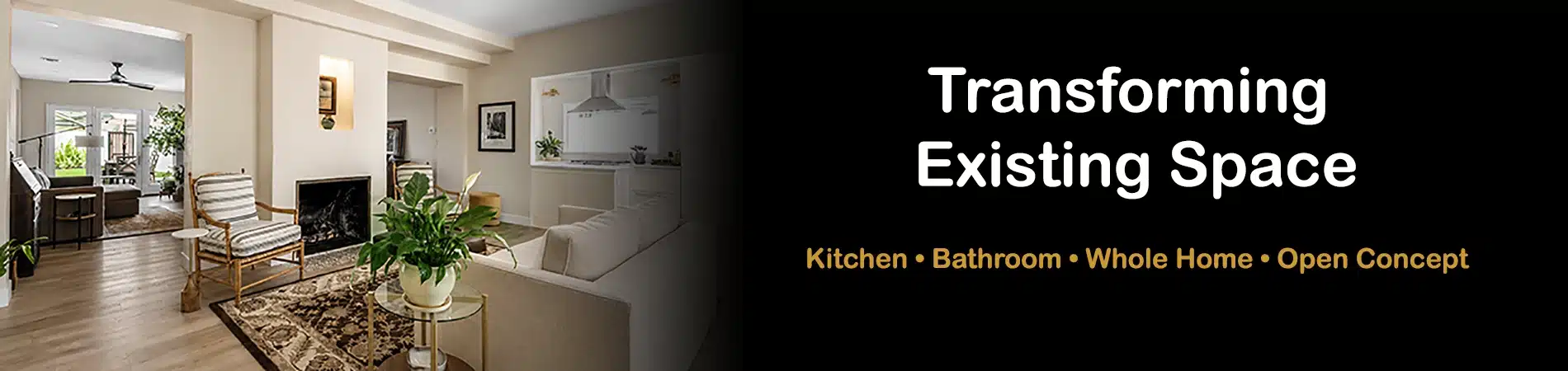
Part 2: Transforming Existing Space
Many homeowners begin exploring remodeling when something about their home no longer functions as it once did. The issue may not be a lack of square footage. In many cases, the home already contains enough space, but that space is organized around priorities, lifestyles, and living patterns that no longer reflect how the household functions today. Kitchens that were once designed primarily for meal preparation now serve as gathering spaces. Formal rooms may sit largely unused while adjacent areas feel crowded. Bathrooms may no longer provide the comfort, convenience, or accessibility homeowners desire. In other situations, walls, hallways, and compartmentalized floorplans can make an otherwise spacious home feel disconnected and inefficient.
Transforming existing space is often one of the most effective ways to improve daily living because it focuses on making better use of what already exists. Rather than beginning with expansion, these projects explore how thoughtful planning, design, and construction can improve functionality, circulation, comfort, storage, natural light, and overall livability within the home’s current footprint. Homeowners are frequently surprised to discover how dramatically a home can change without adding a single square foot when spaces are reorganized around the way people actually live.
The journeys in this section explore some of the most common opportunities homeowners pursue when seeking to improve existing living environments. While each topic focuses on a specific area of remodeling, they are closely connected because improvements made in one area often influence opportunities throughout the rest of the home. Understanding those relationships helps homeowners evaluate possibilities more comprehensively and make decisions that support a broader vision for the future.
Kitchen Remodeling & Connected Living Journey
Few rooms influence daily life as profoundly as the kitchen. For generations, kitchens were often designed as functional workspaces separated from surrounding living areas. While this arrangement reflected the priorities of the time, modern households frequently use kitchens very differently. Today’s kitchens often serve as gathering spaces where family members connect throughout the day, guests naturally congregate during social events, and multiple activities occur simultaneously. Meal preparation, conversation, homework, entertaining, and informal gatherings frequently take place within the same environment.
As lifestyles have evolved, many homeowners have begun to view kitchen remodeling as an opportunity to improve far more than just cabinetry, countertops, or appliances. A well-planned kitchen remodel can strengthen relationships among adjoining rooms, improve circulation, increase storage capacity, enhance natural light, and create stronger connections among cooking, dining, and living areas. These improvements often influence the overall experience of the home because kitchens occupy a central role in how households function.
Kitchen remodeling also serves as a gateway to larger conversations about connected living. As homeowners begin evaluating workflow, visibility, gathering spaces, and family interaction, opportunities often emerge that extend beyond the kitchen itself. Walls may be removed. Adjacent rooms may be reconfigured. Outdoor living spaces may become more integrated with interior environments. What begins as a kitchen remodel frequently evolves into a broader discussion about how the entire home supports daily life.
The Kitchen Remodeling & Connected Living Journey explores these possibilities in greater depth while providing guidance on planning, design, functionality, investment considerations, and the role of kitchens in the modern home.
Continue Reading: Kitchen Remodeling & Connected Living Journey
Bathroom Remodeling, Comfort & Wellness Journey
Bathrooms occupy a unique position in the home because they support some of the most personal daily routines. Unlike gathering spaces that serve groups at once, bathrooms are used individually, often at the start and end of each day. Their influence extends beyond functionality because comfort, privacy, convenience, accessibility, and relaxation all contribute to the overall experience.
Many older bathrooms were designed around basic functional requirements rather than long-term comfort or wellness. Limited storage, inadequate lighting, inefficient layouts, aging fixtures, and accessibility challenges can gradually diminish a space’s usefulness even when it remains technically functional. As homeowners spend more time evaluating how their homes support overall quality of life, bathrooms frequently emerge as important opportunities for meaningful improvement.
Modern bathroom remodeling often reflects a broader shift toward comfort and wellness. Homeowners increasingly seek environments that support relaxation, reduce stress, improve organization, and accommodate changing needs over time. Features such as larger showers, improved lighting, enhanced storage, better ventilation, universal design principles, and thoughtful space planning can significantly improve daily routines while increasing long-term livability.
The Bathroom Remodeling, Comfort & Wellness Journey explores how bathroom remodeling can enhance functionality and quality of life, and provides guidance on planning, design considerations, accessibility, investment priorities, and long-term performance.
Continue Reading: Bathroom Remodeling, Comfort & Wellness Journey
Whole-Home Remodeling Journey
While some homeowners focus on individual rooms, others eventually recognize that the challenges affecting their homes extend beyond isolated spaces. A kitchen may need improvement, but adjacent living areas may also feel disconnected. Bathrooms may require updates, yet the home’s circulation patterns may remain inefficient. Storage, lighting, room relationships, and architectural consistency may all contribute to a broader sense that the home no longer reflects how the household lives.
Whole-home remodeling addresses these broader opportunities by approaching the home as an integrated system rather than a collection of separate projects. This perspective allows homeowners to evaluate relationships between rooms, identify opportunities for greater cohesion, and develop comprehensive solutions that address multiple objectives simultaneously. Rather than making improvements one room at a time, whole-home remodeling creates an opportunity to align the entire property with a unified vision.
This approach often produces benefits that extend beyond aesthetics. Improved circulation, better space utilization, stronger visual continuity, enhanced functionality, and more efficient project sequencing can all contribute to a more satisfying long-term outcome. While whole-home remodeling typically requires greater planning and coordination than isolated projects, it also offers some of the greatest opportunities for meaningful transformation.
The Whole-Home Remodeling Journey explores the principles, planning considerations, and strategic decisions involved in comprehensive residential remodeling projects.
Continue Reading: Whole-Home Remodeling Journey
Open-Concept Remodeling & Removing Load-Bearing Walls Journey
Few remodeling trends have transformed modern homes more dramatically than the move toward open-concept living. Many older floorplans were designed around separate rooms for cooking, dining, entertaining, and daily activities. While those layouts served previous generations well, many homeowners today prefer spaces that feel more connected, flexible, and welcoming.
Open-concept remodeling seeks to strengthen the relationships between adjoining spaces by improving sightlines, increasing natural light, enhancing circulation, and creating greater interaction between family members and guests. In many cases, a home can feel significantly larger and more functional without adding a single square foot.
Achieving these transformations, however, often involves more than simply removing walls. Structural modifications frequently require careful evaluation of load-bearing elements, engineering requirements, permitting considerations, and construction sequencing. What appears to be a straightforward design change can involve important decisions that affect the long-term performance and safety of the home.
When thoughtful design, structural engineering, and skilled construction work together, removing load-bearing walls can become one of the most powerful ways to transform how a home feels and functions. Kitchens become connected to gathering spaces. Natural light reaches deeper into the home. Daily activities flow more naturally from one area to another.
This journey explores both the design principles behind open-concept living and the structural realities of removing load-bearing walls, helping homeowners understand the opportunities, challenges, and planning considerations involved in creating more connected living environments.
Continue Reading: Open-Concept Remodeling & Removing Load-Bearing Walls Journey
Build Path — Preparation & Living Through a Remodel
Every successful remodeling project creates two transformations at once. The first is the physical transformation of the home itself. The second is the temporary period of change that homeowners experience while that transformation is taking place.
Most people focus naturally on the finished result. They imagine the kitchen, bathroom, addition, or reconfigured living space they hope to enjoy when construction is complete. What receives less attention is the journey between today’s home and tomorrow’s home. During that period, routines may adjust, familiar spaces may change, and homeowners often discover that remodeling involves far more than construction alone.
Fortunately, preparation creates confidence. Homeowners who understand what to expect during construction often navigate the process with greater peace of mind because they recognize that temporary inconveniences are part of creating long-term improvements. They learn how communication, planning, realistic expectations, and flexibility help make the remodeling experience more manageable and less stressful.
This journey explores the practical and emotional realities of living through a remodel. You’ll learn how preparation creates stability, why progress can sometimes be difficult to see, how families maintain normalcy during construction, and why communication plays such an important role throughout the process.
Continue Reading: Preparation & Living Through a Remodel Journey
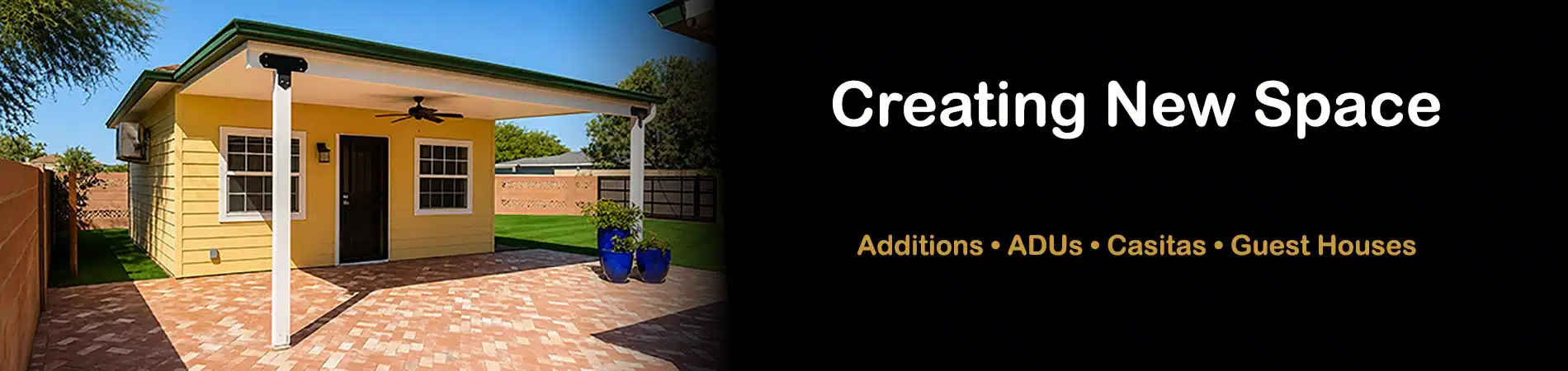
Part 3: Creating New Space
While many remodeling goals can be achieved through reconfiguration and improved use of existing square footage, there are times when the most effective solution is to create entirely new living space. Families grow, lifestyles evolve, multigenerational living arrangements become necessary, hobbies require dedicated areas, and changing priorities create demands that existing floorplans cannot reasonably accommodate. In these situations, homeowners often face an important question: should they move to a different home or invest in expanding the one they already love?
The answer is rarely simple because homes represent more than square footage. They are connected to neighborhoods, schools, relationships, memories, routines, and long-term financial investments. Many homeowners discover that relocating would require leaving behind qualities they value deeply while introducing uncertainties that may not solve all of their concerns. Expanding an existing home can offer an alternative, allowing families to preserve the advantages of their current location while creating space that better supports their future needs.
Creating new space differs from remodeling existing rooms because expansion projects entail additional considerations, including site constraints, zoning requirements, permitting, utilities, structural integration, and long-term property planning. Additions and detached living structures must not only function well independently but also feel like natural extensions of the property as a whole. Successful projects require balancing immediate needs with future flexibility while ensuring that new construction complements the character, architecture, and functionality of the existing home.
The journeys in this section explore two of the most common approaches homeowners use when expanding their living environments. While both create additional space, they serve different purposes and present unique opportunities. Understanding those differences helps homeowners evaluate which approach best supports their goals, lifestyle, and long-term vision.
Home Additions & Expanding Lifestyle Journey
The desire for more space often begins with a practical need. A growing family may require additional bedrooms. Empty nesters may wish to create a luxurious primary suite. Remote work may increase demand for dedicated office space. Aging parents may eventually move into the home. Entertaining needs may evolve, or a homeowner may simply wish to improve comfort and functionality without leaving a neighborhood they enjoy.
Home additions provide a way to address these needs while preserving many of the qualities that originally made the home desirable. Unlike moving, an addition allows homeowners to build upon an existing foundation of relationships, routines, and investments. The project becomes an opportunity not only to gain square footage but also to redefine how the property supports everyday life.
The most successful additions are rarely designed around square footage alone. Additional space has value because of what it enables. A larger kitchen may improve family interaction. A new primary suite may enhance comfort and privacy. A second-story addition may create room for a growing household while preserving outdoor living areas. A thoughtfully planned addition should improve both functionality and quality of life while creating stronger alignment between the home and the people who live within it.
Home additions also require strategic planning because new construction must integrate with existing architecture, structure, utilities, circulation patterns, and design objectives. Decisions made during planning influence not only the new space but also how the existing home functions after construction is complete. The most successful projects treat additions as opportunities to improve the entire property rather than simply attaching extra square footage to an existing structure.
The Home Additions & Expanding Lifestyle Journey explores the planning, design, budgeting, construction, and long-term investment considerations for residential additions, helping homeowners understand how expansion can support changing needs without sacrificing the advantages of staying in place.
Continue Reading: Home Additions & Expanding Lifestyle Journey
Casitas, ADUs & Guest Houses Journey
Not all expansion projects are connected directly to the main house. In many cases, homeowners seek additional living space that functions independently while remaining part of the same property. This need has become increasingly common as families adapt to changing living arrangements, multigenerational households, aging parents, adult children, visiting guests, flexible work requirements, and evolving financial goals.
Detached living structures offer unique opportunities by combining proximity with independence. A guest house can accommodate visitors while preserving privacy. A casita may create a comfortable living space for extended family members. An Accessory Dwelling Unit (ADU) can support a variety of lifestyle objectives while increasing the property’s flexibility. These structures often serve multiple purposes over time as family needs evolve, making them among the most versatile investments homeowners can make.
The growing popularity of ADUs and similar structures reflects broader demographic and economic trends. Families increasingly value flexibility. Housing costs continue to influence living arrangements. Aging-in-place strategies frequently involve keeping loved ones nearby. Remote work has created demand for dedicated spaces separate from the primary residence. Detached living environments offer solutions that adapt to changing circumstances while enhancing the property’s functionality.
Planning for casitas, guest houses, and ADUs requires careful consideration of zoning regulations, site constraints, utility connections, privacy concerns, architectural compatibility, and long-term objectives. These projects often involve more than simply constructing a small building. They require thoughtful integration with the existing property to ensure that the new structure enhances overall usability while maintaining harmony with the main residence.
Because these buildings are often smaller than traditional homes, efficient design becomes especially important. Every square foot must contribute meaningfully to comfort, functionality, storage, circulation, and livability. Successful projects balance independence and connection, creating environments that feel complete and comfortable while supporting the property owner’s broader goals.
The Casitas, ADUs & Guest Houses Journey explores the opportunities, planning considerations, design strategies, permitting requirements, and long-term benefits associated with detached living structures. Whether the goal involves housing family members, accommodating guests, creating flexible living arrangements, or improving long-term property value, understanding these options helps homeowners evaluate how additional living space can support future needs.
Continue Reading: Casitas, ADUs & Guest Houses Journey
As homeowners explore opportunities to create new space, they often discover that expansion projects involve more than just construction decisions. Additions, guest houses, and ADUs frequently influence budgeting strategies, long-term planning, permitting requirements, lifestyle priorities, and future flexibility. These projects encourage homeowners to think not only about present needs but also about how those needs may evolve over time. The ability to anticipate future possibilities is one reason expansion projects can provide such lasting value.
Creating new space represents a significant commitment, but it also offers some of the most transformative opportunities available through remodeling. When planned thoughtfully, these projects can preserve the advantages of a beloved home while providing the flexibility, functionality, and comfort necessary to support future chapters of life. Understanding how these opportunities fit within the broader remodeling journey helps homeowners evaluate expansion not simply as a construction project, but as a long-term investment in how they live, work, gather, and grow.

Part 4: Specialized Remodeling
Every remodeling project is unique because every homeowner, every property, and every set of priorities is different. While many remodeling principles apply broadly across residential projects, certain homes and lifestyles introduce considerations that require deeper planning, specialized expertise, and a more nuanced understanding of how design decisions influence long-term outcomes. These projects often extend beyond questions of aesthetics and functionality because they involve preserving architectural character, accommodating future needs, supporting specific lifestyles, or protecting features that make a property distinctive.
Specialized remodeling challenges homeowners to think beyond immediate improvements and consider how a home will perform over many years. Decisions involving historic preservation, Mid-Century Modern architecture, accessibility, and entertaining spaces frequently influence not only how a home looks but also how it feels, functions, and adapts to changing circumstances. In these situations, successful remodeling requires balancing respect for what already exists with a vision for what the home can become.
The journeys in this section explore remodeling opportunities that benefit from additional context, planning, and expertise. While each topic addresses a unique aspect of residential remodeling, all four share a common objective: helping homeowners make thoughtful decisions that preserve important qualities while improving the way their homes support daily living.
Historic Home Remodeling Journey
Historic homes possess a character and sense of place that cannot easily be replicated. Architectural details, craftsmanship, materials, proportions, and design elements often reflect the era in which the home was originally built, creating an identity that distinguishes it from contemporary construction. Homeowners who choose to live in historic properties frequently appreciate these qualities and value the connection such homes provide to the history of a neighborhood and community.
Remodeling a historic home entails a unique set of responsibilities, as every improvement must balance modernization with preservation. Homeowners often want updated kitchens, improved bathrooms, modern mechanical systems, enhanced energy performance, and more functional living spaces. At the same time, they wish to retain the architectural features that make the property special. The challenge lies in determining how improvements can support modern lifestyles without diminishing the character that gives the home its identity.
Successful historic remodeling requires thoughtful planning because older homes frequently contain construction methods, materials, and design relationships that differ from modern standards. Structural conditions, permitting requirements, preservation guidelines, and architectural consistency all play important roles in shaping project decisions. Rather than treating these factors as limitations, experienced remodeling professionals often view them as opportunities to create solutions that respect the home’s history while supporting contemporary living.
The Historic Home Remodeling Journey explores the principles, planning considerations, preservation strategies, and modernization opportunities that help homeowners improve historic properties while honoring their architectural heritage.
Continue Reading: Historic Home Remodeling Journey
Mid-Century Modern Remodeling Journey
Few architectural styles have experienced a resurgence comparable to Mid-Century Modern design. Originally celebrated for its clean lines, open spaces, strong indoor-outdoor connections, and innovative use of materials, Mid-Century Modern architecture continues to attract homeowners who appreciate its aesthetic qualities and forward-thinking design philosophy. Many of these homes remain remarkably relevant because they were originally conceived around ideas that continue to influence residential design today.
Despite their enduring appeal, Mid-Century Modern homes often require thoughtful modernization to support contemporary lifestyles. Kitchens, bathrooms, storage systems, energy performance, and mechanical infrastructure may no longer meet current expectations. The challenge is rarely whether improvements are needed. The challenge is determining how to make those improvements without compromising the architectural principles that define the home.
Successful Mid-Century Modern remodeling requires understanding what makes the architecture distinctive. Open floorplans, strong visual connections to outdoor spaces, clerestory windows, exposed structure, clean geometry, and carefully proportioned spaces often contribute more to the character of a home than any single finish material. Preserving these qualities while improving functionality allows homeowners to benefit from modern conveniences without losing the essence of the original design.
The Mid-Century Modern Remodeling Journey explores the philosophy of Mid-Century Modernization, the relationship between preservation and improvement, and the strategies that help homeowners modernize iconic homes while protecting the design principles that make them exceptional.
Continue Reading: Mid-Century Modern Remodeling Journey
Live Path — Designing for the Way You Live
Explore how thoughtful remodeling can support comfort, accessibility, relationships, entertaining, and long-term value throughout the years you live in your home.
Aging-in-Place & Universal Design Journey
Most homeowners hope to remain in their homes for as long as possible. As lifestyles evolve and mobility needs change, however, many properties begin revealing limitations that were easy to overlook earlier in life. Narrow doorways, inaccessible bathrooms, changes in floor elevation, inadequate lighting, and difficult-to-reach storage areas can gradually reduce comfort, convenience, and independence. These challenges often develop slowly, making them difficult to recognize until they begin affecting everyday routines.
Aging-in-place planning encourages homeowners to think proactively about the future rather than waiting until limitations become obstacles. The goal is not to create a clinical environment or transform a home into a healthcare facility. The goal is to design spaces that remain comfortable, functional, and welcoming across a broad range of ages and abilities. When implemented thoughtfully, these improvements often enhance convenience for everyone, regardless of current mobility needs.
Universal Design provides a framework for achieving this objective by emphasizing accessibility, usability, safety, and flexibility. Features such as wider circulation paths, curbless showers, improved lighting, lever-operated hardware, and thoughtfully planned storage can support long-term livability while blending seamlessly into the home’s overall design. Many homeowners discover that Universal Design improves daily life immediately while simultaneously preparing the home for future needs.
The Aging-in-Place & Universal Design Journey explores the principles, planning strategies, and remodeling opportunities that help homeowners create environments that support independence, comfort, and dignity for years to come.
Continue Reading: Aging-in-Place & Universal Design Journey
Designing for Entertaining Journey
Homes have always served as places where people gather, but the ways families and friends come together continue to evolve. Many homeowners place a high value on creating environments that support hospitality, celebrations, holidays, casual gatherings, and everyday interactions. These priorities often influence remodeling decisions because a home’s design plays an important role in how comfortably people can connect with one another.
Designing for entertaining extends beyond creating larger rooms. Successful entertaining environments support movement, conversation, visibility, convenience, and flexibility. Kitchens often become gathering spaces. Indoor and outdoor living areas increasingly function together. Seating arrangements, circulation paths, serving areas, and lighting all contribute to the experience of guests and homeowners alike. Thoughtful design helps these spaces feel welcoming while supporting a variety of activities throughout the year.
Homes designed for entertaining frequently benefit from stronger relationships between spaces. Open-concept layouts, outdoor living environments, beverage centers, expanded kitchens, guest accommodations, and flexible gathering areas can all contribute to a more enjoyable experience. At the same time, successful entertaining design must continue supporting everyday life. Spaces should function beautifully when hosting guests while remaining comfortable and practical in everyday use.
The Designing for Entertaining Journey explores how thoughtful remodeling can strengthen connections between people by creating environments that support hospitality, interaction, comfort, and meaningful shared experiences.
Continue Reading: Designing for Entertaining Journey
The specialized remodeling topics explored in this section demonstrate that successful remodeling is rarely defined by square footage alone. The most meaningful projects often emerge when homeowners identify qualities they value deeply and develop strategies to strengthen them while improving functionality and livability. Whether the goal involves preserving architectural history, modernizing a Mid-Century Modern home, preparing for future needs, or creating a better environment for gathering with family and friends, thoughtful planning helps ensure that improvements support both present priorities and long-term aspirations.
As homeowners gain a deeper understanding of these specialized opportunities, they often become better equipped to evaluate the broader decisions that influence remodeling success. Those decisions increasingly involve the people who help bring projects to life, making the next stage of the journey a natural transition from understanding homes to understanding the professionals who design, plan, and build them.

Part 5: Working With Professionals
As homeowners progress through the remodeling journey, they eventually reach a point where success depends not only upon the ideas they develop but also upon the people they choose to help bring those ideas to life. Remodeling is often discussed in terms of design, products, budgets, and construction techniques, yet the quality of the experience is frequently shaped just as much by relationships, communication, trust, and professional guidance. Even the most promising plans can struggle when expectations are unclear, or expertise is lacking, while well-organized teams often help homeowners navigate complex decisions with greater confidence and clarity.
The importance of professional relationships becomes more apparent as projects increase in scope and complexity. Homeowners must evaluate qualifications, understand different roles within the remodeling process, assess communication styles, and determine which professionals are best equipped to support their goals. Decisions regarding contractor selection, certifications, project management, and company values can profoundly influence both the remodeling experience and the final outcome. Because most homeowners undertake major remodeling projects only a handful of times during their lives, understanding how to evaluate professional guidance becomes an important part of becoming an informed consumer.
The journeys in this section explore the human side of remodeling. They examine how professional teams function, why standards and certifications matter, how values influence decision-making, what award-winning projects can teach homeowners, and how to evaluate potential remodeling partners. Together, these topics provide a framework for understanding not only what successful remodeling looks like, but also who helps make that success possible.
Working With Remodeling Professionals Journey
Remodeling projects bring together a wide range of expertise. Designers help translate ideas into plans. Project managers coordinate activities and schedules. Estimators evaluate costs and budgeting implications. Construction professionals execute the work required to transform plans into reality. Depending on the project’s scope, engineers, specialty consultants, permitting professionals, and other experts may also contribute to the process. Each role serves a specific purpose, yet all must work together effectively to achieve a successful outcome.
For homeowners, understanding these relationships helps create realistic expectations and improves communication throughout the project. Many frustrations occur not because professionals are incapable, but because homeowners are uncertain about responsibilities, timelines, decision points, and communication pathways. A clear understanding of how professional teams operate can help eliminate confusion while creating a more collaborative working relationship.
Successful remodeling often depends upon alignment. Homeowners, designers, project managers, and construction professionals should share a common understanding of goals, priorities, expectations, and desired outcomes. When that alignment exists, decision-making becomes easier because everyone is working toward the same objectives. When alignment is absent, misunderstandings and inefficiencies can emerge even when individual team members are highly skilled.
The Working With Remodeling Professionals Journey explores how remodeling teams function, the responsibilities different professionals fulfill, and the communication practices that contribute to productive working relationships throughout the remodeling process.
Continue Reading: Working With Remodeling Professionals Journey
Certifications & Professional Standards Journey
Licensing is often the first qualification homeowners investigate when evaluating a remodeling company, but licensing alone provides only part of the picture. Professional certifications, continuing education, industry involvement, and adherence to established standards can provide additional insight into a company’s commitment to excellence, accountability, and ongoing professional development.
The remodeling industry continues to evolve as construction methods, design trends, building science, sustainability practices, accessibility standards, and homeowner expectations change over time. Professionals who pursue advanced certifications demonstrate a willingness to invest in education and remain current within their field. These efforts often require rigorous testing, ongoing training, and participation in professional organizations that establish ethical and technical standards.
For homeowners, certifications can serve as indicators of specialized knowledge and professional commitment. While credentials alone do not guarantee success, they provide evidence that a professional has chosen to pursue a higher standard of expertise. Understanding the role certifications play within the remodeling industry helps homeowners ask better questions and evaluate qualifications more effectively.
The Certifications & Professional Standards Journey explores the differences between licensing and certification, the significance of professional designations, the role of continuing education, and the ways professional standards help protect homeowners while encouraging excellence throughout the remodeling industry.
Continue Reading: Certifications & Professional Standards Journey
Faith, Values & Community Journey
Technical expertise and professional qualifications play important roles in remodeling, but homeowners often discover that character, values, and integrity influence their experience just as profoundly. Remodeling projects require trust because homeowners invite professionals into their homes, share personal goals, make significant financial commitments, and rely upon guidance throughout a process that may span many months. The quality of those relationships often reflects the values that shape a company’s culture and decision-making practices.
Values influence how professionals communicate, address challenges, honor commitments, and interact with clients, employees, trade partners, and the broader community. These principles become particularly important in unexpected situations, as difficult decisions often reveal whether a company’s actions align with its stated beliefs. Homeowners who understand the values guiding a remodeling company often gain greater confidence in the relationship because they have a clearer understanding of the principles influencing decisions behind the scenes.
Community involvement represents another expression of values in action. Companies that invest in professional leadership, local organizations, charitable efforts, educational initiatives, and industry improvement often demonstrate a commitment to serving something larger than individual projects. These contributions help strengthen communities while reinforcing a culture of responsibility and stewardship.
The Faith, Values & Community Journey explores how personal beliefs, organizational values, professional ethics, and community engagement influence the remodeling experience and contribute to long-term trust between homeowners and remodeling professionals.
Continue Reading: Faith, Values & Community Journey
Award-Winning Projects Journey
Awards often capture attention because they celebrate exceptional results, but their true value extends beyond recognition. Behind every award-winning project lies a story involving planning, collaboration, problem-solving, craftsmanship, and a commitment to excellence. Understanding what contributes to these outcomes can provide valuable insights for homeowners seeking to improve their own projects.
Award-winning projects rarely achieve success through aesthetics alone. While beautiful design is certainly important, many of the qualities recognized by industry organizations involve factors that homeowners may not immediately see. Creative solutions, thoughtful planning, technical execution, preservation efforts, innovation, functionality, and client satisfaction frequently play significant roles in distinguishing exceptional projects from ordinary ones. These characteristics often reflect the effectiveness of the process as much as the quality of the finished product.
Studying award-winning work also helps homeowners recognize the relationship between preparation and outcome. Projects that receive recognition typically benefit from strong collaboration among homeowners, designers, project managers, and construction professionals. They demonstrate how thoughtful decision-making can produce results that are both visually compelling and highly functional.
The Award-Winning Projects Journey explores the lessons homeowners can draw from recognized remodeling projects while highlighting the principles, planning strategies, and collaborative efforts that drive exceptional outcomes.
Continue Reading: Award-Winning Projects Journey
Choosing the Right Remodeling Contractor Journey
Few decisions influence the remodeling experience more than contractor selection. While design choices, budgets, and product selections are important, the company responsible for guiding and executing the project often has the greatest impact on communication, coordination, problem-solving, and overall satisfaction. Choosing the right contractor therefore becomes one of the most consequential decisions homeowners make throughout the remodeling process.
Evaluating remodeling professionals involves more than comparing proposals or reviewing portfolios. Homeowners benefit from understanding experience, communication practices, project delivery methods, certifications, organizational structure, references, values, and long-term commitment to client service. The lowest proposal is not always the best value, just as the most impressive photographs do not always reveal the quality of the underlying process. Meaningful evaluation requires a broader perspective that considers both technical capability and relationship compatibility.
The contractor selection process also provides an opportunity for homeowners to clarify their own priorities. Understanding goals, expectations, communication preferences, and decision-making styles helps identify professionals who are well-suited to support the project. The strongest remodeling relationships often emerge when homeowners and contractors share a common vision for how the project should be planned, managed, and executed.
The Choosing the Right Remodeling Contractor Journey explores the questions homeowners should ask, the qualifications they should evaluate, the warning signs they should recognize, and the principles that contribute to successful long-term remodeling partnerships.
Continue Reading: Choosing the Right Remodeling Contractor Journey
The professional relationships explored throughout this section remind homeowners that remodeling is ultimately a collaborative endeavor. Great projects rarely emerge from individual effort alone. They result from homeowners, designers, project managers, craftspeople, and industry professionals working together toward a common objective. Understanding how to evaluate and engage those relationships helps homeowners move beyond simply hiring a contractor and toward building a team capable of helping them achieve their goals.
As the journey approaches its conclusion, the focus shifts from understanding possibilities and evaluating professionals to taking practical action. The final section explores how homeowners can use everything they have learned throughout the Remodeling Knowledge Center to begin planning their own projects with greater clarity, confidence, and purpose.
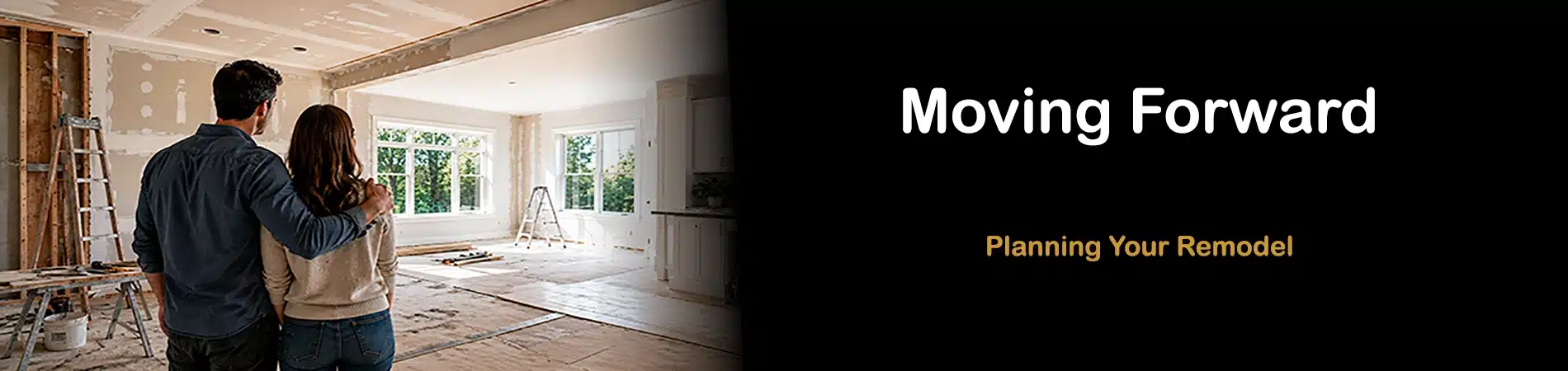
Part 6: Moving Forward
Every remodeling journey eventually reaches a point where learning must give way to action. Homeowners who begin exploring remodeling often start with a single question, only to discover that successful projects involve a network of interconnected decisions. Planning influences budgeting. Budgeting influences scope. Scope influences design possibilities. Design decisions affect construction methods, scheduling, and long-term performance. Throughout the Remodeling Knowledge Center, these relationships have been explored from multiple perspectives, creating a framework for understanding how successful remodeling projects evolve from concept through completion.
The purpose of this final section is not to introduce an entirely new subject. Instead, it serves as a bridge between knowledge and implementation. By this stage of the journey, homeowners have explored planning systems, project delivery methods, remodeling investments, kitchens, bathrooms, additions, specialized remodeling opportunities, professional qualifications, and contractor selection. The challenge now becomes determining how those ideas apply to a specific property, a specific family, and a specific set of goals.
Remodeling projects rarely begin with perfect clarity. Most homeowners start with a collection of ideas, concerns, frustrations, and aspirations that gradually become more refined through research and discussion. The objective is not to have all the answers before taking the next step. The objective is to develop sufficient understanding to move forward thoughtfully, ask better questions, and make decisions within a framework that supports long-term success. Remodeling becomes significantly less intimidating when homeowners understand that progress occurs one decision at a time, not all at once.
The final journey in this Knowledge Center focuses on transforming information into action. It explores how homeowners can organize priorities, establish realistic expectations, prepare for planning discussions, evaluate opportunities, and begin turning ideas into a well-defined remodeling strategy. While every project follows its own path, certain principles consistently contribute to better outcomes, greater confidence, and a more rewarding remodeling experience.
Next Steps: Planning Your Remodel Journey
The most successful remodeling projects begin long before design drawings are created or construction schedules are established. They begin when homeowners take the time to clarify what they hope to accomplish and why those goals matter. While inspiration photographs, product selections, and design ideas often play important roles, effective planning starts by understanding how the home currently functions and identifying the opportunities that would create the greatest improvement in everyday life.
Many homeowners initially focus on visible changes. They imagine a larger kitchen, an updated bathroom, additional living space, improved storage, or a more open floorplan. These ideas provide valuable starting points, but meaningful planning often requires looking deeper. Why does the current space feel inadequate? What activities are difficult to accommodate? Which frustrations occur repeatedly? How might future needs differ from present needs? Questions such as these help transform general ideas into clearly defined objectives that can guide decision-making throughout the project.
Budget planning becomes more productive when it follows goal clarification rather than preceding it. Homeowners who understand their priorities are better positioned to evaluate tradeoffs and allocate resources effectively. Rather than assigning arbitrary numbers to individual ideas, they can focus on investing in improvements that provide the greatest value relative to their objectives. This approach helps create stronger alignment between expectations, scope, and investment levels.
The planning process also benefits from an honest assessment of timing, lifestyle considerations, and project complexity. Some projects can be completed in a single phase, while others may be best approached through a long-term master plan. Certain improvements may be relatively straightforward, while others involve structural modifications, permitting requirements, engineering considerations, or extensive coordination among multiple disciplines. Understanding these factors helps homeowners establish realistic expectations and avoid unnecessary surprises later in the process.
Professional guidance is especially valuable during this stage, as experienced remodeling teams can help homeowners evaluate possibilities that may not be immediately apparent. Design opportunities, construction considerations, budgeting implications, and long-term planning strategies frequently emerge through conversation and collaboration. Homeowners who approach planning as a process of discovery rather than a search for immediate answers often uncover solutions that better support their goals than they originally imagined.
Perhaps the most important lesson within the Remodeling Knowledge Center is that successful remodeling rarely results from a single decision. It emerges from a series of thoughtful decisions that reinforce one another over time. Clear goals support effective planning. Effective planning supports realistic budgeting. Realistic budgeting supports informed design decisions. Informed design decisions contribute to successful construction outcomes. Each step builds upon the previous one, creating momentum that gradually transforms ideas into reality.
The Next Steps: Planning Your Remodel Journey explores this process in greater depth, helping homeowners organize priorities, prepare for planning conversations, evaluate opportunities, and develop a roadmap for moving forward with confidence. Whether the project involves a single room, a whole-home transformation, a home addition, a specialized remodeling challenge, or a long-term master plan, the principles remain remarkably consistent. Successful remodeling begins with understanding, grows through thoughtful planning, and ultimately succeeds when decisions align with a clearly defined vision for the future.
Continue Reading: Next Steps: Planning Your Remodel Journey
The Remodeling Knowledge Center was created to help homeowners navigate one of the most important investments they will make in their homes and lifestyles. Every chapter within this journey reflects a belief that informed homeowners make better decisions, experience fewer surprises, and ultimately achieve outcomes that more closely align with their goals. Remodeling will always involve complexity because homes are complex systems, but complexity becomes far easier to manage when approached with knowledge, preparation, and a clear understanding of how the pieces fit together.
Whether you arrived here while researching a specific project or have moved through the entire journey from beginning to end, the next step remains the same: continue learning, continue asking thoughtful questions, and continue refining your vision for what your home can become. The dedicated Journey pages linked throughout this Knowledge Center provide deeper exploration of every major topic introduced here and serve as the next stage in building the knowledge necessary for a successful remodeling experience.
Every successful remodel begins with understanding. The journey continues with action.
© 2026 Homework Remodels. All rights reserved. No portion of this publication may be reproduced, republished, or distributed without written permission.