
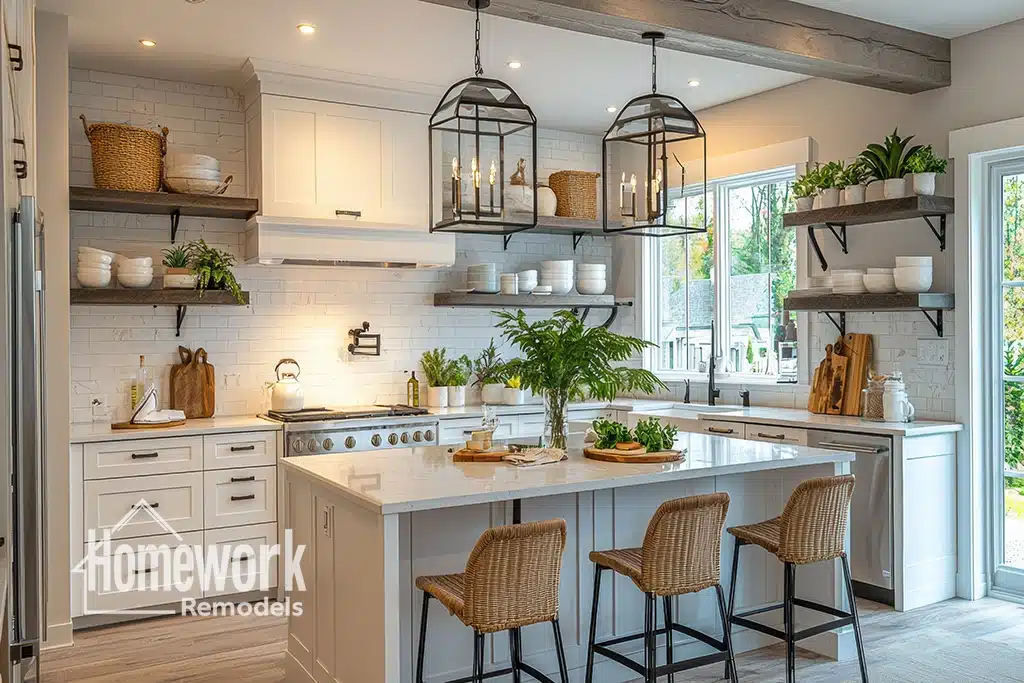
Common Kitchen Layout Mistakes Tempe Homeowners Should Avoid
Kitchen frustrations often stem from decisions made long before the first cabinet was installed. In many Tempe homes, the kitchen looks updated on the surface but still feels awkward to use. Traffic jams form at the island. Prep space feels disconnected. Appliances clash with walkways. These issues rarely come from poor craftsmanship—they come from layout mistakes that quietly undermine daily routines.
If you’re planning a kitchen remodel and want to avoid kitchen layout mistakes in Tempe, the most important step is recognizing how layout decisions shape function long after finishes are chosen.
Why layout problems are so common in Tempe kitchens
Tempe’s housing stock spans decades of construction styles. Many homes were designed for smaller appliances, different cooking habits, and more segmented living spaces. When these kitchens are updated without rethinking layout fundamentals, old problems get wrapped in new materials.
Layout mistakes often happen when homeowners focus on isolated elements—like islands, cabinets, or appliances—without considering how the kitchen works as a system. The result is a space that looks refined but feels inefficient.
Mistake one: prioritizing the island over circulation
Kitchen islands are popular, but they’re also one of the most common sources of layout trouble. Oversized islands or poorly placed ones restrict movement, block appliance doors, and create bottlenecks during everyday use.
In Tempe homes, where kitchens often connect to family rooms or patios, circulation matters even more. An island should support flow, not dominate it. Proper clearances around all sides are essential for comfort and safety.
Mistake two: ignoring how work zones actually function
Kitchens function best when prep, cooking, cleaning, and storage zones are clearly defined and logically connected. A common mistake is scattering these elements without considering how tasks unfold.
For example, placing the refrigerator far from prep space or separating the sink from the dishwasher may look fine on paper but complicate daily routines. Layout decisions should reflect how the kitchen is truly used—not just how it photographs.
Mistake three: underestimating the impact of appliance placement
Appliance placement affects more than aesthetics. Doors that open into walkways, ovens that interrupt prep zones, or dishwashers that block access can turn simple tasks into constant adjustments.
These issues are especially noticeable in Tempe kitchens where entertaining and daily living overlap. Thoughtful placement improves safety, efficiency, and ease of use without adding square footage.
From problem to solution to outcome
A Tempe homeowner may remodel their kitchen only to find that cooking still feels chaotic. The problem isn’t the quality of materials—it’s a layout that forces people to cross paths repeatedly.
The solution involves stepping back and reworking the layout to align work zones, adjust clearances, and simplify movement. When done intentionally, the outcome is a kitchen that feels calm, intuitive, and easy to use—even during busy moments.
This level of clarity is easier to achieve when layout planning happens early and is coordinated with construction realities. Many homeowners gain confidence by understanding how experienced teams approach layout decisions as part of a comprehensive kitchen plan with a kitchen remodeling contractor near you in Tempe.
Mistake four: treating storage as an afterthought
Insufficient or poorly planned storage leads to cluttered countertops and frustration. Upper cabinets that are hard to reach, deep base cabinets without organization, or mismatched storage locations all contribute to inefficiency.
Effective layouts integrate storage where it supports tasks—drawers near prep zones, accessible pantry space, and thoughtful placement of everyday items. Storage should work with the layout, not fight it.
Mistake five: overlooking lighting in layout decisions
Lighting is often planned after the layout is finalized, which limits options. Poorly lit work areas or glare from fixtures can make even a well-designed kitchen uncomfortable.
In Tempe kitchens, where natural light is abundant but inconsistent, lighting should be layered and coordinated with layout decisions. This ensures task areas are well-lit without overwhelming the space.
Mistake six: forcing trends into incompatible spaces
Open shelving, oversized ranges, or statement features may work beautifully in some kitchens—but not all. Forcing trends into layouts that can’t support them often leads to regret.
Layouts should respond to the home’s scale, architecture, and daily use patterns. When trends align naturally with the space, they enhance it. When they don’t, they compromise function.
The value of professional layout planning
Avoiding layout mistakes requires more than inspiration—it requires experience. Professional planning principles emphasize flow, proportion, and usability. Credentials and standards help ensure that layout decisions are grounded in function rather than assumption.
Local experience matters as well. Understanding how Tempe homes are built, how families use their kitchens, and how climate affects materials all inform better layout outcomes.
Seeing layout as part of the whole home
Kitchen layouts influence adjacent spaces, sightlines, and circulation throughout the home. In Tempe homes with open designs, layout decisions ripple outward, affecting living and dining areas as well.
For homeowners considering broader improvements, viewing the kitchen within the context of the entire home can reveal better solutions. The Tempe home remodeling hub provides insight into how kitchen layouts fit into larger renovation strategies.
A smarter way forward
Most kitchen layout mistakes are preventable with early planning and thoughtful coordination. When layout decisions are made intentionally, kitchens feel easier to use, more comfortable to gather in, and better suited to daily life.
If you’re planning a kitchen remodel and want to avoid common pitfalls before decisions are finalized, a calm planning conversation can help clarify options and priorities. You can begin that process through a free remodeling consultation, designed to support confident decisions without pressure.