
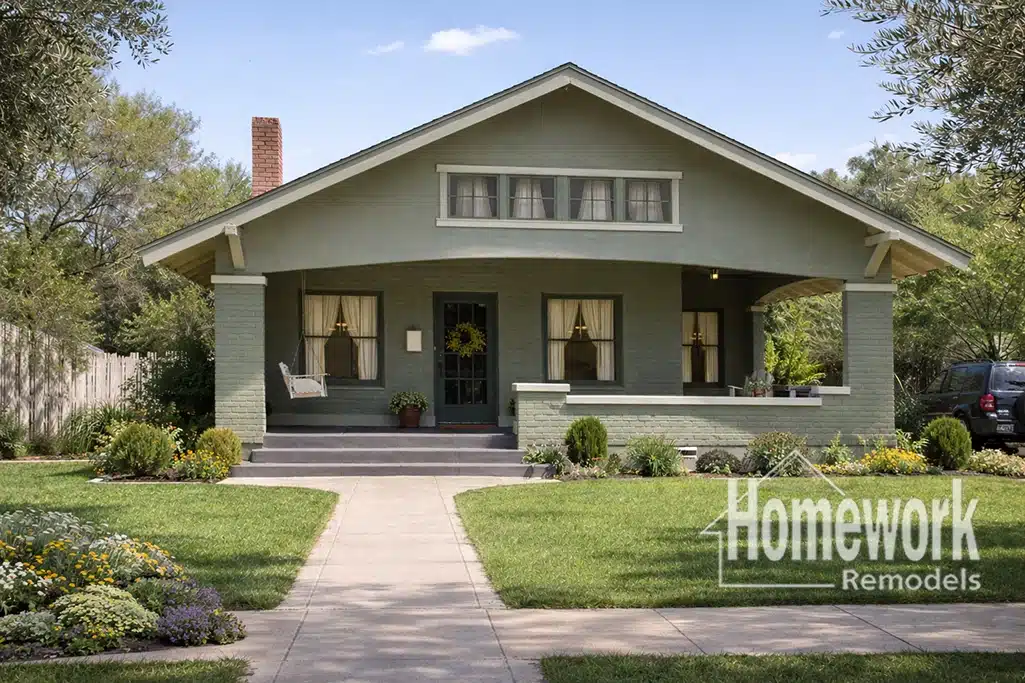
Designing Historic Home Additions That Preserve Encanto-Palmcroft’s Architectural Legacy
Encanto-Palmcroft homes were built at a time when daily life required far less interior space than it does today. Kitchens were compact, bedrooms modest, and storage minimal by modern standards. Yet what these homes lack in square footage, they make up for in proportion, craftsmanship, and architectural grace. For homeowners committed to remaining in this historic neighborhood, additions must be approached with care, restraint, and long-term vision.
In Encanto-Palmcroft, the goal of an addition is not simply to add space. It is to extend the life of the home without diminishing its identity. Poorly conceived expansions can overwhelm original architecture, disrupt scale, and weaken the cohesive streetscape that defines the district. Successful additions begin with a clear hierarchy: the original structure remains visually dominant, while new construction plays a supporting role.
Rear-oriented additions are the most common and most appropriate strategy. By expanding toward the backyard, homeowners preserve the street-facing elevation that gives Encanto-Palmcroft its recognizable character. This approach allows kitchens to be enlarged, family rooms added, or primary suites introduced without altering the historic rhythm of the neighborhood.
Scale and massing are central design considerations. Additions that feel too tall, too wide, or too abrupt often read as separate structures rather than natural extensions. Thoughtful designs rely on stepped transitions, compatible rooflines, and proportional relationships that echo the original home without copying it outright. Continuity is achieved through restraint rather than imitation.
Interior integration is just as critical as exterior appearance. A successful addition should feel like it belongs to the home, not like a destination appended to it. Circulation paths, ceiling heights, and sightlines must be carefully aligned so that movement through old and new spaces feels intuitive. When this integration is overlooked, even well-built additions can feel awkward or disconnected.
Material selection reinforces architectural continuity. Exterior finishes are chosen to complement existing stucco, masonry, or wood detailing. Window proportions and trim depth are considered carefully, as even small deviations can disrupt the visual balance of a historic façade. Inside, flooring transitions, millwork profiles, and wall finishes help new spaces blend seamlessly with the original interior.
Encanto-Palmcroft homeowners tend to approach additions with a long-term mindset. Rather than maximizing square footage, they prioritize flexibility, durability, and livability over decades. Spaces are designed to adapt as needs change, reducing pressure for future expansions and preserving the integrity of the original structure.
Additions also present opportunities to improve overall performance. Electrical upgrades, HVAC improvements, insulation enhancements, and structural reinforcement are often integrated into the project. While largely invisible, these upgrades significantly enhance comfort and efficiency while respecting the home’s historic character.
For homeowners evaluating how historic context shapes addition design in this neighborhood, the Encanto-Palmcroft Home Remodeling hub provides neighborhood-specific insight into planning considerations, preservation priorities, and long-term strategies.
Ultimately, successful additions in Encanto-Palmcroft reflect stewardship. They allow homes to evolve while honoring the architectural legacy that makes the neighborhood enduringly desirable. When executed thoughtfully, an addition strengthens both the home and the district as a whole.
For a deeper look at how additions fit within broader remodeling strategies unique to this historic area, the Encanto-Palmcroft Home Remodeling hub offers comprehensive guidance tailored to the district.