
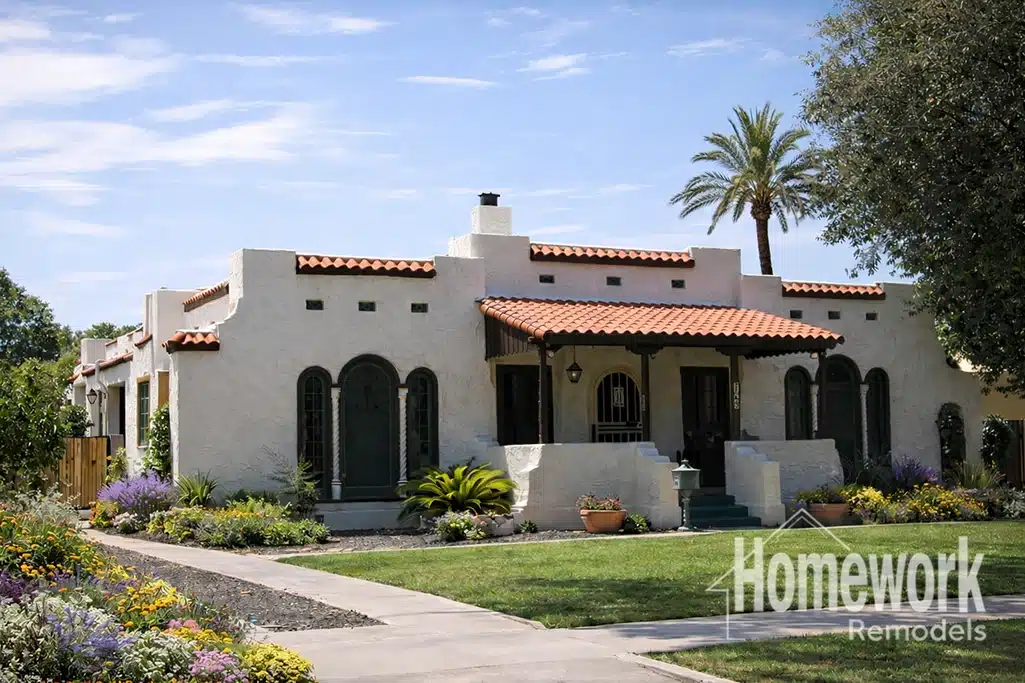
Preserving Original Architectural Details During Encanto-Palmcroft Remodels
Encanto-Palmcroft homes are valued not only for their location and scale, but for the architectural details that give them lasting character. Built primarily in the 1920s and 1930s, these residences reflect an era when craftsmanship, proportion, and material quality were central to residential design. Handcrafted plaster walls, original hardwood flooring, decorative millwork, and thoughtfully proportioned openings were not decorative afterthoughts—they were fundamental to how these homes were conceived and built.
In the Encanto-Palmcroft Historic District, these details contribute as much to a home’s identity as its overall style. When remodeling, preserving original architectural elements is often just as important as improving functionality. In many cases, it is the careful retention of these features that allows a remodel to feel authentic rather than intrusive.
Successful remodels in Encanto-Palmcroft begin with recognition. Original details are not obstacles to modernization—they are assets worth protecting. Before design decisions are made, homeowners and designers often take a thoughtful inventory of what remains: door and window casings, baseboards, ceiling profiles, fireplaces, built-in cabinetry, and original flooring. Understanding what exists helps guide decisions about what should be preserved, restored, or carefully integrated into new work.
This early assessment phase is critical. It establishes priorities and prevents irreversible decisions made too quickly. Once original details are removed, they are rarely replaced with anything of equal quality or authenticity. Preservation-minded remodeling begins with understanding what gives the home its soul.
One of the most common challenges is balancing layout improvements with preservation. Modern living often requires improved flow, updated kitchens, and reconfigured bathrooms. These changes can be achieved without stripping a home of its identity when alterations are targeted rather than wholesale. Preserving original openings, maintaining room proportions, and retaining decorative elements helps ensure that new layouts still feel historically grounded.
Rather than removing walls indiscriminately, many successful projects focus on refining connections. Widened openings, aligned transitions, or improved circulation paths can dramatically enhance usability while preserving the rhythm of the original floor plan. This approach respects the logic of historic design while adapting it to contemporary needs.
Plaster walls are a defining feature of many Encanto-Palmcroft homes. While repairing plaster can be more labor-intensive than replacing it with drywall, preservation often yields superior results. Original plaster contributes to acoustic comfort, visual depth, and historic authenticity. Its subtle texture and thickness create a quality that modern materials struggle to replicate.
When walls must be opened for mechanical upgrades, careful patching allows original surfaces to remain intact. Skilled plaster repair can seamlessly blend old and new, preserving the integrity of the interior while accommodating modern systems. In historic homes, these behind-the-scenes efforts often make the difference between a remodel that feels cohesive and one that feels compromised.
Woodwork and millwork also deserve special attention. Original doors, trim, and built-ins were often custom crafted and far exceed the quality of modern mass-produced replacements. Their proportions, profiles, and joinery reflect a level of craftsmanship that is increasingly rare. Thoughtful remodels retain these elements wherever possible, supplementing them with new work that matches scale and proportion rather than competing stylistically.
When new millwork is required—such as in an addition or expanded kitchen—successful designs take cues from existing details. Replicating depth, shadow lines, and proportions allows new elements to feel like natural extensions of the original home rather than obvious insertions.
Flooring presents another important preservation opportunity. Original hardwood floors can often be refinished rather than replaced, maintaining continuity throughout the home. These floors carry a visual warmth and patina that cannot be recreated. Where new flooring is introduced—such as in an addition or reconfigured kitchen—selecting compatible species, plank widths, and layouts helps old and new spaces feel cohesive.
For homeowners navigating how preservation fits within larger remodeling goals, the Encanto-Palmcroft Home Remodeling hub provides neighborhood-specific guidance on balancing modernization with architectural stewardship, including practical considerations unique to this historic district.
Lighting and hardware updates are often opportunities to subtly enhance historic details. Thoughtfully chosen fixtures can highlight ceiling profiles, accent original millwork, and improve usability without feeling out of place. Rather than competing with historic features, lighting is used to support them—bringing attention to craftsmanship and proportion.
Hardware selection follows a similar philosophy. Door handles, hinges, and plumbing fixtures that reference period-appropriate styles help maintain continuity while offering modern performance. These small decisions collectively shape how authentic a remodel feels.
Preservation also supports long-term value. Homes that retain authentic architectural details tend to age more gracefully and remain desirable over time. Buyers drawn to Encanto-Palmcroft are often seeking character, not novelty. Remodeling decisions that respect original craftsmanship help protect both individual property value and the overall integrity of the neighborhood.
At its best, remodeling in Encanto-Palmcroft is an act of stewardship. Homeowners are not simply updating a house—they are caring for a piece of architectural history. By preserving original details while thoughtfully introducing modern improvements, these historic homes continue to serve contemporary life without losing the qualities that make them enduringly special.
For a broader look at how preservation aligns with remodeling strategies in this district, the Encanto-Palmcroft Home Remodeling hub offers a comprehensive overview tailored specifically to historic homes.