
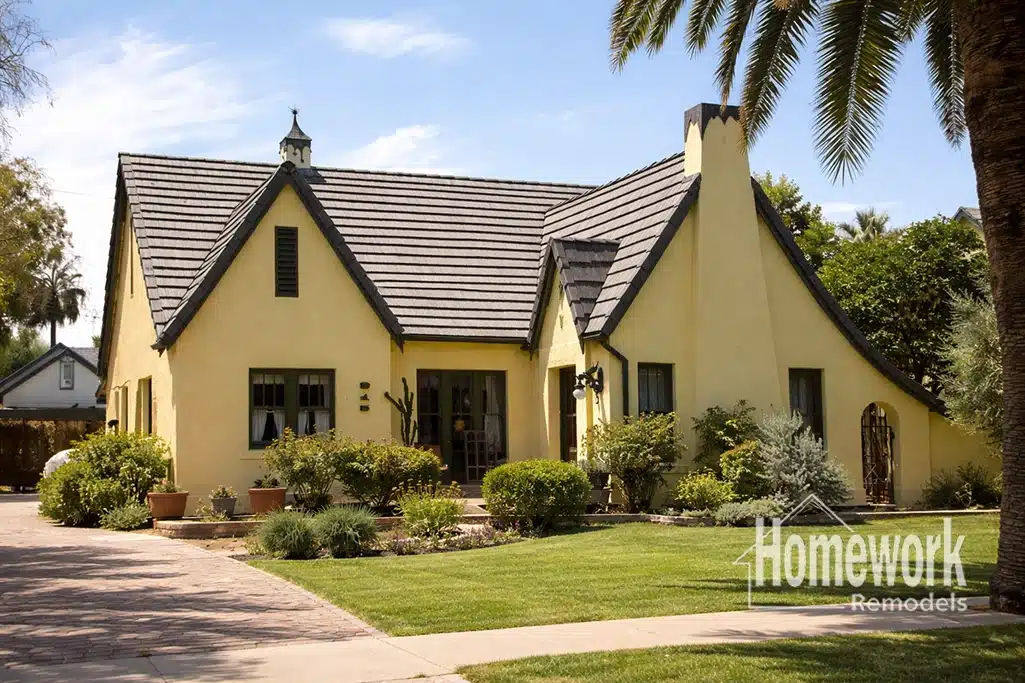
Willo Historic District Whole-Home Planning: Remodeling with Clarity in a Neighborhood That Rewards Thoughtfulness
The Willo Historic District is one of Phoenix’s most recognizable neighborhoods, defined by its tree-lined streets, early 20th-century architecture, and strong sense of community. Tudor Revivals, Spanish Colonials, and Craftsman-style homes give Willo a cohesive identity that homeowners value deeply. Yet these same qualities make remodeling more complex than it first appears.
In Willo, whole-home planning is not a luxury—it is a necessity. The compact footprints, interconnected systems, and preservation considerations common to historic homes mean that isolated upgrades often create unintended consequences. Homeowners who take a thoughtful, comprehensive approach are far more likely to achieve lasting results that respect both the home and the neighborhood.
Why Whole-Home Planning Matters More in Willo
Many Willo homes were built between the 1920s and 1940s, long before modern expectations for kitchens, bathrooms, electrical capacity, or HVAC systems. Over the decades, piecemeal updates may have addressed immediate needs, but they often left behind a patchwork of systems with limited coordination.
Whole-home planning allows homeowners to step back and evaluate how the house functions as a single system. Plumbing routes, electrical loads, structural walls, and circulation patterns are all interconnected. Addressing one area without understanding the others can restrict future options or require expensive rework later.
The decision tension many Willo homeowners face is whether to renovate incrementally or commit to a more comprehensive plan upfront. While phased remodeling can work, it must be guided by a long-term vision to avoid boxing the home into inefficient layouts or outdated infrastructure.
Structural Density in Smaller Historic Homes
One of the defining characteristics of Willo homes is their modest scale. Unlike larger estate neighborhoods, Willo properties often have compact floor plans with limited redundancy. Structural walls are frequent and closely spaced, reflecting building practices of the era.
This density affects everything from layout changes to mechanical upgrades. Removing or relocating walls requires careful structural analysis, and even small changes can have ripple effects throughout the home. Ceiling heights, window placements, and original built-ins further influence what is feasible.
Understanding these constraints early allows homeowners to prioritize wisely. Instead of chasing every possible improvement, whole-home planning helps identify the changes that will have the greatest impact on livability.
For homeowners considering layout changes, exploring options for removing load-bearing walls in Phoenix’s older homes early in the process helps set realistic expectations.
Kitchens, Bathrooms, and the Importance of Sequence
In many Willo homes, kitchens and bathrooms are clustered near shared plumbing walls. Remodeling one space often affects the other, whether intentionally or not. A bathroom upgrade may require plumbing changes that influence kitchen planning, and vice versa.
Whole-home planning establishes the correct sequence of work. Infrastructure upgrades—such as plumbing replacement or electrical panel expansion—are addressed before finishes and cabinetry. This prevents newly renovated spaces from being disrupted later.
The decision tension here is subtle but significant: invest in infrastructure now or defer it to preserve budget. In historic homes, deferring infrastructure often leads to higher costs and limited flexibility down the road.
Learning how whole-home remodeling in Phoenix is approached from a systems perspective can help homeowners understand why sequence matters so much.
Electrical and Mechanical Realities
Original electrical systems in Willo homes were not designed for today’s appliance loads, lighting demands, or technology. Even homes that have been partially updated may lack the capacity needed for modern living.
Whole-home planning evaluates electrical, HVAC, and plumbing systems together. This ensures that upgrades are coordinated, code-compliant, and future-ready. It also allows homeowners to plan for features they may not install immediately, such as additional lighting, home offices, or electric vehicle charging.
Without this level of foresight, homeowners risk hitting limits that constrain future improvements or require invasive work later.
Preserving Character While Improving Flow
Willo’s charm lies in its architectural details—arched doorways, original windows, plaster walls, and built-in cabinetry. Whole-home planning helps determine which elements should be preserved, which can be adapted, and how new work can complement existing character.
Rather than defaulting to open-concept trends, many successful Willo remodels focus on improving flow through subtle adjustments. Widened openings, reoriented circulation paths, and better use of underutilized space can dramatically enhance livability without erasing historic integrity.
The key decision tension is openness versus authenticity. Whole-home planning allows homeowners to strike a balance that supports modern life while honoring the home’s origins.
Phased Remodeling Done the Right Way
Not every homeowner is ready—or able—to remodel their entire home at once. In Willo, phased remodeling can work well when guided by a comprehensive plan.
A whole-home plan acts as a roadmap. Even if construction occurs over several years, each phase supports the next. This approach prevents dead ends, maintains design consistency, and protects long-term value.
Homeowners who skip this planning step often discover too late that earlier decisions limit later options. In historic homes, those limitations can be costly or irreversible.
Design-Build as a Planning Advantage
Whole-home planning in Willo benefits from an integrated design-build approach. Design, engineering, budgeting, and construction considerations are aligned from the beginning, reducing surprises and conflicts.
This is especially important in historic neighborhoods, where unforeseen conditions are common. When the same team is responsible for planning and execution, adjustments can be made efficiently without derailing the project.
Understanding how a design-build remodeling approach works helps homeowners appreciate why it is so well-suited to historic home planning.
The Core Decision Tension: Incremental vs. Comprehensive
At the heart of whole-home planning in Willo is a fundamental choice. Should improvements be tackled incrementally, or should the home be evaluated and planned as a complete system?
There is no single correct answer, but there is a correct process. Comprehensive planning—regardless of construction timing—gives homeowners clarity. It reduces risk, protects character, and ensures that each improvement moves the home closer to its full potential.
In a neighborhood as thoughtfully preserved as Willo, that clarity is invaluable.
A Note for Homeowners…
Many of the questions raised in this article—around planning, cost, timing, and long-term outcomes—are part of a broader remodeling system that most homeowners aren’t shown upfront.
Our Core Guides were created to explain why remodeling often feels unpredictable and what actually brings clarity and stability before construction begins.
Ready to Take the Next Step?
If you are considering a remodel in the Willo Historic District, the most important first step is understanding how your home functions as a whole. With thoughtful planning and neighborhood-specific expertise, you can modernize your home without compromising what makes it special.
We invite you to schedule a free remodeling consultation to discuss your goals and explore a clear, well-planned path forward.