
The Best Casita Floor Plans for Desert Living
Introduction: Why Floor Plans Matter in Desert Casitas
In Scottsdale, a casita isn’t just an extra room—it’s a lifestyle space shaped by heat, sun, and outdoor living. The right floor plan determines how comfortable the space feels year-round, how efficiently it uses square footage, and how well it integrates with the main home and landscape. Desert living places unique demands on secondary dwellings, from managing solar exposure to encouraging airflow and shaded transitions. A well-designed casita floor plan responds to these realities, creating a space that feels intentional, livable, and perfectly suited to the Arizona climate.
Understanding Desert Living Constraints and Opportunities
Designing for the desert starts with understanding both limitations and advantages. High summer temperatures, intense sun, and seasonal winds influence how rooms are arranged and oriented. At the same time, Scottsdale’s climate allows for year-round outdoor living when shade and ventilation are thoughtfully planned. Casita floor plans that account for these factors can reduce energy loads, improve comfort, and make even compact spaces feel generous. The desert rewards smart design—where walls, openings, and circulation work with the environment instead of fighting it.
Popular Casita Floor Plan Types in Scottsdale
Scottsdale homeowners tend to gravitate toward a few proven casita layouts. One-bedroom plans with defined living zones are popular for long-term guests or family members. Studio-style casitas appeal to those seeking flexibility for short stays, workspaces, or creative studios. Courtyard-oriented plans are also common, allowing the casita to open toward a shaded outdoor room rather than direct sun. Each plan type serves different needs, but the best layouts share a focus on simplicity, efficient circulation, and connection to outdoor spaces.
One-Bedroom Casitas for Guests and Family
One-bedroom casitas offer privacy and comfort without unnecessary complexity. These floor plans typically include a compact living area, bathroom, and sleeping space arranged to maximize separation between public and private zones. In desert settings, bedrooms are often positioned away from west-facing sun to improve comfort. Thoughtful placement of windows and doors allows natural light without excessive heat gain. For aging parents or extended family, one-bedroom casitas provide independence while remaining close to the main home.
Studio Casitas with Flexible Living Space
Studio casitas are ideal when versatility is the priority. An open floor plan allows the space to adapt—from guest suite to home office or wellness retreat. In desert environments, studios benefit from clear zoning through ceiling treatments, built-ins, or furniture placement rather than walls. This keeps airflow unobstructed and maintains a sense of openness. When designed well, studio casitas feel intentional rather than temporary, offering flexibility without sacrificing comfort or aesthetics.
Indoor-Outdoor Floor Plans That Embrace the Climate
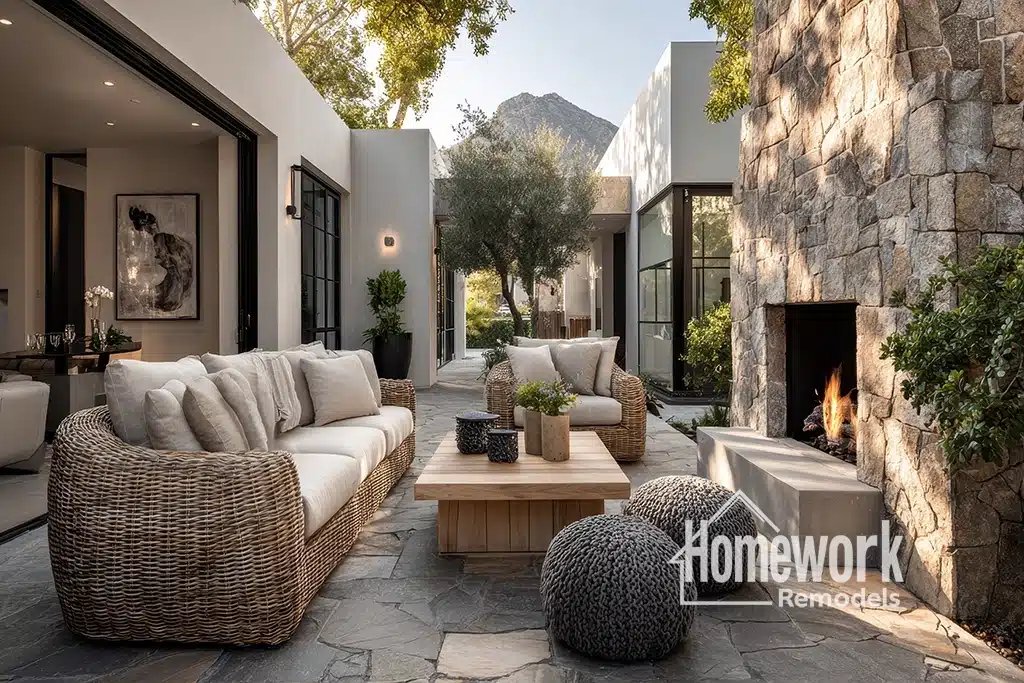
Indoor-outdoor flow is one of the greatest advantages of desert living. Casita floor plans that incorporate covered patios, courtyards, or shaded terraces extend usable space without increasing interior square footage. Large openings, sliding doors, and shaded transitions allow occupants to enjoy fresh air during cooler months while retreating indoors during peak heat. These layouts blur the line between inside and out, making the casita feel larger and more connected to the property as a whole.
Privacy, Shade, and Orientation Considerations
Successful casita floor plans carefully balance privacy with openness. Orientation plays a critical role—placing primary windows and doors to avoid harsh afternoon sun while capturing morning light. Shade structures, overhangs, and landscape elements help control heat and glare. Privacy can be achieved through thoughtful setbacks, courtyard walls, or strategic window placement rather than excessive enclosure. These considerations ensure the casita feels comfortable and secluded without feeling isolated.
How Design-Build Improves Casita Floor Plan Outcomes
Casita floor plans are most successful when design, engineering, and construction are aligned from the start. A unified design-build remodeling process allows floor plans to evolve alongside budget, site constraints, and permitting realities. This approach reduces redesigns and ensures the final layout performs as intended in real-world conditions. For Scottsdale homeowners, design-build brings clarity and confidence to what can otherwise be a complex planning process.
Related Casita and Addition Services in Scottsdale
Casita projects often connect to broader remodeling goals. Homeowners exploring floor plans may also review Scottsdale casitas & ADU additions, work with a Scottsdale guest house contractor, or integrate changes into Scottsdale whole-home remodeling plans. Understanding the full range of Scottsdale home remodeling services helps ensure the casita fits seamlessly into the long-term vision for the property.
Conclusion: Designing a Casita That Works Year-Round
The best casita floor plans respond to the desert environment with intention and care. By prioritizing orientation, airflow, and indoor-outdoor connections, Scottsdale homeowners can create spaces that remain comfortable and functional throughout the year. Thoughtful planning transforms a simple addition into a meaningful extension of desert living.
A Note for Homeowners
Many of the questions raised in this article—around planning, cost, timing, and long-term outcomes—are part of a broader remodeling system that most homeowners aren’t shown upfront.
Our Core Guides were created to explain why remodeling often feels unpredictable and what actually brings clarity and stability before construction begins.
Ready to take the Next Step?
Schedule your free consultation to explore casita floor plans designed for comfort, privacy, and desert living in Scottsdale.