
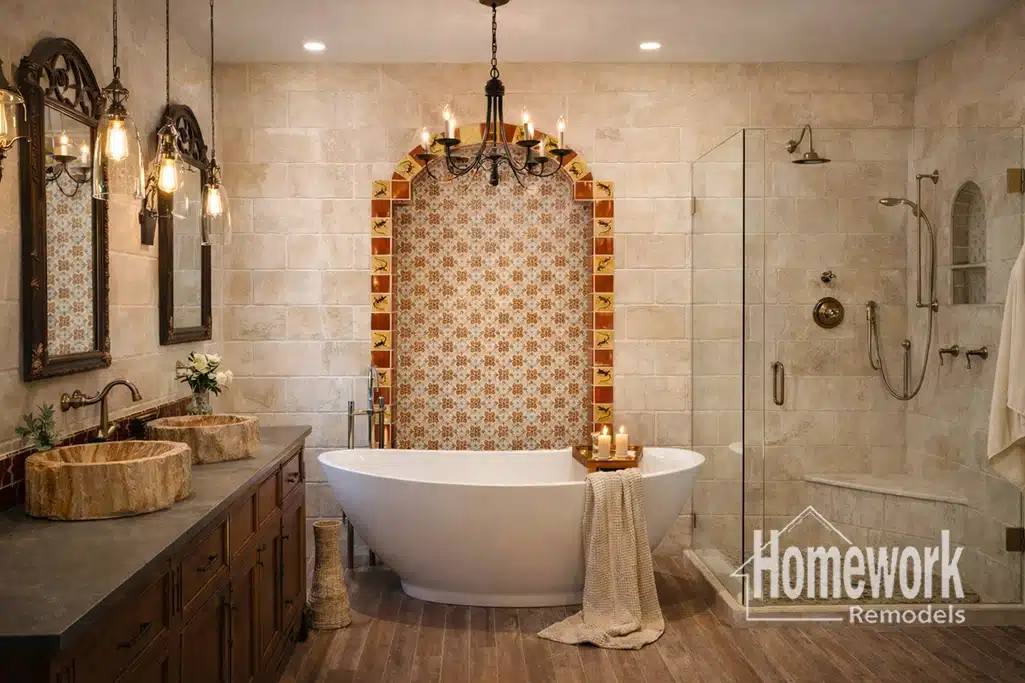
Willo Bathroom Expansions: Creating Comfort Inside Narrow Historic Floor Plans
Bathrooms in Willo Historic District homes often feel like an afterthought—tight, dated, and disconnected from modern expectations of comfort. Built primarily in the 1920s and 1930s, these homes were designed with efficiency in mind, not spa-like retreats or generous storage. As a result, many Willo homeowners eventually confront the same challenge: how do you expand a bathroom when the entire floor plan is narrow and carefully balanced?
In Willo, adding bathroom comfort is rarely about finding extra space. It’s about deciding where that space should come from—and what tradeoffs are worth making.
Why Willo Bathrooms Feel Especially Constrained
Historic Willo homes often have long, narrow footprints with central hallways. Bathrooms were typically tucked into interior corners, sized just large enough to serve their purpose.
Over time, expectations changed. Larger vanities, walk-in showers, and better storage became the norm—but the footprint stayed the same. This mismatch is what homeowners feel most acutely today.
The core decision tension is modern comfort versus spatial disruption.
Expanding a Bathroom Almost Always Affects Adjacent Rooms
Unlike newer homes, Willo floor plans rarely include unused square footage. Expanding a bathroom means borrowing space from somewhere else—often a bedroom, hallway, or closet.
Each option has consequences. Losing bedroom square footage may affect furniture placement. Reducing hallway width can alter circulation. Stealing closet space may solve one problem while creating another.
Thoughtful evaluation prevents cascading compromises.
Reallocation Often Beats Pure Expansion
In many Willo homes, bathrooms improve more through reallocation than enlargement. Shifting fixtures, rotating layouts, or consolidating plumbing walls can dramatically increase usability without increasing footprint.
Reallocation preserves the overall balance of the home while delivering noticeable functional gains.
The decision tension is visible change versus intelligent refinement.
Plumbing Paths Limit What’s Possible
Bathrooms depend on gravity and venting. In narrow historic homes, plumbing stacks and vent paths are often fixed in place.
Moving fixtures far from existing plumbing can increase cost and complexity quickly. Successful expansions respect these paths rather than fighting them.
Understanding plumbing constraints early avoids designs that look good on paper but fail in execution.
Bedrooms Absorb the Most Impact
When bathrooms expand, bedrooms usually pay the price. The question becomes how much bedroom space can be sacrificed without affecting livability.
Sometimes losing a few feet delivers a bathroom that feels dramatically better. Other times, the tradeoff isn’t worth it.
The decision tension is private retreat versus daily function.
Hallways Are Not Always Spare Space
Narrow hallways may seem like easy targets for expansion, but reducing them can make homes feel cramped and awkward.
Preserving circulation width maintains comfort and accessibility, especially for long-term living.
Light and Ventilation Matter as Much as Size
Small bathrooms often feel worse because they lack light and ventilation. Strategic window adjustments or borrowed light solutions can improve comfort without expanding walls.
In historic homes, these changes must be handled carefully to preserve exterior character.
Structural Walls Add Another Layer of Complexity
Some bathroom walls carry structural loads. Altering them may require beams or framing changes that affect ceilings and adjacent rooms.
Before committing to expansion, homeowners should understand what is involved in removing load-bearing walls in Phoenix historic homes. Structural clarity prevents surprises mid-project.
Cost Predictability Depends on Scope Discipline
Bathroom expansions in narrow homes can escalate quickly if scope creeps. Clear priorities—shower size, vanity space, storage—help keep decisions focused.
Knowing what matters most prevents overbuilding in the wrong places.
Whole-Home Perspective Prevents Imbalance
Bathrooms do not exist in isolation. Expanding one affects how the rest of the house feels and functions.
Homeowners who understand how whole-home remodeling in Phoenix evaluates space tradeoffs are better equipped to balance comfort and proportion.
Why Design-Build Is Essential in Willo Homes
Design-build remodeling allows layout, plumbing, structure, and cost to be evaluated together before walls move.
In narrow historic homes, this integration is critical. It allows homeowners to explore multiple options and choose the one that delivers the most comfort with the least disruption.
Learning how the design-build remodeling process works helps Willo homeowners avoid costly missteps.
The Core Decision Tension: Bigger Bathroom or Better Home
In Willo, the best bathroom remodels don’t simply chase size. They respect the narrow footprint and improve function without upsetting the home’s balance.
Better bathrooms should enhance daily life—not dominate the floor plan.
Let’s Expand Bathroom Comfort Without Compromising Your Home
If you’re considering a bathroom expansion in a Willo Historic District home, careful planning is key. With neighborhood-specific experience and an integrated design-build approach, it’s possible to improve comfort while preserving the character and flow of your home.
We invite you to schedule a free remodeling consultation to explore bathroom solutions tailored to your floor plan.