
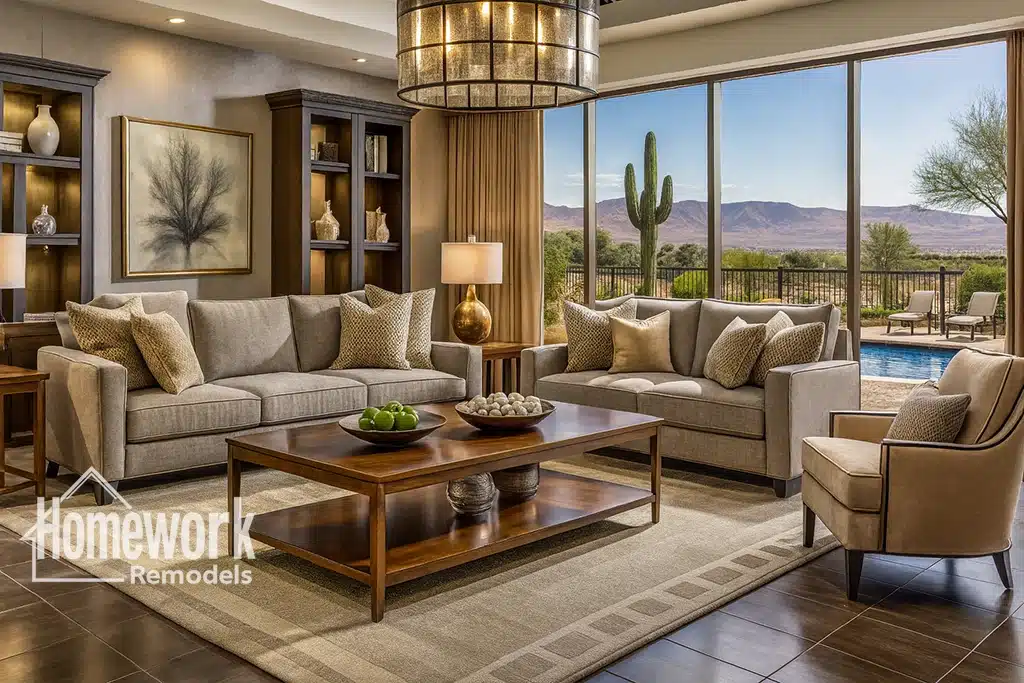
Creating Seamless Indoor-Outdoor Flow in Desert Homes
Indoor-outdoor living is often treated as a design feature—large doors, expansive patios, and uninterrupted sightlines. In Scottsdale’s desert climate, however, creating true indoor-outdoor flow is less about visual drama and more about comfort, control, and year-round usability.
Homes that succeed at indoor-outdoor living don’t just look connected. They function as a unified environment, even when temperatures swing dramatically.
Why Desert Homes Require a Different Approach
Desert conditions introduce challenges that coastal or temperate climates don’t face. Extreme heat, intense sunlight, dust, and seasonal wind all affect how openings perform.
In many Scottsdale homes, indoor-outdoor connections were added as afterthoughts—sliding doors cut into walls without sufficient shade, structural planning, or HVAC coordination. The result is often a space that looks impressive but is rarely used.
True flow requires intentional planning from the inside out.
The Decision Tension: Openness vs. Environmental Control
Homeowners often want large openings to erase the boundary between inside and outside. The tradeoff is environmental control. Bigger openings can increase heat gain, reduce energy efficiency, and complicate comfort.
The key decision is not whether to connect indoors and outdoors, but how much openness is appropriate for daily use. Smaller, well-placed openings paired with shaded transition zones often outperform expansive door systems that are uncomfortable for much of the year.
Structural Planning Comes First
Creating seamless flow usually involves structural changes—widening openings, removing walls, or modifying rooflines. In Scottsdale homes, roof loads often rely on exterior walls that appear non-structural.
Before any opening is enlarged, understanding what the wall supports is critical. Early evaluation through removing load-bearing walls safely prevents design concepts that can’t be executed responsibly.
Structural planning also affects how door systems integrate with ceilings, beams, and exterior overhangs.
Transition Zones Matter More Than Door Size
One of the most overlooked aspects of indoor-outdoor flow is the transition zone—the space where inside becomes outside. Covered patios, deep overhangs, pergolas, and shaded courtyards moderate temperature and light.
These zones extend the usable season and reduce the shock of moving between environments. Without them, even the largest openings feel abrupt and underutilized.
In successful desert homes, transition zones are treated as rooms, not leftovers.
Flooring and Level Changes Influence Continuity
Seamless flow is disrupted when floor heights don’t align or materials clash. Flush thresholds improve accessibility and visual continuity, but they require precise planning.
Material selection also matters. Flooring that performs well indoors may not tolerate exterior exposure. Matching tones and textures—rather than identical materials—often produces better long-term results.
These decisions are typically addressed early in whole-home remodeling in Scottsdale, where indoor and outdoor spaces are planned together.
Shading, Orientation, and Sun Control
Sun exposure varies dramatically by orientation. South- and west-facing openings require different strategies than north-facing ones. Fixed overhangs, adjustable screens, and landscape elements all play a role.
Effective sun control reduces reliance on mechanical systems and improves comfort. It also protects interior finishes from UV damage—an important consideration in desert environments.
Designing openings without considering sun paths often leads to spaces that are visually appealing but impractical.
Mechanical Coordination Is Non-Negotiable
Large openings change how air moves through a home. HVAC systems must be evaluated to ensure they can handle increased volume and infiltration.
In some cases, zoning adjustments or equipment upgrades are necessary to maintain comfort. Ceiling fans, operable windows, and natural ventilation strategies can supplement mechanical systems when planned intentionally.
Ignoring these factors often results in hot spots, drafts, or underperforming systems.
When Smaller Connections Work Better
Not every home benefits from fully retractable walls. In many cases, strategically placed French doors or multi-panel sliders provide flexibility without sacrificing control.
These solutions maintain enclosure when needed while still supporting visual and physical connection. They also tend to integrate more easily with existing architecture.
The right solution is the one that gets used—not the one that looks most dramatic.
Designing for Year-Round Enjoyment
Indoor-outdoor flow should support daily life, not just special occasions. Spaces that require perfect weather to function often go unused.
By balancing openness with shade, structure, and mechanical planning, Scottsdale homeowners can create environments that feel connected even when doors are closed.
Flow That Feels Natural, Not Forced
Seamless indoor-outdoor living isn’t about erasing boundaries—it’s about managing them gracefully. When design decisions respond to climate, structure, and lifestyle, the connection feels effortless.
Let’s Plan Indoor-Outdoor Flow That Works in Real Life
If you’re considering improving indoor-outdoor flow in your Scottsdale home, early planning can help identify solutions that balance openness with comfort and long-term performance. To explore options tailored to your home and site conditions, you can schedule a free consultation with our design-build team and move forward with clarity.