
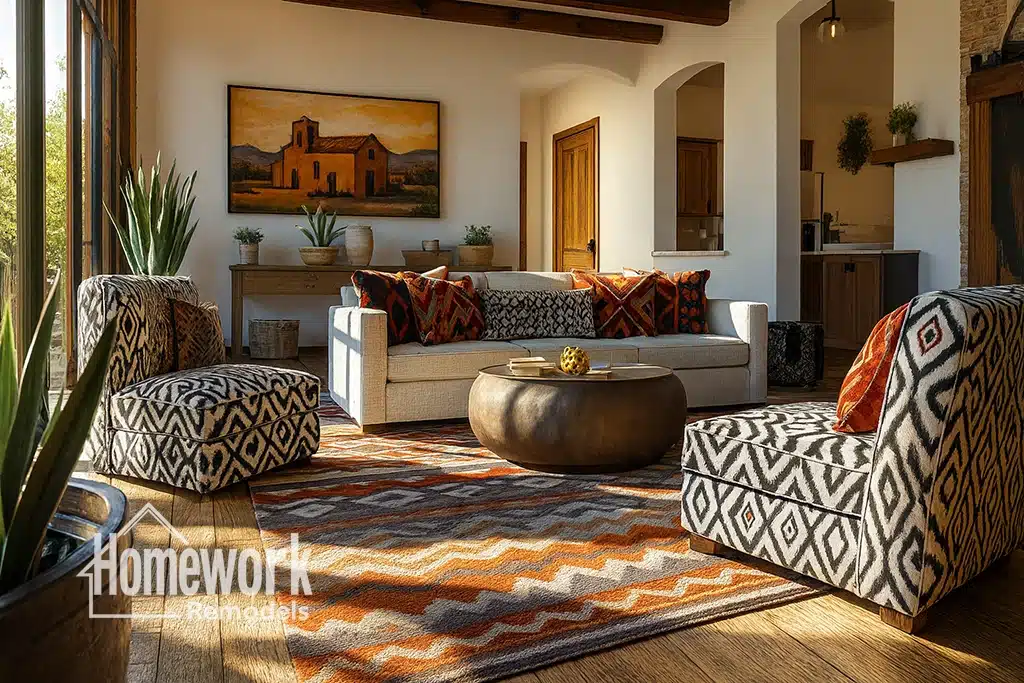
How to Redesign for Comfort and Flexibility
Comfort and flexibility are often discussed as abstract goals, but for many homeowners they are the real reasons remodeling becomes necessary. In Tempe, where homes must adapt to shifting family needs, work-from-home realities, and long-term livability in a desert climate, redesigning for comfort and flexibility is less about style and more about how a house supports daily life over time.
A home that looks beautiful but feels rigid will eventually fall short. Comfort and flexibility ensure that a remodel continues to serve you—not just today, but years from now.
Comfort Starts With How a Home Responds to Daily Life
Comfort is often mistaken for softness or luxury finishes. In reality, comfort is functional.
Homeowners tend to feel most comfortable when:
- Spaces are intuitive to move through
- Temperatures are consistent across rooms
- Noise is controlled
- Storage supports daily routines
If a home fights your habits, no amount of finish upgrades will fix that tension.
Flexibility Is About Options, Not Square Footage
Flexible homes don’t rely on excess space. They rely on adaptable space.
Flexibility means:
- Rooms that serve more than one purpose
- Layouts that evolve without major construction
- Furniture arrangements that don’t feel forced
A flexible home allows change without disruption.
Layout Decisions Drive Both Comfort and Flexibility
Many Tempe homes were built with rigid room definitions.
Redesign often begins by:
- Improving circulation paths
- Reducing bottlenecks
- Aligning spaces that share daily use
When layout supports movement, comfort improves automatically—and flexibility follows.
Open Plans Help—but Only When Balanced
Open-concept layouts are often chosen to improve comfort and adaptability.
However, openness alone does not guarantee flexibility. Poorly planned open layouts can:
- Increase noise
- Reduce privacy
- Make furniture placement difficult
Balanced designs introduce openness where it improves function while preserving zones for retreat.
Structural Planning Expands Possibilities
Flexibility increases when structure is planned thoughtfully.
Removing walls—or adjusting them—can improve flow, but only when structure is respected. In some homes, this includes work like removing load-bearing walls safely in Tempe homes, which must be evaluated early to avoid limiting future options.
Structure should enable change, not restrict it.
Comfort Depends on Environmental Control
Temperature control is a major factor in comfort, especially in desert climates.
Redesigning for comfort often includes:
- HVAC zoning
- Improved insulation
- Window and shading strategies
When environmental systems are aligned with layout, homes feel calmer and more livable.
Flexible Rooms Outperform Dedicated Rooms
Single-purpose rooms are often underused.
Flexible spaces might serve as:
- Guest rooms and offices
- Workout areas and storage
- Quiet retreats and gathering spaces
Designing for flexibility means resisting rigid labels and focusing on proportions, access, and light.
Storage Is a Comfort Feature
Clutter undermines comfort.
Redesigning for flexibility often reveals opportunities to:
- Add built-in storage
- Improve closet layouts
- Reclaim underused space
Storage that’s integrated—not added later—supports both comfort and adaptability.
Privacy Can Coexist With Openness
Comfort includes the ability to withdraw.
Flexible homes provide:
- Visual separation when needed
- Acoustic buffering
- Personal space within shared layouts
This balance allows households to function together without constant compromise.
Furniture Planning Should Influence Design
Comfortable, flexible homes anticipate how furniture will be used.
Early planning considers:
- Circulation around seating
- Multiple layout options
- Scale relationships
Designing around real furniture—not abstract floor plans—produces better results.
Lighting Plays a Role in Adaptability
Lighting helps spaces shift roles.
Flexible lighting includes:
- Dimmers
- Multiple circuits
- Task-specific fixtures
Lighting allows rooms to adapt from day to evening, work to relaxation, or quiet to social.
Indoor-Outdoor Connection Adds Flexibility
In Tempe, outdoor spaces can function as extensions of the home.
When connected intentionally, patios and yards:
- Expand usable space
- Provide alternative work or gathering areas
- Reduce pressure on interior layouts
Outdoor access increases both comfort and flexibility.
Understanding how redesign choices fit within the broader Tempe home remodeling context helps homeowners prioritize changes that last.
Whole-Home Thinking Prevents Isolated Fixes
Comfort and flexibility suffer when changes are isolated.
A coordinated whole-home remodeling strategy in Tempe ensures that layout, systems, and finishes support one another—rather than competing.
Design-Build Supports Long-Term Comfort
Flexibility requires foresight.
The design-build remodeling process keeps comfort goals aligned with structural realities, budget decisions, and construction sequencing—reducing regret later.
Comfortable Homes Feel Easy to Live In
The most successful remodels don’t announce themselves.
They feel natural. Movement is effortless. Spaces adapt without friction.
Comfort and flexibility aren’t added at the end—they’re designed from the beginning.
Let’s Redesign Your Home for the Way You Live
If you’re considering a whole-home redesign in Tempe and want comfort and flexibility that lasts, planning makes all the difference. You can schedule a free consultation with our design-build team to explore options with clarity and confidence.