
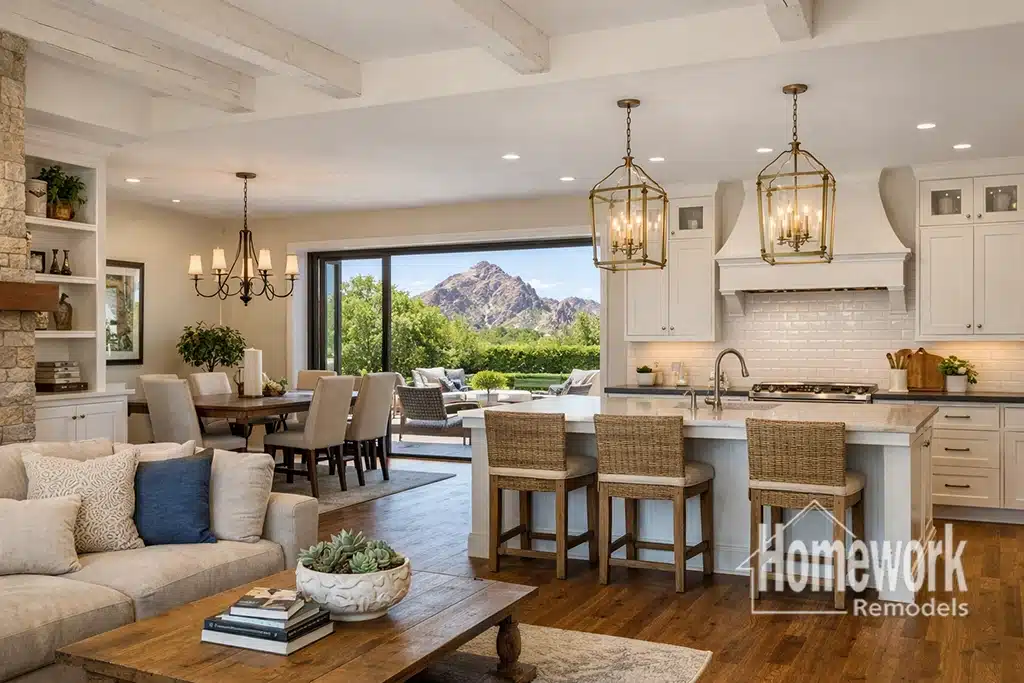
Arcadia Kitchens: Designing Islands That Don’t Break Ranch Circulation
Kitchen islands are one of the most requested features in Arcadia homes—and also one of the easiest ways to undermine how a ranch house actually works. Arcadia’s classic ranch layouts favor long, horizontal circulation paths, strong connections to outdoor living, and kitchens that act as connectors rather than destinations. When islands are oversized, mispositioned, or overloaded with functions, they quietly interrupt those patterns.
In Arcadia, the best kitchen islands don’t dominate the room. They support movement.
Why Ranch Circulation Is Different in Arcadia
Ranch homes in Arcadia were designed for flow. Hallways are minimal, rooms connect laterally, and kitchens often sit between living spaces and outdoor patios. Circulation paths tend to run straight through the kitchen rather than around it.
This makes the kitchen island a potential obstacle—or a powerful organizing tool.
The core decision tension is feature appeal versus daily flow.
Why Oversized Islands Create Hidden Bottlenecks
Many homeowners equate a larger island with better functionality. In ranch kitchens, oversized islands often narrow walkways and force traffic through prep zones.
What looks impressive on paper can become frustrating in daily use, especially when multiple people are moving through the space.
Clearance Matters More Than Island Size
In Arcadia kitchens, circulation clearances determine success. Adequate space around the island ensures that cooking, passing through, and entertaining can all happen simultaneously.
When clearances are compromised, islands become barriers rather than assets.
Island Placement Should Follow Natural Paths
The most successful islands align with existing circulation paths instead of blocking them. This often means offsetting the island slightly or reducing its depth to maintain straight-line movement through the kitchen.
Following the house’s original rhythm preserves the ranch’s easy livability.
Seating Can Compromise Function
Island seating is appealing, but too much seating often intrudes into walkways or prep zones. In ranch homes, seating should support—not dominate—the island’s purpose.
Sometimes fewer seats deliver better flow and more usable workspace.
Prep vs. Passage Must Be Clearly Defined
Islands that mix prep sinks, cooktops, and seating without clear zoning create conflicts. Separating active prep areas from passage edges reduces collisions and stress.
Clear functional zones improve both safety and comfort.
Indoor-Outdoor Flow Deserves Protection
Many Arcadia kitchens open directly to patios or backyards. Islands placed between the kitchen and outdoor doors often interrupt this connection.
Preserving a clean path to the outdoors supports entertaining and daily living—one of Arcadia’s greatest assets.
Storage Strategy Reduces Island Bulk
Homeowners often enlarge islands to compensate for insufficient storage elsewhere. Improving perimeter cabinetry or pantry design can allow the island to stay appropriately scaled.
Smarter storage keeps islands lean and effective.
Structural Walls Influence Island Options
Some Arcadia kitchens sit near structural walls or beams that limit layout flexibility. Forcing island placement without accounting for structure often leads to awkward proportions.
Before finalizing layouts, homeowners should understand what’s involved in removing load-bearing walls in Phoenix homes. Structural clarity supports better island decisions.
Cost Control Comes From Restraint
Large islands increase costs through cabinetry, stone, electrical, and plumbing. In ranch kitchens, modestly scaled islands often deliver better value and usability.
Bigger isn’t always better—and rarely cheaper.
Whole-Home Flow Prevents Kitchen Isolation
Kitchen islands should support how the entire home functions, not just the kitchen. Evaluating circulation across living rooms, dining areas, and outdoor spaces prevents kitchen-centric decisions that disrupt the whole.
Homeowners who understand how whole-home remodeling in Phoenix evaluates flow tend to avoid circulation mistakes.
Why Design-Build Is Ideal for Island Planning
Design-build remodeling allows island size, placement, circulation, and structure to be evaluated together—before construction begins.
In Arcadia homes, this integration helps homeowners avoid islands that look good in isolation but fail in daily life.
Learning how the design-build remodeling process works supports confident kitchen planning.
The Core Decision Tension: Statement Piece or Seamless Flow
In Arcadia, the best kitchen islands don’t announce themselves. They quietly support cooking, movement, and connection—without interrupting the ranch lifestyle.
When islands respect circulation, kitchens feel open, calm, and easy to live in.
Let’s Design an Island That Fits How Your Home Moves
If you’re planning a kitchen remodel in an Arcadia ranch home, island design should enhance—not hinder—how the house flows. With neighborhood-specific experience and a design-build approach, the right balance becomes clear.
We invite you to schedule a free remodeling consultation to explore island strategies tailored to your home.