
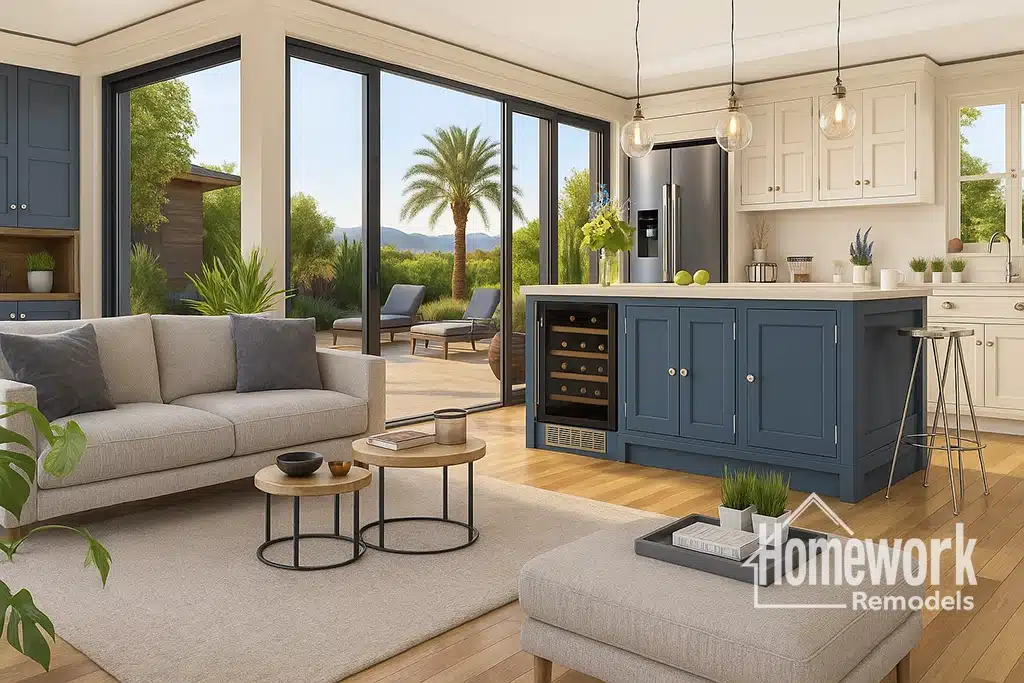
How to Design for Tempe’s Natural Light and Shade
Natural light is one of Tempe’s greatest assets—and one of its most misunderstood challenges. Homes here receive abundant sunshine year-round, which can elevate spaces beautifully when handled well, or quietly undermine comfort when it’s not.
Designing for light and shade in Tempe is not about maximizing glass or darkening rooms indiscriminately. It’s about control. The most successful remodels treat light as something to be shaped, filtered, and directed—so homes feel bright without feeling exposed or overheated.
Why Tempe Light Requires Intentional Design
Tempe’s sun behaves differently than in cooler or cloudier regions. High sun angles, intense summer exposure, and long daylight hours place real demands on buildings.
Homes built decades ago often managed this through smaller windows, deeper overhangs, and shaded outdoor spaces. As remodeling introduces larger openings and more openness, those original strategies can be lost—sometimes unintentionally.
Designing well in Tempe means recognizing that more light isn’t always better. Better light is the goal.
The Core Decision: Brightness vs. Comfort
Homeowners often face a defining tension early in planning: Do we open the home up to bring in more light—or protect it from too much sun?
Both instincts are valid. Dark interiors feel dated and constrained. Overexposed interiors feel harsh and uncomfortable. The answer lies between these extremes.
Thoughtful design balances daylight with shade, allowing light to enter where it enhances daily life—and softening it where it doesn’t.
Orientation Matters More Than Window Size
One of the most overlooked factors in light design is orientation. East-, south-, west-, and north-facing windows behave very differently in Tempe’s climate.
West-facing glass can introduce significant afternoon heat. South-facing openings benefit from predictable sun paths that can be managed with overhangs. North-facing windows provide consistent, softer light.
Remodels that consider orientation early often avoid costly corrections later, such as excessive shading devices or reliance on mechanical cooling.
Shade as an Architectural Feature
Shade doesn’t have to be an afterthought. In Tempe, it’s an architectural asset.
Deep overhangs, recessed openings, pergolas, and covered patios all contribute to comfortable interiors and usable outdoor spaces. When shade is integrated into the design, homes feel calmer and more grounded.
These elements also help transitions between inside and outside feel natural rather than abrupt.
Interior Light Control Is Just as Important
Light design doesn’t stop at the exterior. Interior planning plays a critical role in how light moves through a home.
Open sightlines can help daylight penetrate deeper into the house—but too much openness can also amplify glare. Strategic partitions, ceiling planes, and surface finishes can soften light without blocking it.
Materials matter here. Matte surfaces, warm tones, and textured finishes often perform better than glossy or highly reflective ones in Tempe’s bright conditions.
Kitchens and Living Areas Benefit from Balanced Light
Kitchens and living spaces often receive the most attention when it comes to daylight—and for good reason. These are the spaces where homeowners spend the most time.
Successful remodels aim for even, comfortable light rather than dramatic brightness. Task lighting, layered illumination, and controlled daylight work together to support daily use without visual fatigue.
For homeowners considering broader layout changes to improve light distribution, understanding how these decisions interact with structure can be helpful. Resources like Whole-Home Remodeling in Tempe provide additional context on coordinating light, layout, and long-term livability.
Bedrooms Need a Different Light Strategy
What feels energizing in a living room can feel intrusive in a bedroom. Designing for rest requires restraint.
Morning light may be welcome; afternoon glare often isn’t. Window placement, shading, and orientation should support sleep patterns as much as aesthetics.
Remodels that treat all rooms the same often overlook this distinction, leading to spaces that look good but feel wrong.
Outdoor Light Shapes Indoor Comfort
Outdoor spaces influence interior light more than many homeowners realize. Reflective surfaces, hardscape placement, and landscaping all affect how light enters the home.
Thoughtful landscape design—trees, screens, and planting—can provide seasonal shade while preserving openness. These strategies often outperform mechanical solutions in both comfort and longevity.
Designing indoors and outdoors together leads to better outcomes on both sides.
Light, Shade, and Long-Term Performance
Homes that manage light well tend to perform better over time. Reduced heat gain, lower energy demand, and more consistent comfort all contribute to long-term satisfaction.
These benefits compound quietly. Homeowners may not think about light control daily—but they feel its effects constantly.
In Tempe, good light design is a form of future-proofing.
Context Shapes the Right Balance
Different Tempe neighborhoods respond differently to light. Lot size, proximity to neighbors, and surrounding development all influence what strategies work best.
Remodels that account for neighborhood context—rather than applying generic solutions—tend to feel more natural and more livable.
Understanding how your home fits into the broader landscape of home remodeling in Tempe, AZ can help clarify which approaches make sense for your specific setting.
Designing With the Sun, Not Against It
Tempe’s light is powerful—but it doesn’t have to be overpowering. When treated with respect and intention, it enhances comfort, beauty, and daily experience.
The most successful remodels don’t fight the sun. They work with it—shaping light and shade so homes feel bright, calm, and enduring.
Let’s Plan Your Remodel with Clarity
If you’re thinking about remodeling your home in Tempe, the most valuable first step is a clear, pressure-free conversation. Understanding how light, shade, and orientation affect your home before design begins helps avoid costly surprises and ensures decisions feel confident—not rushed.
If you’d like to explore your options, you can schedule a free remodeling consultation with our design-build team. We’ll help you evaluate possibilities, constraints, and next steps so you can move forward with clarity.