
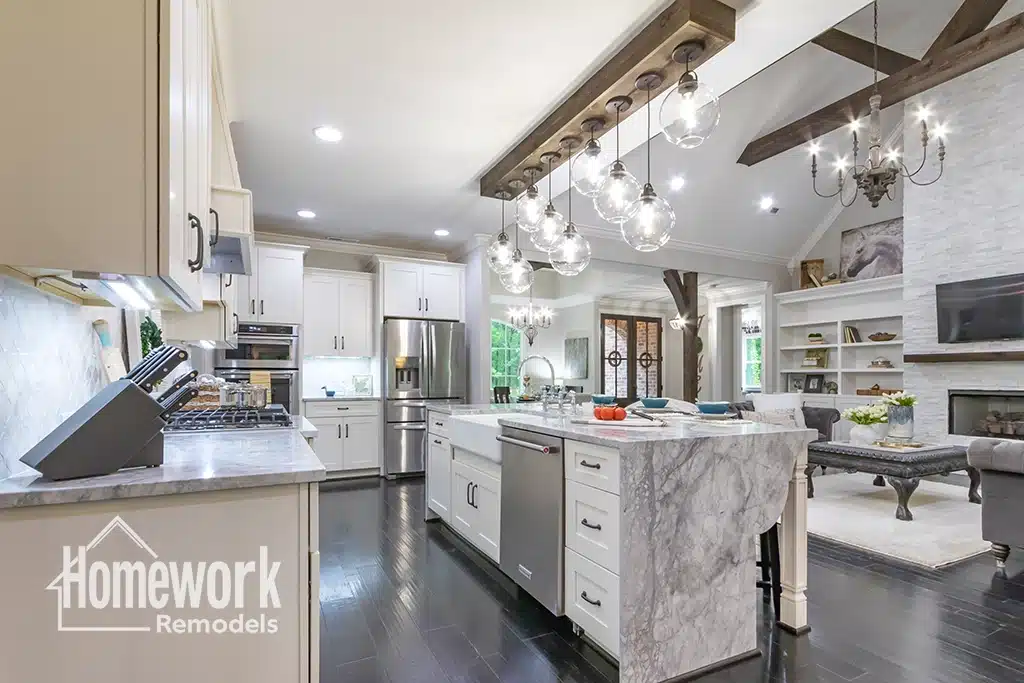
Aging-in-Place Kitchen Design for Scottsdale Homes
Many Scottsdale homeowners begin thinking about aging in place long before it becomes a necessity. The goal isn’t to anticipate limitations—it’s to create a kitchen that continues to feel comfortable, functional, and enjoyable no matter how needs evolve over time.
Aging-in-place kitchen design for Scottsdale homes is not about making a kitchen look specialized or clinical. It’s about thoughtful planning that supports ease of movement, reduces daily strain, and enhances long-term usability while preserving the beauty and character of the home.
What aging in place really means for kitchens
In kitchen design, aging in place focuses on adaptability. It asks simple but important questions. Can the kitchen be used comfortably for decades? Does it reduce unnecessary bending, reaching, or lifting? Is it easy to navigate when mobility or strength changes?
For Scottsdale homeowners planning to remain in their homes long-term, these considerations often overlap with good design. Kitchens that are easier to use are typically more enjoyable for everyone—regardless of age.
Why kitchens deserve special attention
Kitchens are among the most physically demanding rooms in the home. Cooking, cleaning, and storage all involve repetitive motion. Over time, small inefficiencies can become daily frustrations.
Many Scottsdale homes were built with kitchens that prioritize appearance over ergonomics. Narrow walkways, deep cabinets, and poorly placed appliances can make daily tasks more taxing than they need to be. Aging-in-place design addresses these issues proactively rather than reactively.
A common concern—and how it’s resolved
A frequent concern is that aging-in-place features will make a kitchen feel institutional or dated. The problem usually arises when accessibility elements are added late or without design integration.
The solution is incorporating these features from the start. In one Scottsdale kitchen remodel, the homeowner wanted improved comfort but worried about compromising style. By adjusting counter heights subtly, adding pull-out shelving, and improving lighting, the outcome was a kitchen that felt refined, modern, and significantly easier to use—without any visible “specialty” features.
This problem–solution–outcome sequence is why many homeowners explore how a design-build remodeling process supports aging-in-place decisions early, when layout and structure can still be refined.
Layout and circulation that reduce strain
Good aging-in-place kitchen design begins with layout. Clear walkways, logical work zones, and accessible storage reduce unnecessary movement and fatigue.
In Scottsdale kitchens designed for long-term living, open layouts often improve both flow and safety. Removing obstacles and tightening work zones allows the kitchen to remain functional even as physical needs change.
Cabinetry and storage that work smarter
Cabinet design plays a major role in aging-in-place kitchens. Pull-out shelves, soft-close drawers, and accessible storage reduce the need to reach or kneel.
These features don’t just support aging in place—they improve everyday convenience. Homeowners often find that these changes make the kitchen feel more intuitive and less physically demanding from the moment they’re installed.
Appliance placement and ease of use
Appliance placement can significantly affect comfort. Wall ovens at accessible heights, induction cooktops, and easy-to-operate controls all contribute to a kitchen that feels safer and more manageable.
In Scottsdale homes where homeowners plan ahead, appliance choices are guided by usability rather than novelty. The goal is reliability, clarity, and ease—not complexity.
Lighting that supports visibility and safety
Lighting is often underestimated in aging-in-place design. Good visibility reduces eye strain and improves safety during food preparation and cleanup.
Layered lighting—combining ambient, task, and accent lighting—ensures that work areas are well illuminated without glare. In Scottsdale homes with abundant natural light, balancing artificial lighting helps maintain consistency throughout the day.
Subtle details that make a big difference
Small details often have the greatest impact. Rounded countertop edges, slip-resistant flooring, and easy-grip hardware all contribute to a kitchen that feels comfortable and secure.
When these details are selected thoughtfully, they disappear into the design rather than standing out. The kitchen simply feels better to use.
Aging in place as a long-term investment
Aging-in-place kitchens often add value beyond personal comfort. Homes designed with long-term usability appeal to a broader range of buyers and reduce the need for future modifications.
For Scottsdale homeowners, this approach supports both lifestyle goals and long-term flexibility. It’s a way to invest in comfort today while preserving options for tomorrow.
Reviewing examples of Scottsdale kitchen remodeling projects can help homeowners see how aging-in-place principles integrate naturally into well-designed kitchens.
Planning makes all the difference
The success of aging-in-place kitchen design depends on planning. When decisions are made early, features can be integrated seamlessly and cost-effectively.
Working with professionals who understand both design and construction helps ensure that aging-in-place elements enhance the kitchen rather than complicate it.
Moving forward with confidence
Aging-in-place kitchen design is about preserving independence, comfort, and enjoyment of your home. When approached thoughtfully, it enhances both function and beauty.
If you’re considering a kitchen remodel with long-term living in mind, learning what to expect during your first remodeling consultation can help you understand how these decisions fit into a calm, well-planned process.