
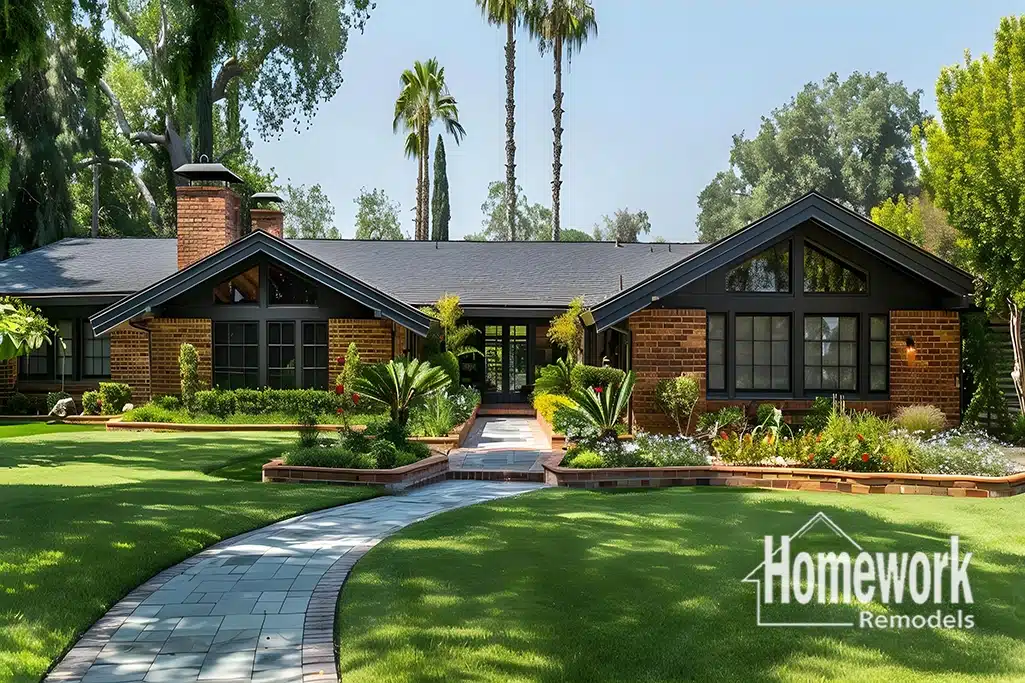
Arcadia Ranch Homes: When Open Concept Goes Too Far
Open-concept remodeling is often presented as a universal upgrade—remove walls, blend spaces, and modernize instantly. In Arcadia ranch homes, however, this approach can quietly work against the very qualities that make these homes livable. Long horizontal layouts, strong indoor–outdoor connections, and clearly defined circulation paths are foundational to the ranch style. When those elements are erased, daily life often becomes less comfortable, not more.
The challenge isn’t whether to open an Arcadia ranch—it’s knowing when openness crosses the line into disruption.
Why Arcadia Ranch Homes Already Feel Open
Arcadia ranch homes were designed with lateral flow. Rooms align along extended axes, windows draw the eye outward, and kitchens often sit between living spaces and patios. While walls exist, visual openness is already present through alignment rather than removal.
Treating these homes like compact two-story layouts misunderstands their logic.
The core decision tension is perceived openness versus functional clarity.
Why Full Wall Removal Often Breaks Circulation
In many ranch homes, interior walls guide movement. Removing them can force circulation through work zones, seating areas, or primary sightlines.
What looks spacious on a plan often feels chaotic in daily use.
Kitchens Are Especially Vulnerable
Opening kitchens too aggressively can turn them into thoroughfares. In Arcadia homes, kitchens frequently serve as connectors. When walls disappear, prep zones become walkways and congestion increases.
Maintaining kitchen boundaries—without full enclosure—often produces better results.
Ceiling Planes Matter More Than Walls
Ranch homes rely on ceiling continuity and rhythm. Removing walls without addressing ceiling transitions can flatten spatial hierarchy and make rooms feel undefined.
Preserving ceiling cues helps spaces remain legible even when openness increases.
Furniture Can’t Fix Broken Flow
Once walls are removed, homeowners often rely on furniture to restore order. While furniture can help, it cannot fully compensate for lost circulation structure.
Layout problems are architectural—not decorative.
Indoor–Outdoor Flow Can Be Weakened
Arcadia ranch homes often center around patios and backyards. Removing interior walls without regard to outdoor connections can interrupt natural movement patterns.
Sometimes less openness inside preserves better openness to the outdoors.
Privacy Suffers in Over-Opened Layouts
Bedrooms, offices, and quiet zones benefit from separation. Overly open layouts expose these areas to noise and visual intrusion.
Ranch homes balance openness with retreat—when that balance is lost, comfort declines.
Structural Walls Are Often Intentional
Walls in ranch homes frequently align with roof structure and load paths. Removing them may require beams that intrude into clean lines and reduce ceiling height.
Before pursuing open-concept changes, homeowners should understand what’s involved in removing load-bearing walls in Phoenix homes. Structural realities often limit how open a home can—or should—be.
Cost Escalation Is Common
Open-concept remodels often expand in scope: structural changes, relocated systems, custom finishes, and extended timelines. Costs rise quickly when boundaries are removed indiscriminately.
Targeted openness usually delivers better value.
Partial Openness Preserves Ranch Character
Openings, cased transitions, and aligned sightlines can increase connection without erasing structure. These strategies honor the ranch style while modernizing use.
More connection doesn’t require fewer walls everywhere.
Whole-Home Thinking Prevents Overcorrection
Openness decisions affect circulation, acoustics, storage, and privacy across the home. Evaluating these impacts holistically avoids solving one problem while creating several others.
Homeowners who apply whole-home remodeling in Phoenix principles tend to arrive at better-balanced solutions.
Why Design-Build Is Essential for Ranch Remodels
Design-build remodeling allows homeowners to test degrees of openness before committing. Layouts, circulation paths, and structural constraints are evaluated together.
In Arcadia ranch homes, this approach protects flow, character, and comfort.
Learning how the design-build remodeling process works helps homeowners avoid irreversible decisions.
The Core Decision Tension: Open Space or Ordered Living
In Arcadia ranch homes, openness is not the goal—ease of living is.
When openness is applied selectively, homes feel modern, calm, and intuitive. When it goes too far, daily life becomes harder than it needs to be.
Let’s Open Your Home—Without Breaking How It Works
If you’re considering open-concept remodeling in an Arcadia ranch home, understanding where openness helps—and where it harms—is essential. With neighborhood-specific experience and a design-build approach, clarity comes early.
We invite you to schedule a free remodeling consultation to explore open-concept strategies tailored to your home.