
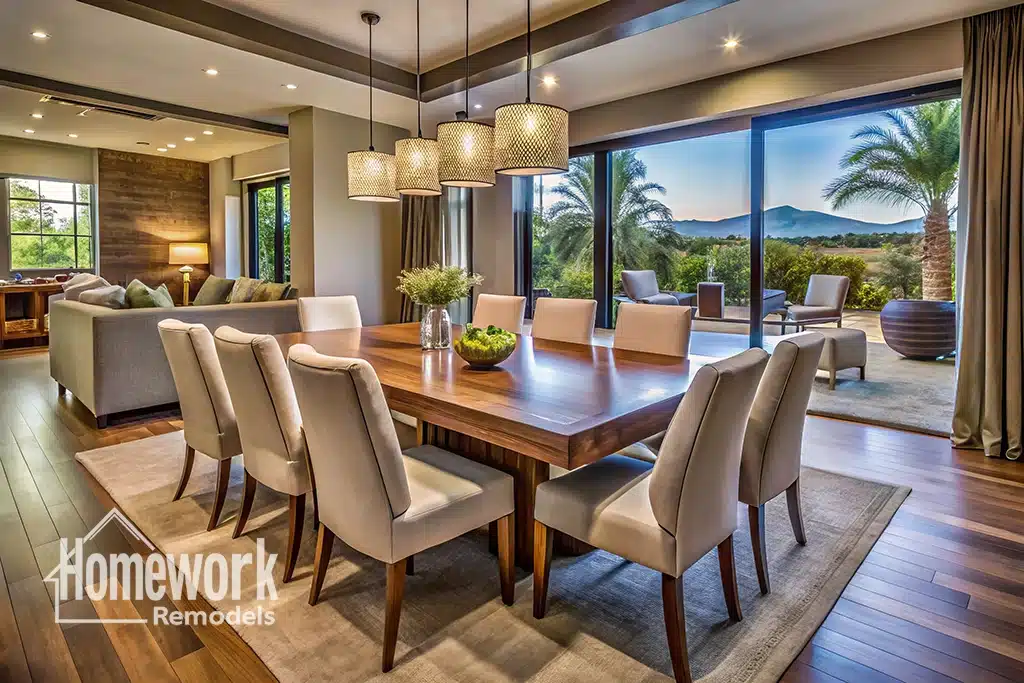
Biltmore Dining Rooms: Reworking Formal Spaces for How Families Actually Live
Formal dining rooms are a defining feature of many Biltmore homes. Designed for entertaining, these rooms were intended to anchor gatherings, reinforce symmetry, and signal refinement. Over time, however, the way families live has changed. Meals are more casual, entertaining styles are flexible, and many formal dining rooms now sit underused.
For Biltmore homeowners, the question is not whether the dining room should change—but how to adapt it without undermining the home’s balance, flow, and long-term value.
Why Formal Dining Rooms Go Unused
Many Biltmore dining rooms are sized generously but used infrequently. Their separation from kitchens, limited connection to outdoor spaces, and formality can make them feel disconnected from daily life.
Homeowners often describe these rooms as beautiful but impractical—reserved for holidays rather than everyday living.
The core decision tension is architectural tradition versus daily practicality.
Eliminating the Dining Room Isn’t Always the Best Answer
Removing a dining room entirely can create openness, but it can also disrupt the home’s spatial rhythm. Formal floor plans rely on sequence and proportion.
When a dining room disappears, adjacent spaces may lose definition, circulation can become ambiguous, and furniture placement becomes more challenging.
Adaptation Preserves Value Better Than Removal
Many successful Biltmore remodels focus on adapting dining rooms rather than erasing them. Expanding openings, improving kitchen adjacency, or introducing flexible uses allows the room to evolve without disappearing.
These strategies maintain architectural intent while supporting modern lifestyles.
The decision tension is transformation versus preservation.
Partial Integration Improves Flow
Widened openings, interior glazing, or cased transitions can connect dining rooms to adjacent spaces without collapsing boundaries.
This approach improves visibility and circulation while retaining room identity—an important factor in luxury homes.
Furniture and Lighting Shape Perception
Dining rooms often feel formal because of how they are furnished and lit. Adjusting scale, introducing flexible furniture, or layering lighting can dramatically change how the room feels.
These changes are often more impactful—and less disruptive—than structural alterations.
Dining Rooms Can Serve Multiple Functions
Modern dining rooms often double as workspaces, homework areas, or secondary gathering zones. Designing with flexibility in mind increases daily use.
The key is ensuring secondary uses do not compromise the room’s ability to host formal gatherings when needed.
Structural Walls Set Clear Limits
Some dining room walls provide structural support or conceal utilities. Removing them may require beams or ceiling modifications that affect aesthetics.
Before considering major changes, homeowners should understand what is involved in removing load-bearing walls in Phoenix. Structural clarity supports better decisions.
Kitchen Adjacency Is Often the Real Issue
In many Biltmore homes, the dining room feels disconnected because the kitchen layout limits interaction. Improving kitchen flow or access may solve the dining room problem without changing the dining room itself.
Understanding how kitchen remodeling in Phoenix affects adjacent spaces helps homeowners target the right intervention.
Resale Still Favors Defined Dining Spaces
While trends shift, many luxury buyers still expect defined dining areas—especially in Biltmore neighborhoods.
Homes that eliminate dining rooms entirely may narrow their buyer pool. Adapted spaces tend to age better in the market.
Whole-Home Perspective Prevents Overcorrection
Dining room changes ripple outward, affecting circulation, lighting, and adjacent spaces.
Homeowners who understand how whole-home remodeling in Phoenix evaluates space relationships avoid solving one problem by creating another.
Why Design-Build Supports Balanced Outcomes
Design-build remodeling allows homeowners to explore multiple adaptation strategies—structural and non-structural—before committing.
This process helps Biltmore homeowners balance lifestyle needs with architectural integrity and long-term value.
Learning how the design-build remodeling process works supports confident, informed decisions.
The Core Decision Tension: Formal Legacy or Functional Future
In Biltmore homes, dining rooms do not need to disappear to become useful. Thoughtful adaptation allows these spaces to support modern living while preserving the elegance that defines the neighborhood.
Let’s Reimagine Your Dining Room Without Losing What Matters
If you’re considering changes to a dining room in a Biltmore home, careful planning makes all the difference. With neighborhood-specific experience and a design-build approach, it’s possible to create a space that works every day and still shines when it matters most.
We invite you to schedule a free remodeling consultation to explore dining room adaptation strategies tailored to your home.