
Biltmore Homes: Reclaiming Front Rooms That No Longer Fit Modern Life
Many Biltmore homes include a front room that once served a clear purpose: formal entertaining. Positioned near the entry, carefully proportioned, and visually distinct from the rest of the house, these rooms reflected a time when hosting followed a predictable script. Today, those scripts have changed. Casual gatherings, open kitchens, and flexible living spaces now define how most families live.
As a result, front rooms in Biltmore homes often sit unused—beautiful but disconnected from daily life. Reclaiming these spaces requires more than cosmetic updates. It requires rethinking how formality fits into modern living.
Why Biltmore Front Rooms Fell Out of Daily Use
Biltmore homes were designed with hierarchy. The front room created a sense of arrival and separation between public and private areas. Entertaining was intentional, and rooms were assigned specific roles.
Modern lifestyles are less compartmentalized. Families gather where food, light, and comfort converge. Front rooms that feel removed from these zones struggle to stay relevant.
The core decision tension is architectural formality versus functional relevance.
Why Eliminating the Front Room Often Creates Imbalance
Some homeowners consider removing the front room entirely—opening it into adjacent spaces or absorbing it into a larger great room. While this can increase openness, it often disrupts the home’s symmetry and sense of arrival.
In Biltmore homes, front rooms often anchor the layout. Eliminating them can make the entry feel abrupt or undefined.
Reprogramming Preserves Structure While Adding Use
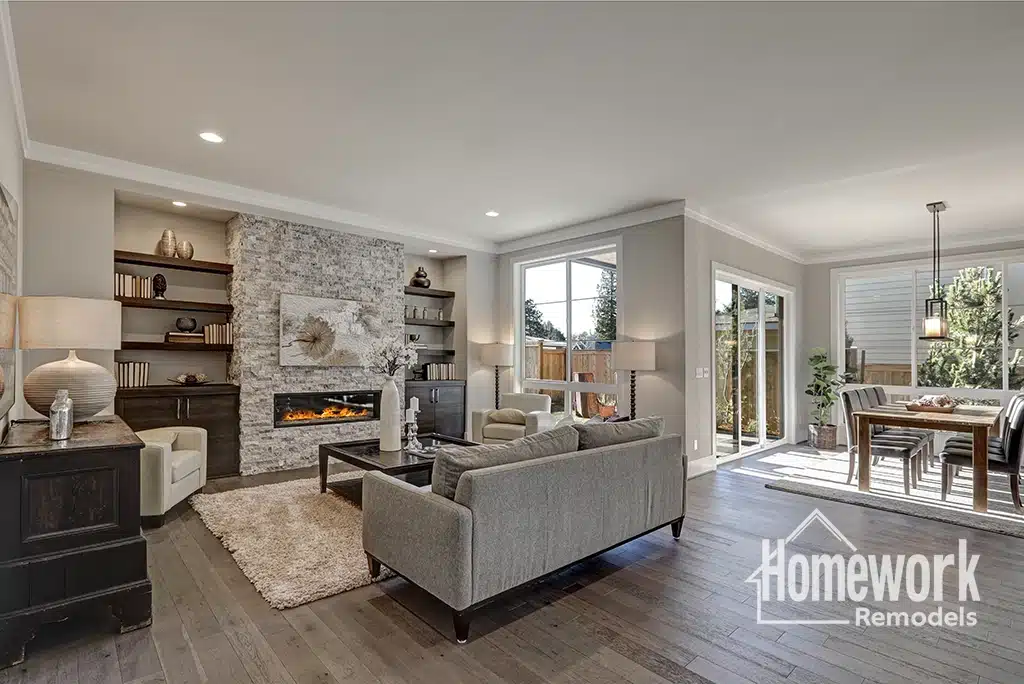
Rather than erasing the front room, many homeowners succeed by redefining its function. Libraries, music rooms, flexible lounges, or hybrid office–sitting rooms allow the space to serve daily life while maintaining its architectural role.
Purpose brings relevance without sacrificing balance.
Furniture Scale Changes How the Room Feels
Oversized or overly formal furniture reinforces the room’s isolation. Introducing scaled seating, movable pieces, or multiple furniture zones invites everyday use.
Furniture choices often redefine a room more effectively than walls.
Lighting Transforms Atmosphere
Front rooms frequently rely on a single central fixture, creating a formal, on-demand feel. Layered lighting—ambient, task, and accent—encourages spontaneous use throughout the day.
Lighting shifts perception from ceremonial to comfortable.
Storage Enables Flexibility
Rooms without storage resist adaptation. Built-in shelving or concealed cabinetry allows the front room to support multiple functions without clutter.
Storage makes versatility possible.
Visual Connection Encourages Use
Front rooms that feel visually isolated are easy to ignore. Subtle visual connections—aligned openings, borrowed light, or partial transparency—encourage integration without full openness.
Connection doesn’t require demolition.
Acoustic Comfort Matters More Than Openness
Hard surfaces and proximity to the entry can make front rooms echo-prone. Addressing acoustics improves comfort and dwell time.
Comfort determines whether a room gets used.
Structural Constraints Should Guide Changes
Some walls defining front rooms are structural. Removing them may require beams or posts that compromise the room’s elegance.
Before altering layouts, homeowners should understand what’s involved in removing load-bearing walls in Phoenix homes. Structural awareness often points toward smarter reprogramming.
Whole-Home Balance Prevents Overcorrection
Front room changes affect circulation, entry experience, and privacy. Evaluating these impacts holistically ensures the home remains cohesive.
Homeowners who apply whole-home remodeling in Phoenix principles tend to achieve better long-term results.
Cost Control Favors Adaptation Over Demolition
Reprogramming a front room typically costs less than major structural changes. By working within existing boundaries, homeowners preserve architectural value while gaining function.
Intentional adaptation delivers better return.
Why Design-Build Supports Subtle Transformation
Design-build remodeling allows homeowners to explore multiple front-room identities before committing. Layouts, lighting, storage, and circulation are evaluated together.
In Biltmore homes, this integration ensures changes feel deliberate rather than reactive.
Learning how the design-build remodeling process works helps homeowners reclaim front rooms without losing what makes their homes special.
The Core Decision Tension: Preserve Tradition or Enable Daily Life
In Biltmore homes, front rooms don’t need to disappear—they need to evolve.
When reprogrammed thoughtfully, these spaces regain purpose, supporting modern life while preserving the architectural dignity that defines the neighborhood.
Let’s Reclaim Your Front Room—Without Losing Balance
If your Biltmore front room no longer fits how you live, thoughtful reprogramming can restore relevance without sacrificing formality. With neighborhood-specific experience and a design-build approach, clarity comes early.
We invite you to schedule a free remodeling consultation to explore front-room strategies tailored to your home.