
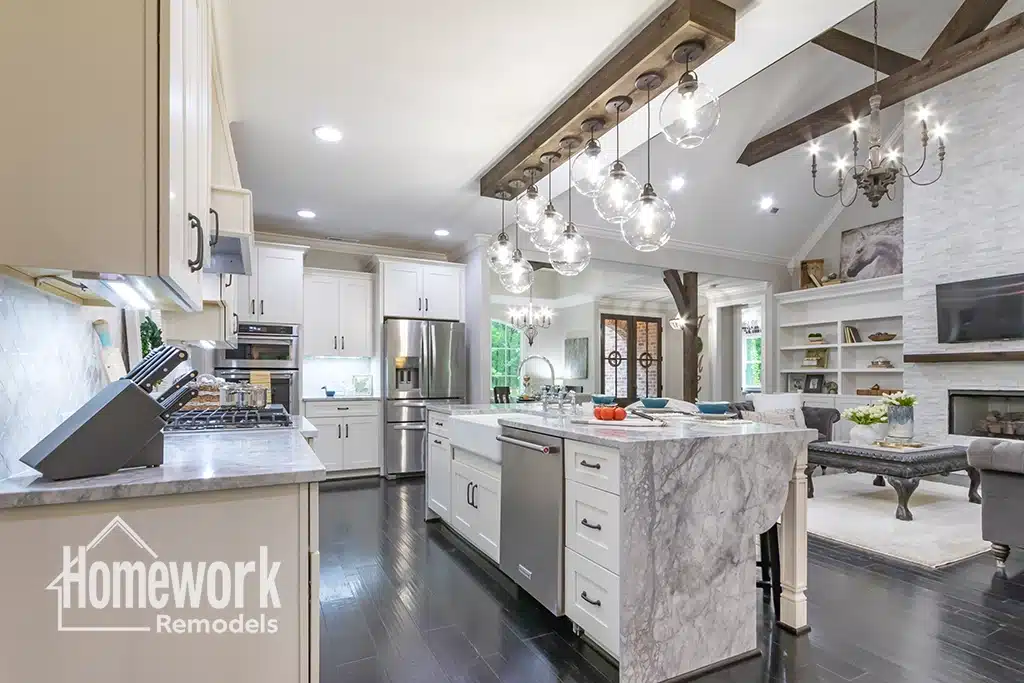
Biltmore Kitchen Relocations: Modern Living Inside a Formal Floor Plan
Many Biltmore homes were designed with a clear hierarchy: public rooms at the front, service spaces tucked discreetly away, and private areas set apart for quiet retreat. These formal floor plans still offer elegance and clarity—but they can feel out of step with modern living, especially when kitchens are isolated from daily activity.
For homeowners in the Biltmore area, relocating the kitchen often seems like the answer. The challenge is doing so without unraveling the order that gives these homes their character.
Why Biltmore Kitchens Often Feel Disconnected
Formal floor plans were built around separation. Kitchens were meant to function efficiently, not serve as gathering spaces. Dining rooms, living rooms, and studies formed a sequence that expressed order and refinement.
As lifestyles evolved, kitchens became social centers. In many Biltmore homes, that shift highlights the kitchen’s distance from where life actually happens.
The core decision tension is openness versus order. Order is part of the appeal.
Relocating the Kitchen Changes More Than One Room
Moving a kitchen is not a single-room decision. It affects circulation, sightlines, and the relationship between public and private spaces.
When kitchens are pulled forward into formal zones without careful planning, they can overwhelm entry sequences or disrupt entertaining flow. When moved too far back, they remain isolated despite new finishes.
The goal is connection without dominance.
Formal Plans Depend on Predictable Circulation
Biltmore homes often guide movement deliberately. Hallways, thresholds, and room alignments create a sense of progression.
Kitchen relocations that ignore these patterns introduce awkward shortcuts and crossing traffic. Successful relocations respect circulation first, then layer function on top.
The decision tension is convenience versus composure. Composure sustains long-term comfort.
Ceiling Transitions Signal Room Importance
Ceiling heights and treatments often shift subtly across formal floor plans. Kitchens moved into higher-ceiling public rooms can feel visually loud if scale is not managed.
Aligning ceiling treatments—or intentionally lowering kitchen zones—helps preserve hierarchy even as spaces connect.
Structural Implications Are Common but Hidden
Kitchen relocations frequently involve structural walls, floor reinforcement, and rerouted utilities. These changes affect feasibility and cost early.
Before committing to a new kitchen location, homeowners benefit from understanding what is involved in removing load-bearing walls in Phoenix’s older homes and how those changes interact with formal layouts.
Structural clarity prevents late-stage compromises.
Dining Rooms Often Become the Pivot Point
In many Biltmore homes, dining rooms sit between kitchens and living areas. Relocations often involve partially absorbing or reconfiguring dining spaces.
The challenge is preserving the dining room’s role—formal, flexible, or hybrid—without reducing it to leftover space.
Thoughtful transitions matter more than square footage.
Sightlines Should Be Curated, Not Accidental
Formal homes rely on controlled views. Relocated kitchens introduce appliances, prep zones, and activity into lines of sight that were once calm.
Managing sightlines through partial walls, cabinetry placement, or orientation prevents visual clutter from eroding elegance.
The decision tension is visual energy versus visual rest. Rest is intentional.
Systems Integration Determines Comfort
Kitchens demand ventilation, power, and climate control. Moving them into formal zones stresses existing systems if upgrades are not planned.
Integrated systems design ensures comfort without intrusive soffits or exposed elements.
Understanding how whole-home remodeling in Phoenix evaluates systems holistically helps homeowners anticipate these needs.
Budget Predictability Improves With Early Alignment
Kitchen relocations often cost more than expected because they combine structural, mechanical, and finish work across multiple rooms.
Early feasibility and cost modeling prevent scope creep and protect design intent.
Why Design-Build Is Especially Effective Here
Design-build remodeling allows layout options, structural feasibility, and cost implications to be explored together before a direction is chosen.
In formal Biltmore homes, this integration preserves order while enabling modernization—rather than forcing tradeoffs mid-construction.
Learning how the design-build remodeling process works helps homeowners modernize without sacrificing identity.
The Core Decision Tension: Social Kitchen or Structured Home
Relocating a kitchen can dramatically improve daily life—but only when it respects the framework of the home.
In Biltmore neighborhoods, the best kitchens feel social without feeling chaotic. They belong.
A Note for Homeowners…
Many of the questions raised in this article—around planning, cost, timing, and long-term outcomes—are part of a broader remodeling system that most homeowners aren’t shown upfront.
Our Core Guides were created to explain why remodeling often feels unpredictable and what actually brings clarity and stability before construction begins.
Let’s Modernize Your Kitchen Without Losing What Makes Your Home Refined
If you are considering a kitchen relocation in a Biltmore home, careful planning can protect both function and form. With neighborhood-specific experience and an integrated design-build approach, it is possible to modernize daily living while preserving the structure that defines your home.
We invite you to schedule a free remodeling consultation to explore relocation strategies that respect your home’s original order.