
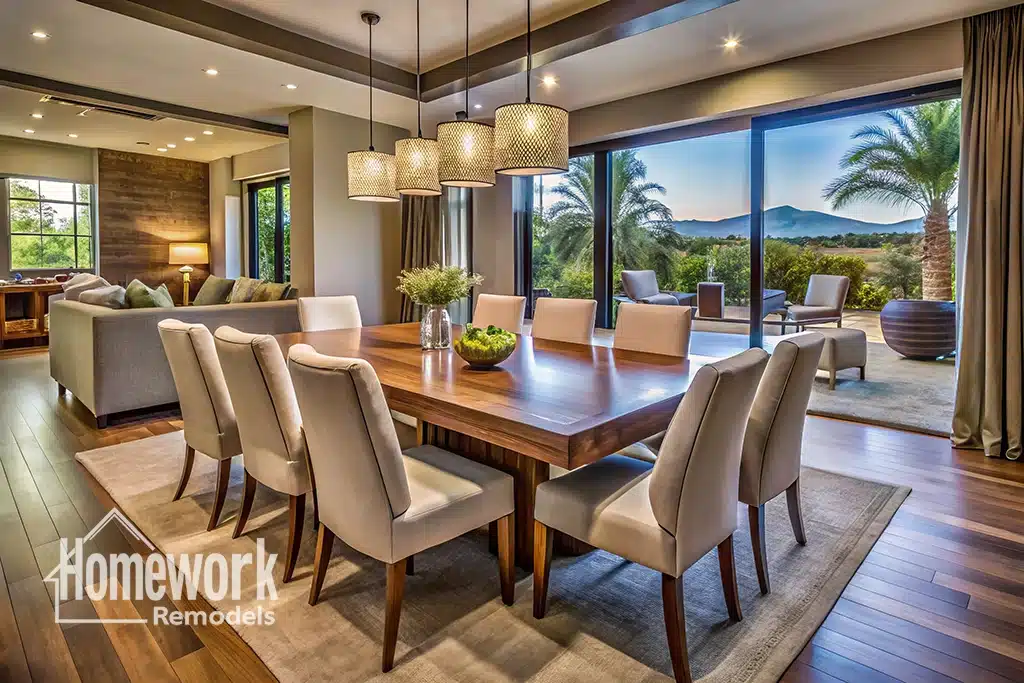
Creating Flow Between Living and Dining Areas
Flow between living and dining areas is one of the most influential factors in how a home feels day to day. When these spaces connect naturally, homes feel larger, calmer, and easier to use. When they don’t, even generous square footage can feel cramped or awkward. In Tempe, where many homes were designed with formal separation between rooms, improving flow often delivers more value than adding space.
Creating flow is not about removing every wall. It’s about shaping how people move, gather, and transition between spaces.
Why Living–Dining Flow Matters More Than Size
Homes with poor flow often feel smaller than they are.
Common symptoms include:
- Narrow or indirect paths between rooms
- Furniture that blocks circulation
- Dining rooms that feel disconnected from daily life
Good flow reduces friction without increasing square footage.
Older Tempe Layouts Were Designed for Formal Use
Many Tempe homes built mid-century or later were designed around formal entertaining.
Dining rooms were often:
- Isolated from kitchens
- Positioned away from living areas
- Used infrequently
As lifestyles became more casual, these separations began to feel inefficient rather than elegant.
Start by Understanding How the Spaces Are Used
Before changing walls or openings, homeowners should observe how rooms are actually used.
Key questions include:
- How often is the dining area used?
- Is it part of daily routines or special occasions?
- Where do people naturally gather?
Design should respond to behavior, not tradition.
Circulation Paths Should Be Obvious
Flow improves when movement feels intuitive.
Successful designs often:
- Align openings between spaces
- Remove unnecessary jogs in circulation
- Preserve clear walkways around furniture
When circulation is clear, rooms feel calmer and more usable.
Partial Openness Preserves Comfort
Complete openness is not always necessary.
Partial solutions may include:
- Wider cased openings
- Partial-height walls
- Aligned openings that maintain definition
These approaches improve connection while preserving intimacy.
Structural Considerations Shape What’s Possible
Improving flow sometimes involves adjusting walls that carry structural loads.
In some homes, this requires evaluating options such as removing load-bearing walls safely in Tempe homes. Structural planning ensures that flow improvements don’t compromise safety or future flexibility.
Ceiling Alignment Enhances Continuity
Ceilings influence how spaces connect.
Aligning ceiling heights:
- Reduces visual breaks
- Enhances openness
- Improves light distribution
Even subtle ceiling adjustments can significantly improve perceived flow.
Furniture Planning Should Drive Design
Flow depends on how furniture fits the space.
Effective layouts consider:
- Table size and placement
- Seating circulation around living areas
- Clearances for daily movement
Designing without furniture in mind often leads to congestion later.
Lighting Reinforces Transitions
Lighting helps define connected spaces.
Layered lighting strategies:
- Distinguish living from dining zones
- Create visual rhythm
- Support different activities
Lighting should guide movement, not flatten it.
Flooring Continuity Supports Movement
Consistent flooring across living and dining areas:
- Strengthens visual connection
- Simplifies transitions
- Enhances perceived space
Interruptions should be intentional, not accidental.
Flow Improves Entertaining and Daily Life
Homes with good flow feel effortless.
They support:
- Casual meals
- Gatherings and celebrations
- Quiet evenings at home
Flow benefits everyday living—not just entertaining.
Neighborhood Context Still Matters
Flow improvements should respect the home’s original scale.
Projects that fit within the broader Tempe home remodeling context tend to feel more natural and age more gracefully.
Whole-Home Perspective Prevents Imbalance
Improving flow in one area can expose issues elsewhere.
A coordinated whole-home remodeling strategy in Tempe ensures that changes reinforce each other rather than create new bottlenecks.
Design-Build Supports Seamle2ss Results
Flow improvements require coordination.
The design-build remodeling process keeps layout, structure, and construction aligned—reducing compromise and rework.
Flow Is Felt More Than Seen
The best flow solutions don’t draw attention.
They simply make the home easier to live in—spaces connect naturally, movement feels intuitive, and rooms support one another without effort.
Let’s Improve How Your Home Moves
If you’re considering improving flow between living and dining areas in your Tempe home and want a solution that balances openness with comfort, thoughtful planning is key. You can schedule a free consultation with our design-build team to explore options with clarity and confidence.