
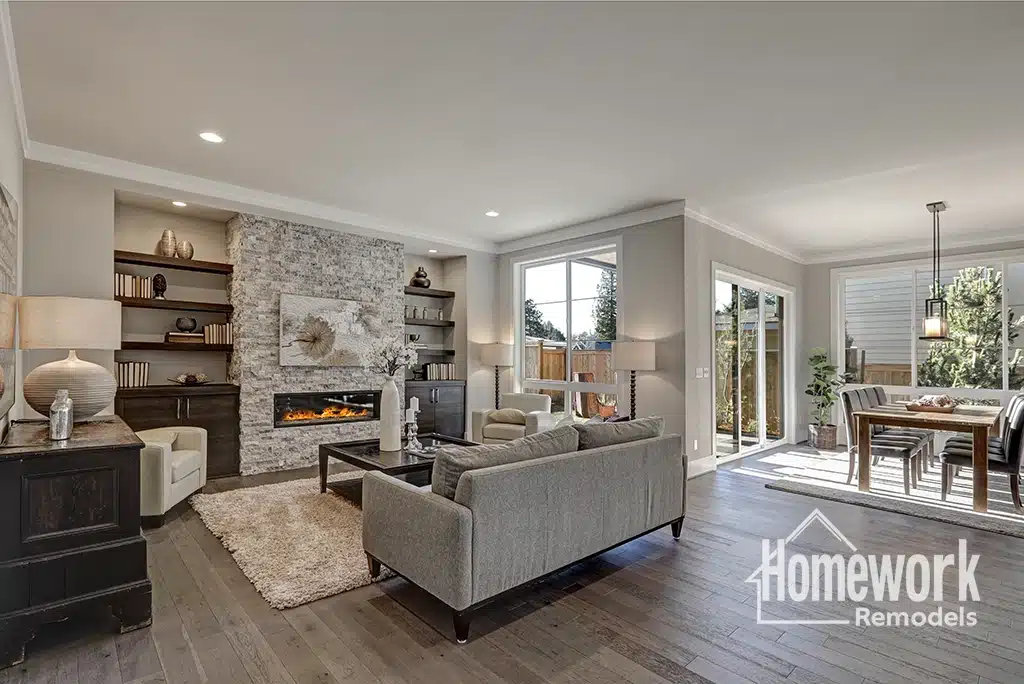
Flooring Trends for Open-Concept Spaces
Flooring decisions carry more weight in open-concept homes than in traditional layouts. Without walls to separate rooms, flooring becomes one of the most dominant visual and functional elements in the house. For Scottsdale homeowners opening up their floor plans, the right flooring choice can unify the space—or quietly undermine comfort and livability.
Trends matter, but performance and continuity matter more.
Why Open Layouts Change Flooring Priorities
In compartmentalized homes, flooring choices could vary by room without much consequence. In open layouts, those transitions disappear. A single flooring material often stretches across kitchens, living areas, dining spaces, and hallways.
This continuity amplifies both strengths and weaknesses. A beautiful material feels expansive and cohesive. A poor-performing one becomes an everyday frustration.
In Scottsdale’s climate, where heat, sunlight, and indoor-outdoor living influence material behavior, flooring decisions deserve early attention.
The Decision Tension: Visual Unity vs. Functional Reality
Homeowners are often drawn to the idea of one seamless floor throughout the home. Visually, this can be striking. Functionally, it raises important questions.
Kitchens experience spills and heavy foot traffic. Living areas prioritize comfort and acoustics. Entry zones deal with grit and moisture. Balancing these competing demands requires honest evaluation—not just trend-following.
The most successful open-concept floors reconcile unity with practicality.
Large-Format Tile: Popular for a Reason—With Caveats
Large-format porcelain tile remains a popular choice in Scottsdale open layouts. It handles heat well, resists moisture, and creates clean visual lines.
However, tile’s hardness affects acoustics and comfort. In expansive spaces, sound can travel farther, and standing for long periods may feel fatiguing. Grout lines, while minimized, still require maintenance.
When chosen thoughtfully—and paired with rugs or soft furnishings—tile can perform beautifully. Without those considerations, it can feel cold in more ways than one.
Engineered Wood: Warmth With Stability
Engineered wood has gained traction in open-concept remodels because it offers the warmth of wood with greater dimensional stability than solid planks. This is especially important over concrete slabs common in Scottsdale homes.
Not all engineered wood performs equally. Thickness, core construction, and finish quality matter. Lower-grade products may show wear quickly across large open areas.
When specified correctly, engineered wood balances visual continuity with comfort and durability.
Luxury Vinyl and Composite Flooring: Evolving Options
Luxury vinyl plank (LVP) and similar composites have improved significantly. They offer moisture resistance, comfort underfoot, and design versatility.
For open layouts, these materials can be practical—particularly in households with pets or children. The tradeoff often lies in long-term perception. Some homeowners find that synthetic materials don’t age as gracefully or feel as authentic as natural options.
Evaluating samples in natural light and considering long-term expectations helps clarify whether these materials align with your goals.
Indoor-Outdoor Continuity and Flooring Choices
Many Scottsdale homes emphasize indoor-outdoor flow. Flooring that transitions smoothly to patios or outdoor living areas can enhance this connection.
However, using the same material indoors and outdoors requires careful attention to slip resistance, temperature tolerance, and expansion characteristics. What works outside may not feel right underfoot indoors—and vice versa.
Planning these transitions early ensures that flooring supports both aesthetics and comfort.
Acoustics, Comfort, and the Forgotten Factors
Open-concept spaces amplify sound. Hard flooring surfaces reflect noise, which can make large spaces feel louder than expected.
Area rugs, furniture placement, and ceiling treatments all play a role in mitigating this effect, but flooring selection sets the baseline. Homeowners sensitive to noise often prioritize materials that absorb sound rather than reflect it.
Comfort underfoot also matters more in open layouts where movement is constant. The right underlayment can significantly improve both acoustics and feel.
Flooring and Structural Considerations
Flooring choices sometimes intersect with structural decisions. Leveling requirements, slab conditions, and transitions between existing and new areas all affect feasibility.
In homes undergoing structural changes—such as those involving removing load-bearing walls safely—flooring planning should align with construction sequencing to avoid rework.
This coordination is a common focus in whole-home remodeling in Scottsdale, where flooring decisions support broader layout goals.
Trends Come and Go—Performance Endures
While trends influence color, plank width, and finish sheen, the most important flooring qualities remain consistent: durability, maintainability, comfort, and compatibility with how you live.
Flooring that performs well fades into the background. Flooring that doesn’t becomes a daily reminder.
Choosing Flooring for Long-Term Satisfaction
Open-concept flooring should support your lifestyle quietly and reliably. When chosen with climate, use patterns, and long-term goals in mind, it becomes a foundation for the entire home—not just a design feature.
Let’s Choose Flooring That Works for Your Home
If you’re planning an open-concept remodel and want flooring that balances beauty with durability and comfort, early planning can prevent costly changes later. To explore options suited to your home’s layout and lifestyle, you can schedule a free consultation with our design-build team and move forward with clarity.