
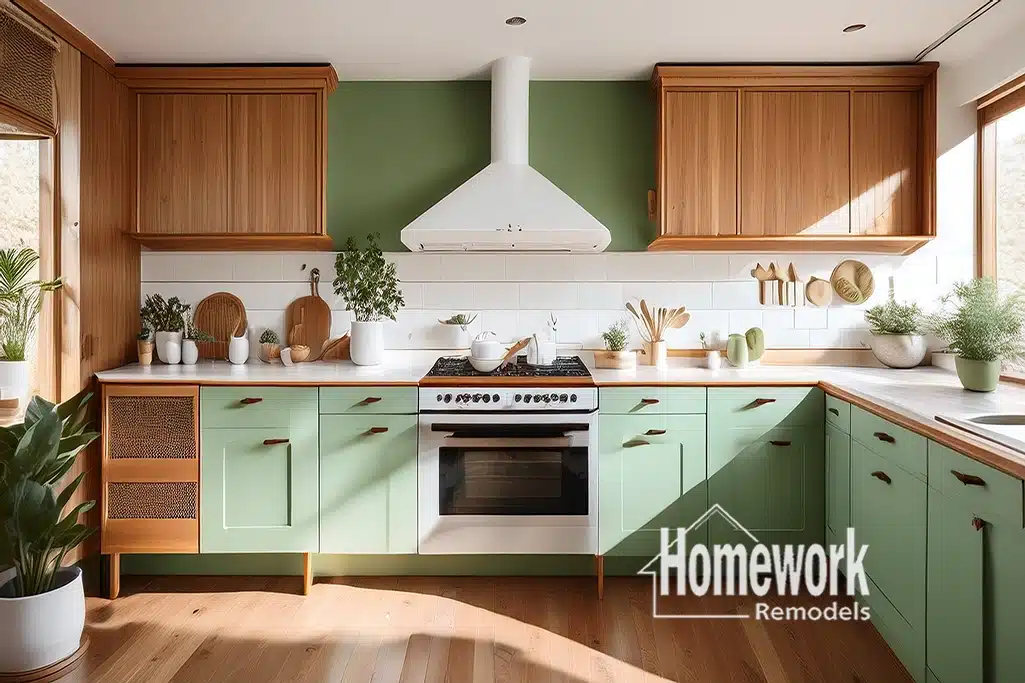
Kitchen Remodeling for Mid-Century Modern Homes: Balancing Authenticity and Function
The kitchen is often the most challenging room to remodel in a mid-century modern home. These homes were designed with intention—clean lines, logical layouts, and understated materials—but kitchens from the era rarely meet today’s expectations for storage, workflow, or technology.
For homeowners exploring mid-century modern home remodeling, a successful kitchen remodel requires balancing architectural respect with modern performance.
Understanding the Original Intent
Mid-century kitchens were never meant to dominate the home. They were efficient, compact, and visually quiet, supporting daily life without drawing attention away from living spaces.
When remodeling, the goal isn’t to turn the kitchen into a showpiece—it’s to improve function while maintaining harmony with the home’s overall design language. This often means preserving proportions, minimizing visual clutter, and choosing materials that feel period-appropriate without being nostalgic replicas.
Improving Function Without Overpowering the Design
Modern kitchens demand more storage, better lighting, and improved appliance integration. The challenge is introducing these upgrades without overwhelming the space.
Thoughtful mid-century kitchen remodeling focuses on:
- Streamlined cabinetry with simple profiles
- Integrated or panel-ready appliances
- Clear circulation paths
- Efficient work triangles
Projects inspired by mid-century ranch modernization in Phoenix show how modern performance can coexist with architectural restraint.
Layout Changes Require Extra Care
Many mid-century homes already offer a degree of openness, but kitchens may still feel separated or undersized. Expanding or reconfiguring the kitchen can improve flow—but only if structural and architectural considerations are handled carefully.
Removing walls or redefining boundaries often requires coordination with the home’s structural system. This is why homeowners considering changes like these benefit from teams experienced in mid-century ranch home remodeling in Phoenix and Scottsdale.
Layout changes should feel like a natural evolution, not a disruption.
Materials That Feel Timeless, Not Trendy
Material selection plays a major role in whether a remodeled kitchen feels authentic. High-gloss finishes, heavy ornamentation, or overly decorative details can clash with mid-century simplicity.
Instead, successful remodels often incorporate:
- Natural wood or wood-inspired cabinetry
- Subtle textures and matte finishes
- Simple slab or gently profiled doors
- Thoughtful color palettes
These choices help the kitchen feel connected to the home’s era while supporting modern living.
Why Design-Build Matters for Mid-Century Kitchens
Mid-century kitchens demand close coordination between design vision and construction reality. Structural considerations, mechanical upgrades, and architectural details intersect in tight spaces.
The design-build process allows these elements to be evaluated together, reducing surprises and protecting the integrity of the home. This approach is especially important when kitchen remodeling is part of a broader mid-century modernization effort.
Kitchens That Support Modern Living
The best mid-century kitchen remodels don’t feel new—they feel right. They support how homeowners live today while honoring the principles that made the home special in the first place.
If you’re considering a kitchen remodel and want a result that respects both function and architecture, learning more about mid-century modern home remodeling through a design-build approach is a strong place to start.