
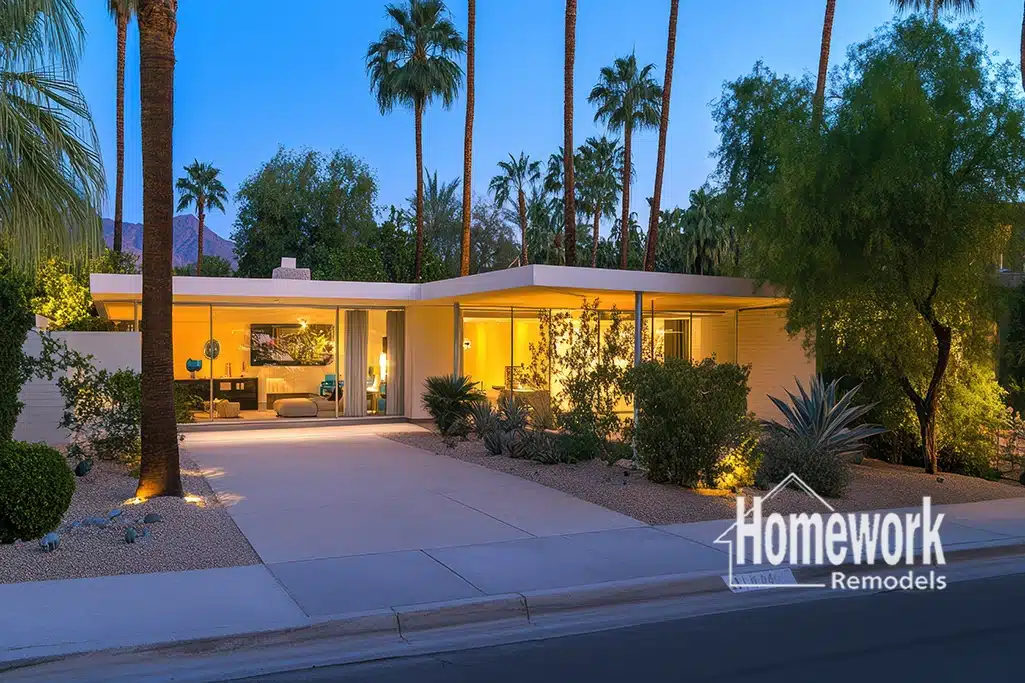
Mid-Century Modern Home Remodeling: When Respecting the Original Design Matters More Than Trends
Mid-century modern homes occupy a special place in Phoenix’s architectural landscape. Built primarily between the late 1940s and mid-1960s, these homes were designed with intention—clean lines, efficient layouts, strong indoor-outdoor connections, and an emphasis on proportion rather than ornament. Remodeling a mid-century modern home successfully requires a mindset very different from remodeling other styles.
The greatest mistake homeowners make is treating mid-century modern remodeling as a cosmetic exercise. Paint colors, cabinetry styles, and fixtures matter—but they are secondary to understanding the architectural logic that makes these homes work. When original design principles are respected, modernization feels natural rather than forced.
Why Mid-Century Modern Homes Are Easily Over-Remodeled
Mid-century homes often feel simple at first glance. Flat planes, minimal trim, and open sightlines can give the impression that dramatic changes are easy to make. In reality, these homes are finely balanced.
Walls are placed deliberately. Ceiling heights are often uniform to maintain horizontal emphasis. Windows and doors align carefully with rooflines and exterior spaces. Removing or altering elements without understanding their role can disrupt the entire composition.
The core decision tension homeowners face is whether to prioritize modern trends or preserve architectural clarity. In mid-century modern homes, restraint almost always produces better outcomes.
Layouts That Already Work—When Left Alone
Unlike many older homes, mid-century modern floor plans were designed for everyday living. Kitchens were integrated earlier than in traditional homes. Living and dining areas often flow together. Bedrooms are arranged efficiently rather than ceremonially.
This does not mean layouts should never change—but it does mean changes should be purposeful. Opening walls that already support flow often reduces usable wall space, storage, or furniture placement.
Homeowners benefit from evaluating what truly needs improvement versus what simply looks dated. In many cases, modest adjustments outperform wholesale reconfiguration.
Structural Simplicity Masks Structural Importance
Mid-century homes often rely on fewer walls for structure, using beams, posts, and roof systems to create open spans. This structural simplicity is part of their appeal—but it also means every structural element matters.
Removing a wall or altering a beam affects roof loads, ceiling planes, and exterior expression. Structural changes must be planned with care to avoid introducing visual or performance issues.
Homeowners considering layout changes should understand what is involved in removing load-bearing walls in Phoenix homes before committing to open-concept ideas that may conflict with the home’s design logic.
Kitchens: Modernization Without Overcomplication
Mid-century kitchens were efficient, not oversized. Remodeling them successfully is less about adding scale and more about improving function.
Integrated appliances, flat-panel cabinetry, and simplified storage often align naturally with mid-century aesthetics. Oversized islands, ornate details, or excessive cabinetry can feel out of place.
The decision tension is capacity versus proportion. Kitchens that respect original scale tend to feel calmer and more authentic—while still performing at a modern level.
Bathrooms and the Challenge of Modern Comfort
Bathrooms in mid-century homes are often compact and straightforward. Remodeling them introduces a common tension between modern comfort and architectural simplicity.
Larger showers, upgraded fixtures, and improved lighting can be incorporated successfully when details remain restrained. Over-designed bathrooms quickly clash with the home’s minimalist ethos.
Smart upgrades focus on function, durability, and subtle comfort rather than dramatic visual statements.
Indoor–Outdoor Connection Is Not Optional
One of the defining features of mid-century modern homes is their relationship to the outdoors. Large windows, sliding doors, and courtyards were integral—not afterthoughts.
Remodeling that ignores this relationship often feels incomplete. Interior changes should reinforce views, daylight, and access rather than block or compete with them.
This may involve aligning floor levels, reworking door openings, or updating outdoor spaces to match interior improvements. When indoor and outdoor areas are planned together, the home’s original intent shines through.
Systems Upgrades Without Visual Disruption
Many mid-century homes need electrical, plumbing, and HVAC upgrades to meet modern expectations. The challenge is integrating these systems without disrupting clean lines.
Visible ductwork, bulky soffits, or mismatched registers can undermine architectural clarity. Planning system upgrades early allows them to be concealed or integrated thoughtfully.
The decision tension is speed versus subtlety. Taking time to integrate systems well preserves the home’s character.
Whole-Home Thinking Preserves Architectural Integrity
Mid-century modern remodeling works best when approached holistically. Even if construction is phased, decisions should support a unified vision.
A whole-home plan ensures that finishes, layouts, and systems align over time. This prevents piecemeal changes that dilute the home’s identity.
Homeowners exploring broader improvements benefit from understanding how whole-home remodeling in Phoenix is planned to preserve architectural coherence.
Why Design-Build Is Especially Effective for Mid-Century Homes
Mid-century modern homes reward coordination. Design decisions must align with structure, systems, and budget simultaneously.
A design-build approach allows these elements to be considered together from the beginning. This reduces compromises and ensures that modernization enhances—rather than erases—the home’s character.
Learning how the design-build remodeling process works helps homeowners understand why it supports better outcomes in architecturally sensitive homes.
The Core Decision Tension: Modern Convenience vs. Architectural Discipline
Every mid-century modern remodel comes down to a central question. How much modernization is appropriate?
The best projects embrace modern convenience while maintaining architectural discipline. When decisions are guided by respect for original design rather than short-term trends, mid-century homes remain timeless—and highly livable.
A Note for Homeowners…
Many of the questions raised in this article—around planning, cost, timing, and long-term outcomes—are part of a broader remodeling system that most homeowners aren’t shown upfront.
Our Core Guides were created to explain why remodeling often feels unpredictable and what actually brings clarity and stability before construction begins.
Let’s Modernize Your Mid-Century Home Without Losing What Makes2 It Special
If you are considering remodeling a mid-century modern home, thoughtful planning is essential. With architectural sensitivity and an integrated design-build approach, it is possible to upgrade comfort and performance while preserving the design principles that define your home.
We invite you to schedule a free remodeling consultation to discuss your home, your goals, and a clear path forward.