
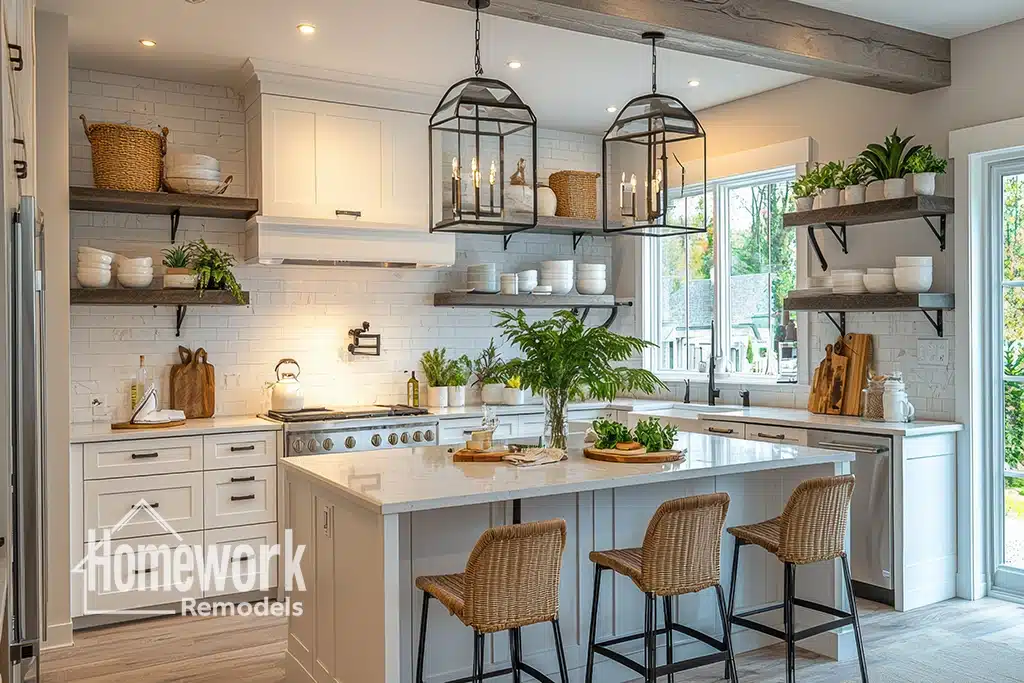
Open-Concept Kitchen Designs Perfect for Entertaining in Scottsdale
Entertaining in Scottsdale often blurs the line between indoors and out. Friends gather around the kitchen, conversations spill into adjacent living spaces, and meals become shared experiences rather than isolated tasks. In homes designed decades ago, however, kitchens were frequently separated from the rest of the house—making hosting feel fragmented and constrained.
Open-concept kitchen designs perfect for entertaining in Scottsdale focus on connection. They allow cooking, conversation, and gathering to happen naturally in one cohesive space, while still respecting structure, circulation, and daily functionality.
Why open-concept kitchens resonate in Scottsdale homes
Scottsdale lifestyles tend to value openness, light, and flow. Whether hosting family dinners or casual get-togethers, homeowners often want kitchens that feel welcoming rather than enclosed.
Open-concept designs support this by removing visual barriers and improving sightlines. Natural light travels farther, spaces feel larger, and the kitchen becomes part of the social experience instead of a separate work zone.
That said, open concept isn’t simply about removing walls. The success of these designs depends on careful planning that balances openness with practicality.
Start with how you actually entertain
Not all entertaining looks the same. Some homeowners host large gatherings; others prefer small, informal get-togethers. Understanding how you entertain should guide design decisions.
In Scottsdale homes, open kitchens often function as the hub of activity. Islands become gathering points, while adjacent living areas support conversation and relaxation. Planning the kitchen’s relationship to these spaces ensures the layout supports real-life use rather than just visual appeal.
A common challenge—and a thoughtful solution
A frequent issue arises when homeowners remove walls without addressing how the kitchen will function afterward. The problem is not openness—it’s lack of structure.
In one Scottsdale home, removing a dividing wall created a large, undefined space that felt noisy and disorganized. The solution involved re-establishing zones through layout, island placement, and lighting rather than walls. The outcome was a kitchen that felt open yet purposeful, supporting entertaining without sacrificing usability.
This problem–solution–outcome sequence is why many homeowners learn about the design-build remodeling process, which allows structural, design, and functional decisions to be coordinated before construction begins.
Managing structure and flow
Open-concept kitchens often require structural changes, such as removing load-bearing walls or reconfiguring support elements. These changes must be planned carefully to maintain safety and integrity.
Beyond structure, flow matters just as much. Clear pathways between the kitchen, dining, and living areas help guests move comfortably without crowding work zones. In Scottsdale homes designed for entertaining, this circulation planning often determines whether the space feels relaxed or chaotic.
Kitchen islands as social anchors
In open-concept designs, the island often becomes the centerpiece. It serves as a place for food prep, casual dining, and conversation.
The key is proportion. An oversized island can disrupt circulation, while one that’s too small may fail to support gathering. Thoughtful island design considers seating, storage, and workflow together, ensuring the island enhances entertaining rather than complicates it.
Visual cohesion without visual clutter
Open kitchens are always on display, which means visual cohesion is essential. Cabinetry, countertops, and finishes should relate naturally to adjacent spaces.
In Scottsdale homes, restraint often leads to better results. Clean lines, consistent materials, and subtle transitions allow the kitchen to feel integrated rather than overwhelming. This approach helps the open space feel calm and inviting during both everyday life and larger gatherings.
Acoustics, lighting, and comfort
Removing walls can introduce new challenges, such as noise travel and lighting balance. Open kitchens benefit from layered lighting that adapts from cooking to entertaining, as well as materials that soften sound.
These details are often overlooked but have a major impact on comfort. Planning for acoustics and lighting early helps ensure the space feels welcoming rather than overstimulating.
Open concept and long-term flexibility
While open-concept kitchens are ideal for entertaining, they should also support daily routines. Zoned layouts, flexible furniture placement, and adaptable lighting help the space function well even when entertaining isn’t the priority.
For Scottsdale homeowners planning to stay in their homes long-term, this flexibility ensures the kitchen remains enjoyable through different life stages and lifestyle changes.
Reviewing examples of Scottsdale kitchen remodeling projects can help homeowners see how open-concept designs are implemented in ways that feel intentional and livable.
Planning before opening walls
The most successful open-concept kitchens begin with careful planning. Structural considerations, mechanical systems, and layout details all need to be evaluated before walls are removed.
Rushed decisions can lead to compromises that affect both function and comfort. Thoughtful planning creates clarity and confidence, reducing surprises during construction.
Moving forward with confidence
Open-concept kitchen designs can transform how a home feels and functions—especially for entertaining. When planned thoughtfully, they create spaces that support connection, comfort, and everyday enjoyment.
If you’re considering opening up your kitchen to improve entertaining, learning what to expect during your first remodeling consultation can help you understand how open-concept planning fits into a calm, well-coordinated remodeling process.