
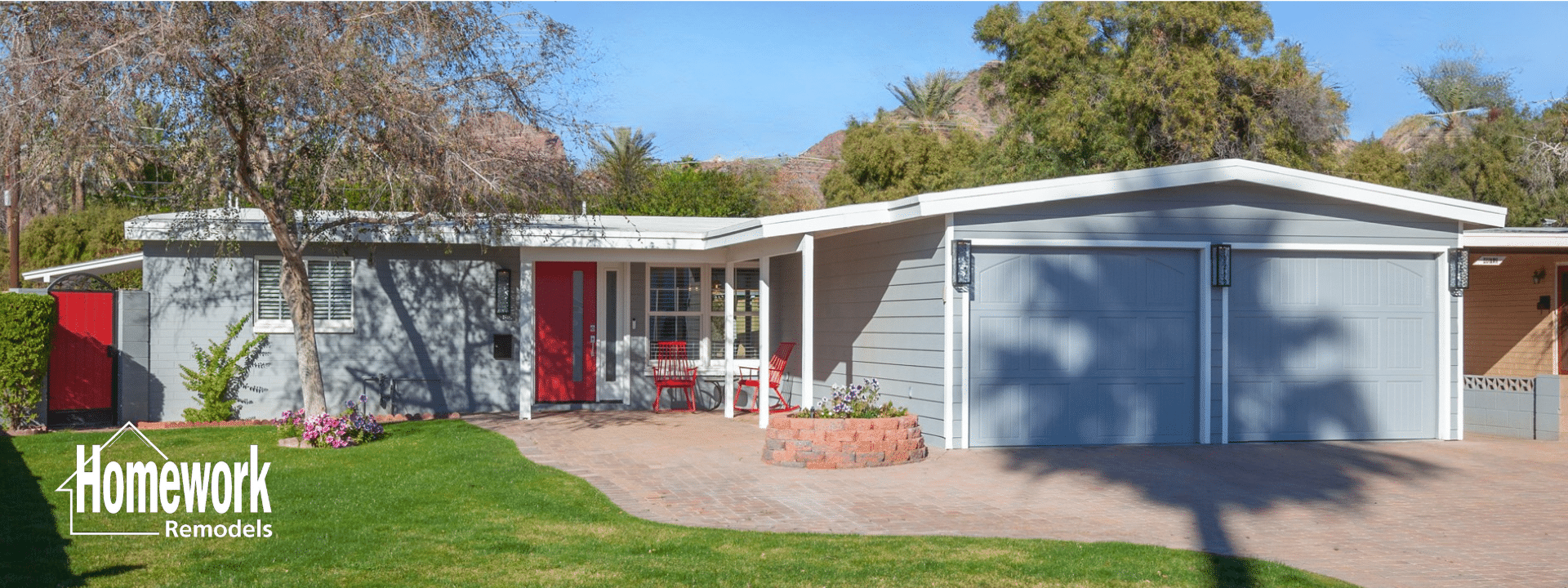
Mid-Century Modern Remodeling in Paradise Gardens
Tucked into the foothills near Phoenix’s Dreamy Draw region, Paradise Gardens remains one of the Valley’s most architecturally distinctive mid-century modern neighborhoods. Developed during the late 1950s and early 1960s, the community reflects the optimism, simplicity, and desert responsiveness that defined Arizona modernism during the postwar era.
Paradise Gardens is closely associated with architect Al Beadle and the broader Mid-Century Modern movement that helped shape the architectural identity of Phoenix. Angular rooflines, breezeblock privacy walls, slump block facades, expansive glazing, and strong indoor-outdoor relationships still give the neighborhood a timeless architectural atmosphere decades after the homes were originally built.
What makes Paradise Gardens especially meaningful is how intentional the architecture feels. These homes were not designed around decorative excess or formal luxury. Instead, they emphasized openness, environmental responsiveness, visual restraint, and honest use of materials. The architecture itself was meant to create calmness, livability, and connection to the surrounding desert landscape.
At the same time, many original homes now require thoughtful modernization to support contemporary lifestyles. Kitchens were often compact and isolated from gathering spaces. Bathrooms were minimal and highly utilitarian. Mechanical systems, insulation, glazing, plumbing, and electrical infrastructure frequently struggle with modern comfort expectations. Homeowners today often want larger entertaining spaces, stronger indoor-outdoor flow, improved functionality, modern systems, guest accommodations, and more connected layouts while still preserving the architectural spirit that makes Paradise Gardens special in the first place.
That balance is where preservation-sensitive mid-century modernization becomes essential.
At Homework Remodels, we specialize in remodeling architecturally significant homes throughout Phoenix with a design-build process focused on protecting original character while carefully adapting homes for modern living. Many homeowners beginning the planning process first explore our broader Mid-Century Modern Home Remodeling hub to better understand how thoughtful modernization differs from conventional remodeling.
Paradise Gardens and the Legacy of Desert Modernism
Paradise Gardens represents a remarkable period in Arizona architectural history when designers embraced the desert environment rather than attempting to hide from it. The neighborhood’s homes were carefully designed around sunlight, shade, airflow, openness, and visual simplicity.
Typical architectural features throughout Paradise Gardens include:
- angular and butterfly rooflines
- breezeblock privacy walls
- slump block and concrete masonry construction
- broad expanses of glass
- open floorplans with minimal ornamentation
- integrated patios and carports
- strong indoor-outdoor continuity
These design elements were not simply aesthetic decisions. They were functional responses to Arizona’s climate and lifestyle. Roof overhangs created shade. Breezeblock screens filtered light and airflow. Large windows framed mountain views and natural desert light. Open floorplans reinforced simplicity and livability.
Many Paradise Gardens homes still feel remarkably modern today because the underlying design principles remain deeply relevant. The homes emphasize openness, flexibility, simplicity, and connection to the surrounding environment in ways that continue aligning naturally with contemporary living.
Many homeowners researching preservation-sensitive modernization continue exploring our Mid-Century Modern Home Remodeling Guide to better understand how thoughtful remodeling can preserve architectural integrity while improving daily livability.
What Mid-Century Modernization Really Means
We intentionally use the phrase “mid-century modernization” because it reflects a more thoughtful approach than simple renovation or cosmetic updating.
Mid-century homes depend heavily on proportion, openness, natural light, structural simplicity, and material restraint. Remodeling them successfully requires understanding how the original architecture was intended to function before introducing major structural or visual changes.
In Paradise Gardens, thoughtful modernization often focuses on:
- preserving original rooflines and geometry
- maintaining visual openness
- strengthening indoor-outdoor flow
- improving kitchen integration
- modernizing bathrooms discreetly
- upgrading systems without visual disruption
- preserving architectural materials and detailing
- improving energy performance sensitively
The strongest projects avoid decorative clutter or trend-heavy styling that visually overwhelms the architecture itself. Instead, successful modernization often feels restrained, balanced, and naturally integrated into the home.
Rather than erasing history, thoughtful modernization allows these homes to evolve naturally while still preserving the architectural language that originally defined them.
Many homeowners evaluating larger transformations continue researching our approach to mid-century modern design-build remodeling to better understand how integrated planning protects architectural integrity throughout major remodeling projects.
Preserving Architectural Integrity During Remodeling
One of the greatest mistakes in remodeling Paradise Gardens homes occurs when homeowners or contractors approach the property like a generic contemporary renovation rather than an architecturally significant home.
Mid-century architecture depends heavily on visual rhythm, natural light, structural clarity, openness, and restraint. Once those relationships are disrupted, the home can quickly lose the calm simplicity that originally defined it. Oversized additions, decorative clutter, busy material transitions, or poorly integrated structural modifications can dramatically weaken the architectural identity of the property.
Thoughtful modernization instead focuses on preserving the architectural DNA of the home while improving comfort and functionality.
Many Paradise Gardens homes contain subtle architectural relationships that can easily be overlooked during remodeling. Rooflines create dramatic geometric balance across the home. Breezeblock walls filter sunlight intentionally throughout the day. Window placement carefully frames views and controls daylight. Open floorplans reinforce visual continuity between interior and exterior spaces.
When remodeling projects ignore those relationships, the home can begin feeling fragmented or visually unstable. Successful remodeling therefore depends heavily on architectural restraint and careful planning rather than dramatic reinvention.
This becomes especially important during structural remodeling. Removing walls or expanding spaces affects much more than circulation alone. Structural modifications influence roof geometry, natural light distribution, ceiling continuity, and the visual openness that defines many Paradise Gardens homes.
Many homeowners evaluating preservation-sensitive remodeling continue researching our broader philosophy of whole-home remodeling to better understand how architectural continuity can be preserved during major transformations.
Kitchen Remodeling in Paradise Gardens Homes
Many original Paradise Gardens kitchens were designed around compact workspaces, smaller appliances, and more isolated family living patterns than homeowners expect today. Remodeling projects frequently focus on improving workflow, increasing storage, integrating islands, and strengthening connection between kitchens and surrounding gathering spaces.
The strongest mid-century kitchens preserve architectural restraint rather than competing visually with the surrounding home. Slab-front walnut cabinetry, terrazzo-inspired surfaces, integrated appliances, matte quartz countertops, and understated lighting often create more authentic results than highly decorative contemporary kitchen styles.
Structural wall removal frequently becomes part of Paradise Gardens kitchen remodeling because opening kitchens into living and dining spaces dramatically improves circulation and entertaining flow.
Many homeowners also prioritize preserving original architectural features such as exposed beams, clerestory windows, masonry detailing, or breezeblock accents while modernizing the surrounding kitchen environment.
The strongest kitchen remodels feel naturally integrated into the original architecture rather than visually separated from it.
Homeowners researching preservation-sensitive kitchen modernization frequently continue exploring our broader approach to improving kitchen flow and functionality while planning long-term remodeling goals.
Bathroom Remodeling with Mid-Century Simplicity
Original Paradise Gardens bathrooms were highly compact and practical by the standards of their era. Today’s homeowners often want larger showers, improved lighting, expanded storage, stronger indoor comfort, and more functional layouts while still preserving the simplicity associated with authentic mid-century architecture.
Successful bathroom modernization projects frequently focus on openness, calmness, and material continuity rather than decorative excess. Floating vanities, frameless glass, curbless showers, integrated lighting, muted tile palettes, and warm natural materials often create more architecturally integrated results than ornate fixtures or trend-heavy finishes.
Many homeowners also prioritize improving natural light and visual openness so bathrooms feel calmer and more connected to the overall architectural language of the home.
The strongest bathroom remodels often succeed because they feel understated rather than over-designed. Simplified transitions and restrained detailing help preserve the calm atmosphere associated with thoughtful mid-century modernization.
Homeowners planning broader whole-home transformations frequently continue exploring our approach to architecturally integrated bathroom remodeling to better understand how bathroom upgrades connect to larger modernization strategies.
Open-Concept Remodeling and Structural Wall Removal
One of the most common remodeling goals in Paradise Gardens involves improving openness and strengthening connection between interior living spaces.
Many original homes already contain relatively open floorplans compared to traditional ranch homes of the era, yet kitchens and secondary spaces may still feel visually disconnected from gathering areas or outdoor patios.
Opening these homes successfully requires careful structural planning and architectural sensitivity. Roof geometry, ceiling continuity, beam relationships, natural light distribution, and visual balance all influence how the home feels once spaces are reconfigured.
The strongest open-concept remodeling projects preserve the calm visual rhythm of the original architecture while improving circulation and functionality. Structural engineering often becomes a major component of these projects because carefully integrated beam systems may be necessary to preserve openness without compromising structural integrity.
Many homeowners also prioritize strengthening indoor-outdoor relationships through larger sliding doors, expanded patios, integrated courtyards, and improved visual connection between interior gathering spaces and the surrounding desert landscape.
Homeowners evaluating these structural transformations frequently continue researching our guidance on creating open-concept living spaces to better understand how thoughtful planning can improve functionality while preserving architectural balance.
Casitas, Guest Houses, and Flexible Living
Many Paradise Gardens properties can accommodate architecturally sensitive additions designed around changing family needs, remote work, multigenerational living, or guest accommodations.
Popular projects often include:
- detached guest houses
- attached casitas
- home offices
- climate-controlled studio spaces
- multigenerational living suites
- compact ADUs designed around modernist geometry
The strongest additions preserve the clean lines, scale relationships, and restrained detailing associated with Paradise Gardens architecture. Roof pitches, glazing proportions, material continuity, and overall massing must feel naturally integrated into the existing structure rather than visibly attached afterward.
Many homeowners also prioritize maintaining neighborhood character while improving flexibility and long-term property value.
Homeowners exploring flexible living solutions frequently continue researching our resources on casita and guest house additions to better understand how additional living space can be integrated thoughtfully into Paradise Gardens properties.
The Design-Build Advantage for Mid-Century Homes
Remodeling architecturally significant homes requires substantial coordination between architecture, engineering, budgeting, and construction execution.
Structural systems, glazing upgrades, insulation improvements, lighting integration, electrical modernization, HVAC redesign, roof coordination, permitting, and architectural detailing all affect one another during construction. Fragmented remodeling processes often create problems because architectural decisions become disconnected from structural realities or long-term planning goals.
Our design-build process was developed specifically to improve coordination throughout architecturally sensitive remodeling projects. Design development, engineering, budgeting, selections, permitting, and construction sequencing evolve together from the earliest planning stages through final construction.
This integrated approach becomes especially important when projects involve structural wall removal, architecturally sensitive additions, preservation-focused remodeling, or whole-home modernization.
Many homeowners planning larger transformations continue exploring our Core Guides for remodeling planning to better understand budgeting, preconstruction, and long-term remodeling strategy.
Mid-Century Neighborhoods Connected to Paradise Gardens
Our preservation-sensitive remodeling work extends beyond Paradise Gardens into many of Metro Phoenix’s most architecturally significant mid-century neighborhoods.
Homeowners often continue exploring:
- Arcadia Lite Mid-Century Modernization
- Windsor Square Mid-Century Modern Remodeling
- Marlen Grove Mid-Century Modern Remodeling
- Village Grove Scottsdale Mid-Century Modern Remodeling
- North Central Phoenix Remodeling
Why Paradise Gardens Homeowners Choose Homework Remodels
Paradise Gardens homeowners often choose Homework Remodels because our process is built around architectural sensitivity, transparency, craftsmanship, and respect for historic homes.
Our team brings decades of experience remodeling architecturally significant properties throughout Phoenix and Scottsdale. We understand how structural systems, rooflines, glazing, lighting, and material continuity all influence the character of Mid-Century Modern homes.
Homeowners researching our remodeling philosophy often continue exploring:
Ready to Modernize Your Paradise Gardens Home?
Your Paradise Gardens home represents an important piece of Phoenix architectural history. Thoughtful modernization can preserve the qualities that make the home meaningful while dramatically improving comfort, functionality, indoor-outdoor living, and long-term livability.
Whether you are planning a kitchen remodel, whole-home modernization, structural reconfiguration, guest house addition, or open-concept transformation, Homework Remodels can help you approach the process with architectural sensitivity, careful planning, and long-term vision.
Many homeowners begin by scheduling a conversation through our Free Remodeling Consultation page to discuss their home, modernization priorities, architectural goals, and long-term plans for the property.
AWARD WINNING HOME AND COMMERCIAL RENOVATION SERVICES
Got a project in mind? Let’s talk! We’re excited to help you make it happen.