
Planning Bathroom Additions in Willo Homes Without Disrupting Historic Scale
Many Willo homes were built with just one bathroom—or in some cases, a single shared bath for the entire household. When these homes were constructed in the 1920s and 1930s, this arrangement was typical. Daily routines were simpler, households were smaller, and expectations for privacy were very different from today. Modern living, however, often demands additional bathrooms to support comfort, efficiency, and long-term livability. Adding a bathroom in a historic Willo home requires careful planning to avoid disrupting scale, proportion, and architectural integrity.
In the Willo Historic District, bathroom additions are approached with a strong sense of restraint. Rather than dramatically altering the home’s footprint, many projects focus on reassigning existing space or making modest rear additions. Preserving the street-facing appearance of the home is a priority, with most visible changes occurring away from primary elevations. This approach helps maintain the visual rhythm of the neighborhood while allowing interiors to evolve.
Interior reconfiguration is often the first strategy explored. Many Willo homes include underutilized closets, oversized bedrooms, or secondary living spaces that no longer align with how families live today. With thoughtful planning, these areas can sometimes be adapted to accommodate a new bathroom without introducing new massing or exterior disruption. These solutions often provide the greatest return with the least impact on the home’s historic character.
When reassigning interior space, circulation is carefully considered. A successful bathroom addition should feel integrated, not squeezed in as an afterthought. Aligning doorways, preserving clear pathways, and maintaining room proportions helps the new bathroom feel intentional and balanced within the existing layout.
When additions are necessary, scale becomes the guiding principle. Bathrooms are compact by nature, which makes them well suited to modest expansions. In Willo, these additions are typically located toward the rear of the home, where they can be visually discreet. Careful attention to rooflines, window proportions, and exterior materials ensures that new construction feels compatible with the original structure rather than competing with it.
Roof design is especially important. Stepped rooflines or lower profiles help additions remain subordinate to the original home. Window placement is also considered carefully, balancing natural light with privacy for both the homeowner and neighboring properties.
Plumbing integration is another key consideration in historic bathroom additions. Older homes often require infrastructure upgrades to support additional fixtures, drainage, and modern water pressure demands. These improvements are typically concealed within walls and floors, preserving visual character while significantly enhancing performance and reliability. While largely invisible once complete, plumbing upgrades are essential to long-term success.
For homeowners considering how bathroom additions fit into the broader context of historic remodeling, the Willo Historic District Home Remodeling hub provides neighborhood-specific insight into planning priorities, preservation strategies, and design considerations unique to Willo homes.
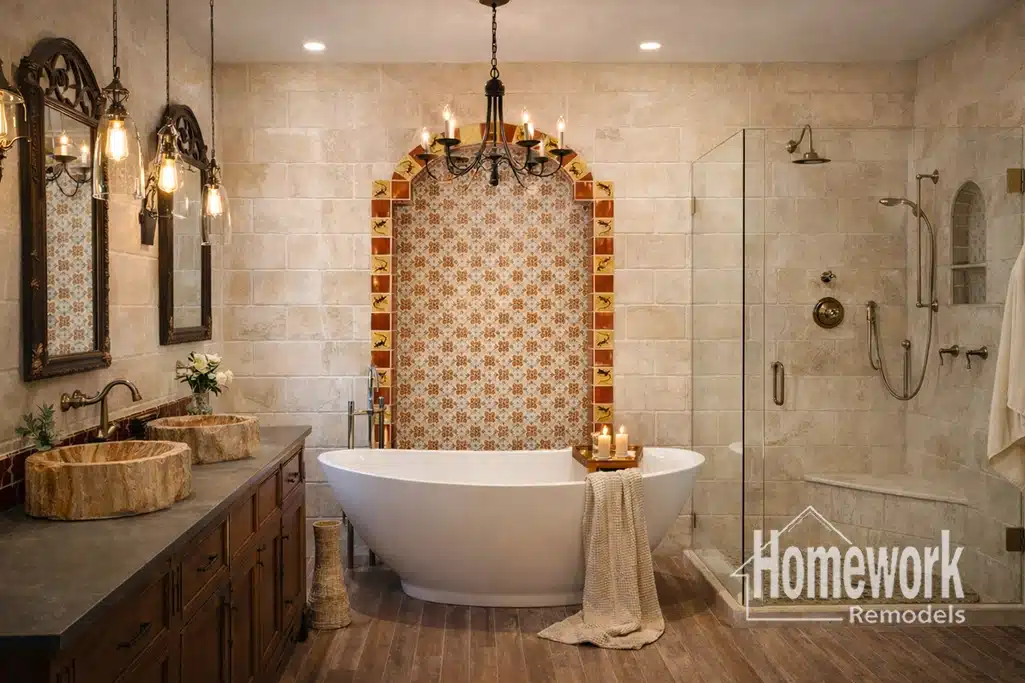
Interior finishes are chosen with particular care in bathroom additions. Overly modern fixtures, glossy surfaces, or minimalist designs can feel disconnected from the rest of the home. Many homeowners instead select period-inspired materials—such as classic tile patterns, understated fixtures, and warm finishes—that feel consistent with the home’s era. These are often paired with modern construction methods that improve durability and ease of maintenance without compromising appearance.
Lighting and ventilation also play important roles. New bathrooms are designed to feel comfortable and bright while remaining visually appropriate. Layered lighting improves usability, while upgraded ventilation protects finishes and manages moisture more effectively than original systems ever could.
Bathroom additions also support long-term living. Additional baths improve adaptability for growing families, frequent guests, and aging-in-place considerations. Features such as improved circulation, step-free showers, and thoughtful lighting can be integrated subtly, ensuring the space remains functional over time without feeling clinical.
Just as important as the bathroom itself is how the addition relates to the rest of the home. Successful projects preserve continuity by aligning ceiling heights, matching trim profiles, and maintaining consistent material transitions. This attention to detail helps the new bathroom feel like a natural extension of the original structure.
Ultimately, bathroom additions in Willo succeed when they prioritize proportion, discretion, and continuity. By respecting the home’s original scale and architectural language, homeowners can gain much-needed functionality without sacrificing the charm that defines the neighborhood.
For a deeper look at how bathroom additions align with long-term stewardship and preservation in Willo, the Willo Historic District Home Remodeling hub offers comprehensive guidance tailored specifically to historic homes.