
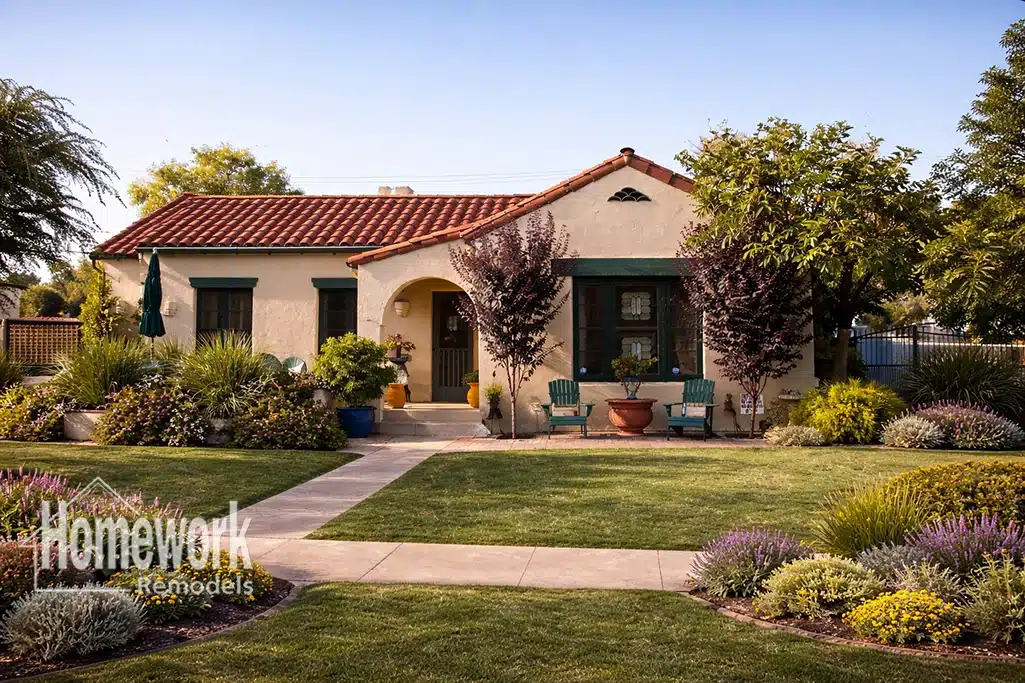
Planning Thoughtful Home Additions in F.Q. Story Without Losing Neighborhood Scale
Homes in the F.Q. Story Historic District were built with intentional restraint. Constructed primarily in the early twentieth century, these houses reflect a period when simplicity, modest proportions, and efficient layouts defined residential design. Rather than grand scale, they rely on balance and human-scaled massing to create comfort and cohesion. This restraint is central to the neighborhood’s enduring appeal. When homeowners consider adding space today, the challenge is not whether an addition is possible, but how to introduce new square footage without eroding the character that makes F.Q. Story distinctive.
In the F.Q. Story Historic District, successful additions begin with a clear understanding of scale. Many of these homes are small by modern standards, and oversized expansions can quickly overwhelm both the original structure and the surrounding streetscape. When additions ignore the home’s original proportions, they often feel visually disconnected—larger than necessary and out of step with neighboring houses. Thoughtful planning prioritizes modest, purpose-driven additions that respond directly to specific needs rather than maximizing square footage.
This mindset encourages intentional decision-making. Instead of asking how much space can be added, homeowners and designers ask what space is truly needed. Whether the goal is a more functional kitchen, a small primary suite, or a flexible family room, defining the purpose of the addition helps keep scale in check and ensures that new construction serves the home rather than dominating it.
Rear-oriented additions are the most common and effective approach in F.Q. Story. By expanding toward the backyard, homeowners preserve the street-facing façade that contributes to neighborhood continuity. This strategy protects the public character of the home while allowing meaningful interior improvements. Kitchens can gain much-needed workspace, compact primary suites can be introduced, or living areas can expand—without altering the visual rhythm of the street.
Rear additions also allow greater discretion. Because they are less visible from public vantage points, they can be designed to meet functional needs while remaining visually secondary. This balance between usability and restraint is a hallmark of successful historic additions.
Massing and proportion require especially careful consideration. Additions that are too tall, too wide, or too abrupt can disrupt the original structure’s balance. Designers often rely on stepped transitions, lower rooflines, and subtle setbacks to ensure that new construction feels subordinate to the original home. These techniques help additions read as natural extensions rather than competing volumes.
Roof design plays a significant role in this perception. Lower secondary roofs or gently sloped transitions preserve the visual dominance of the original structure. Window placement and size are also carefully calibrated so new openings feel consistent with historic proportions rather than oversized or overly contemporary.
Interior integration is equally important. A well-planned addition feels cohesive, not appended. Aligning ceiling heights, floor levels, and circulation paths allows old and new spaces to function together seamlessly. Poor integration—such as abrupt level changes or awkward transitions—can make even small additions feel disconnected and disruptive.
Circulation is often the deciding factor in whether an addition feels successful. When new spaces connect naturally to existing rooms, daily use feels intuitive. When circulation is forced or indirect, the home can feel fragmented. Thoughtful planning ensures that additions enhance flow rather than complicate it.
Material selection reinforces architectural continuity. Exterior finishes are chosen to complement existing stucco or masonry without resorting to imitation. The goal is compatibility rather than replication—materials that feel appropriate without pretending to be original. Window proportions, trim depth, and detailing are carefully considered so new elements align visually with the home’s era.
Inside the home, flooring transitions and millwork profiles help maintain visual flow. Matching plank widths, trim heights, and wall textures allows old and new spaces to blend seamlessly. These details are subtle, but they play a powerful role in how cohesive the finished home feels.
For homeowners exploring how these principles apply locally, the F.Q. Story Home Remodeling hub provides neighborhood-specific guidance on scale, planning constraints, and preservation-minded strategies tailored to this historic district.
Modern system upgrades are often integrated during addition projects. Electrical improvements, HVAC upgrades, enhanced insulation, and structural reinforcement significantly improve comfort and efficiency. These behind-the-scenes updates are largely invisible once complete, yet they contribute enormously to long-term livability. Coordinating system upgrades with an addition allows homeowners to modernize performance without altering the home’s historic appearance.
Flexibility is another guiding principle in F.Q. Story additions. Many homeowners design new spaces to serve multiple purposes over time—guest rooms that later become primary suites, or family rooms that adapt to work-from-home needs. This adaptability reduces pressure for future expansions and supports aging-in-place considerations.
Long-term stewardship is closely tied to this restraint. Homes that retain their modest character tend to age more gracefully and remain more desirable over time. Buyers drawn to F.Q. Story often value simplicity and proportion. Remodeling decisions that respect these qualities protect both individual property value and neighborhood cohesion.
Ultimately, additions in F.Q. Story succeed when guided by intention rather than excess. By respecting original proportions, maintaining architectural hierarchy, and responding thoughtfully to context, homeowners can gain meaningful space while preserving the modest charm that defines the district.
For a broader look at how additions fit within historic remodeling strategies in this neighborhood, the F.Q. Story Home Remodeling hub offers a comprehensive overview focused on long-term livability, architectural integrity, and preservation-minded planning.