
Willo Historic District · Phoenix
Spanish Colonial
Bathroom Remodel
in Willo
Travertine, colorful Mexican tile, and petrified wood vessel sinks bring warmth to a primary bathroom in a circa-1928 home. A freestanding tub and open shower share a setting shaped by the home’s Spanish Colonial character.
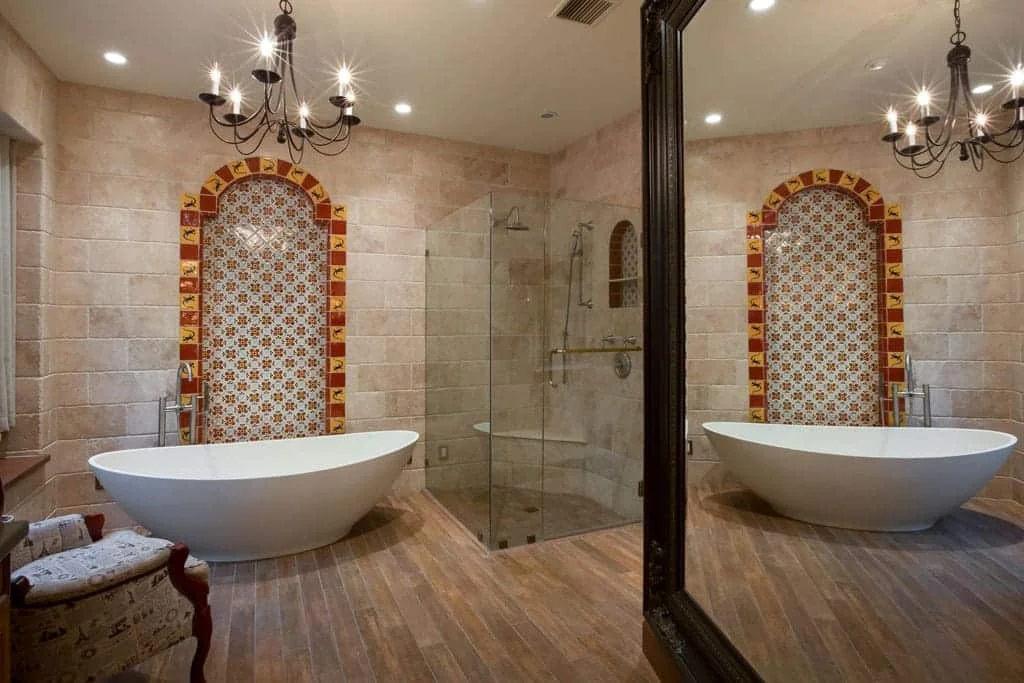
Circa-1928 Spanish Colonial home
Layout, structure, surfaces, and fixtures
freestanding tub, and petrified wood sinks
The bathroom needed to feel connected to the historic home around it.
An earlier remodel had introduced a large glass-block shower, polished marble, extensive mirrored surfaces, and fluorescent lighting. The homeowners wanted a warmer room that related more closely to the house’s Spanish Colonial architecture.
The renovation replaced that earlier arrangement with textured stone, decorative tile, and a more open relationship between the tub and shower. The new materials give the room a distinctive character while keeping its daily functions in view.
The scope of the remodel
Rebuilding beyond the finished surfaces
Removing the glass-block enclosure and dropped soffits made room to reconsider the layout. The work also addressed ceiling and floor conditions before the new finishes went in, including ceiling reframing and adjustments to the floor level.
Those changes affected the surrounding cabinetry and the coordination of the room’s mechanical systems. They were part of making the new bathroom fit the existing home, alongside the more visible choices of stone, tile, and fixtures.
The bathroom formed part of a broader restoration of the property. Its design continues the effort to bring the home’s different spaces into closer architectural agreement.
Stone and decorative tile
A warm background for a colorful focal point
Tumbled travertine covers the walls and continues into the shower. Its variation and softened texture give the room a quieter background for the patterned Mexican tile.
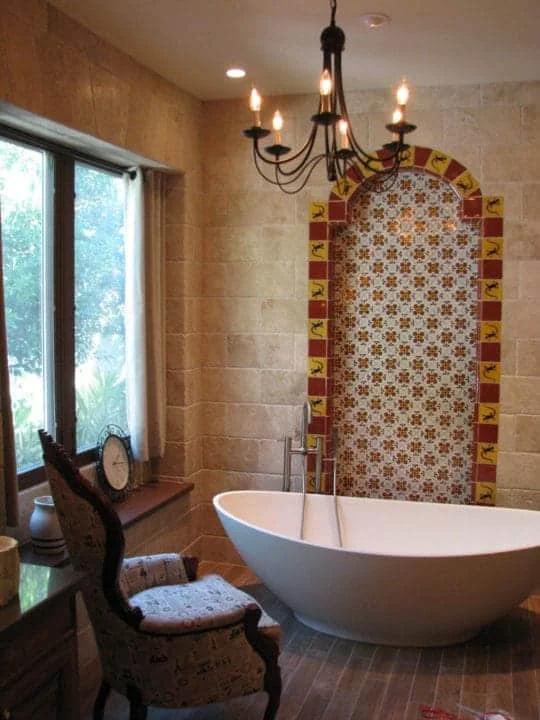
Behind the tub, a tall arched tile panel introduces color and pattern. The red-and-yellow border emphasizes its outline, while the smaller patterned field gives the freestanding tub a clear place within the room.
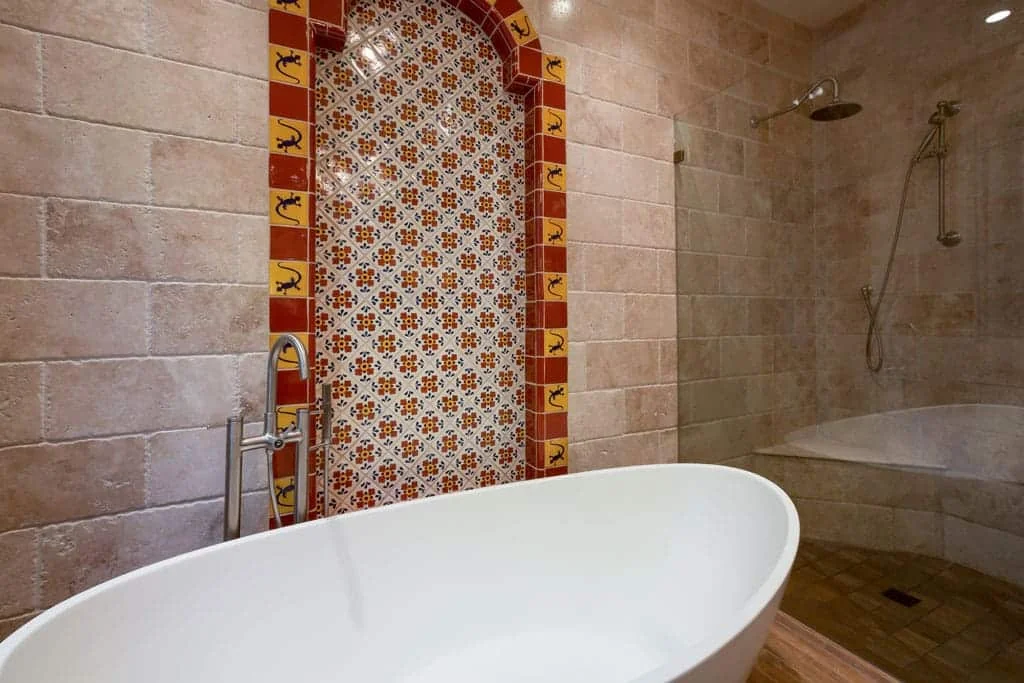
The bathing area
A freestanding tub with room around it
The white soaking tub sits in front of the decorative tile panel rather than within a heavy built-in surround. Its curved shape stands out against the stone walls and patterned background.
Beside it, the redesigned shower uses a recessed pan to reduce the transition into the bathing area. A bench and the continuation of the travertine help the shower read as part of the room.
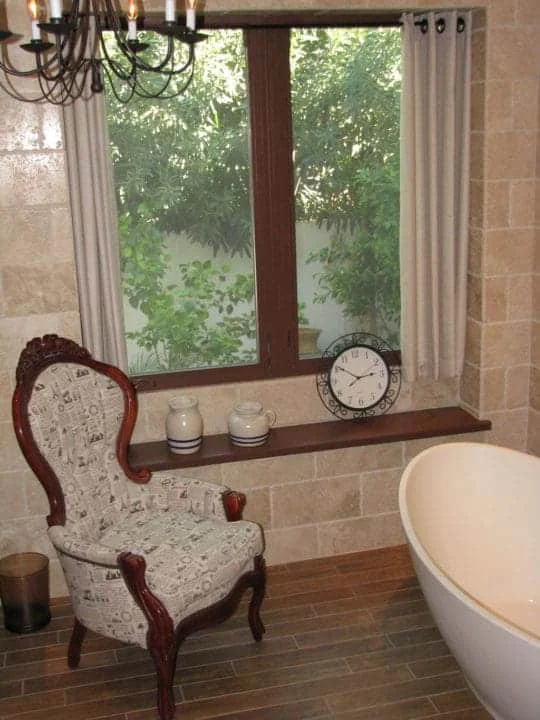
The large window brings daylight across these surfaces. A dark chandelier adds a contrasting detail above the tub, relating to the room’s Spanish Colonial-inspired furnishings.
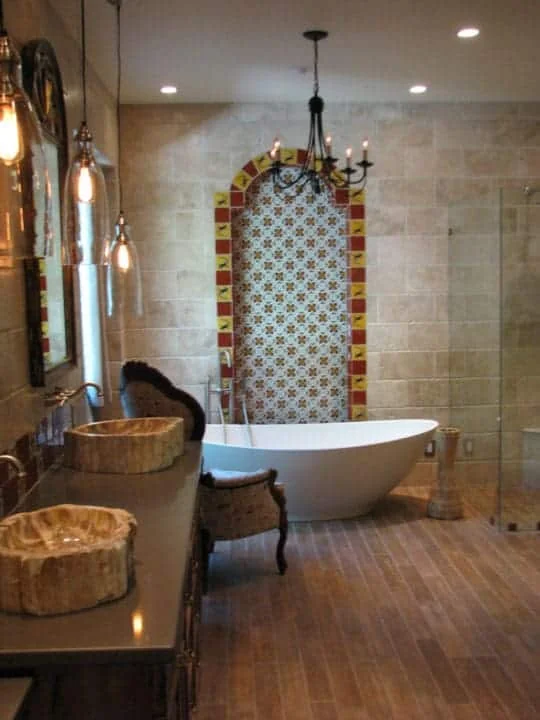
The vanity
Natural texture at the sinks
Petrified wood vessel sinks give each washing position an individual shape and pattern. They sit above a dark counter and refinished cabinetry, adding another natural material alongside the travertine.
Mirrors and pendant lights organize the vanity area, with recessed ceiling lights providing another layer of illumination. The mix of light sources serves the sinks and the broader room.
The vanity’s darker surfaces balance the pale walls and white tub. Together, the finishes create variation without making every surface compete for attention.
Daylight and furnishings
A place to pause beside the window
An upholstered wood chair brings a furniture-like detail into the bathroom. Its carved frame, the window treatment, and the chandelier soften the room’s stone surfaces.
These choices make the bathroom feel connected to the way the rest of the home is furnished. The large window provides a view of greenery and brings changing daylight into the bathing area.
Historic bathroom remodeling in Phoenix
A room that belongs with the home
The finished bathroom brings the home’s Spanish Colonial character into the primary suite through its materials and details. Travertine provides continuity, Mexican tile adds color, and the vessel sinks introduce individual natural forms.
The freestanding tub and more open shower give those choices a practical setting. The result is a bathroom designed for the homeowners’ daily use and for the character of their Willo home.
Planning a bathroom remodel in Willo?
In an older home, the plan needs to account for the existing structure and service routes alongside the style of the room. Understanding those conditions early helps coordinate layout, fixtures, and material choices.
Explore our bathroom remodeling services and design-build remodeling process. Begin organizing your priorities with The Path to Remodeling Clarity™.
Award-Winning Home Remodeling Services
Tell us what you would like your bathroom to do better and what you value about your home. We’ll begin with a conversation about your priorities and the possibilities for your remodel.