
Willo Historic District Galley Kitchen Remodel
Modernizing a 1938 Classic While Preserving Its Character
2018 NARI Contractor of the Year (CotY) Winner
Residential Kitchen Remodel | $30,000–$60,000

When a Historic Kitchen Feels Disconnected from the Home
The challenge isn’t always square footage—it’s connection.
This 1938 home in Phoenix’s Willo Historic District carried everything that makes historic homes so desirable—proportion, craftsmanship, and a strong architectural identity.
But the kitchen told a different story.
The narrow galley layout felt enclosed and isolated. Natural light struggled to reach the space. And when the homeowners entertained, they found themselves separated from the life of the home.
They didn’t want a bigger kitchen.
They wanted a better one—one that respected the home’s character while allowing it to function for modern living.
Projects like this reflect the balance required in historic home remodeling—but also connect to broader principles seen in home remodeling in Phoenix, where layout, light, and flow define how a home performs.
A Recognized Approach to Design-Build Remodeling
This project was recognized with the 2018 NARI Contractor of the Year award, highlighting excellence in both design and execution.
More importantly, it demonstrates the value of a coordinated process.
Historic remodels require more than design—they require alignment between structure, materials, and systems. This level of integration is central to design-build remodeling in Phoenix, where planning and construction evolve together from the beginning.
Opening the Kitchen Without Losing Its Identity
The most meaningful transformation came from improving connection—not removing character.
Originally, the kitchen was completely separated from the living room. Cooking meant stepping away from conversation.
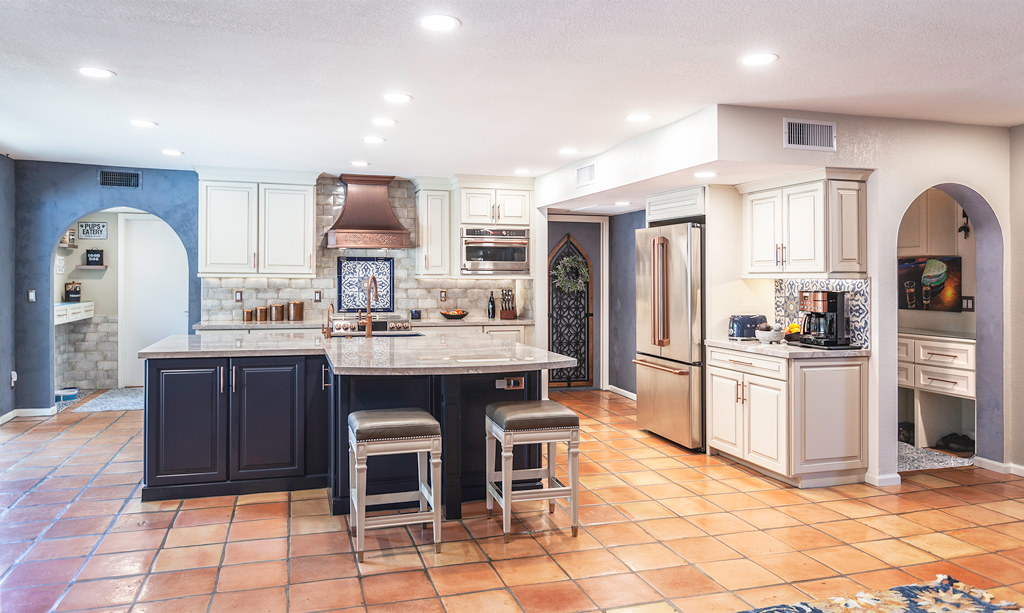
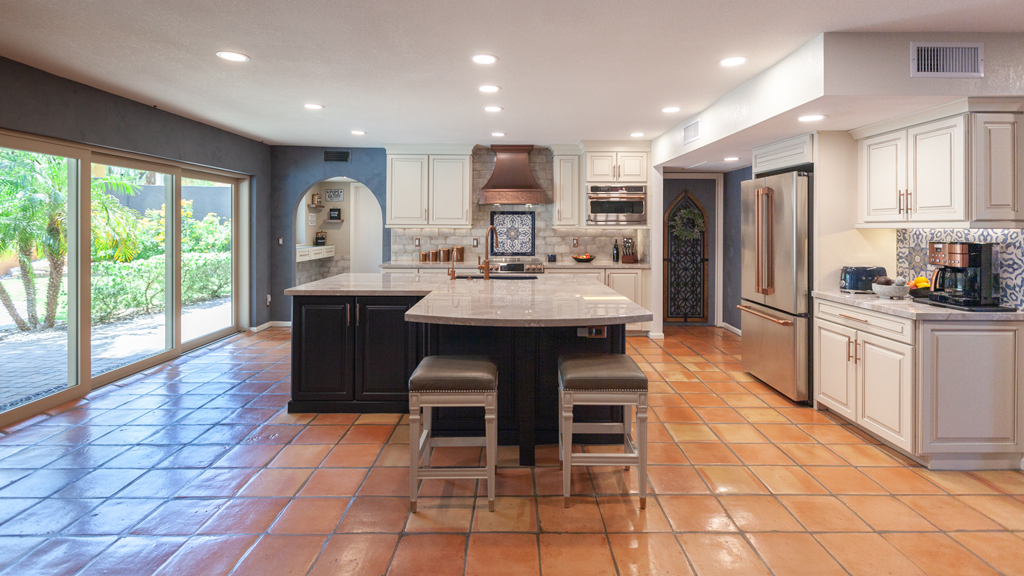
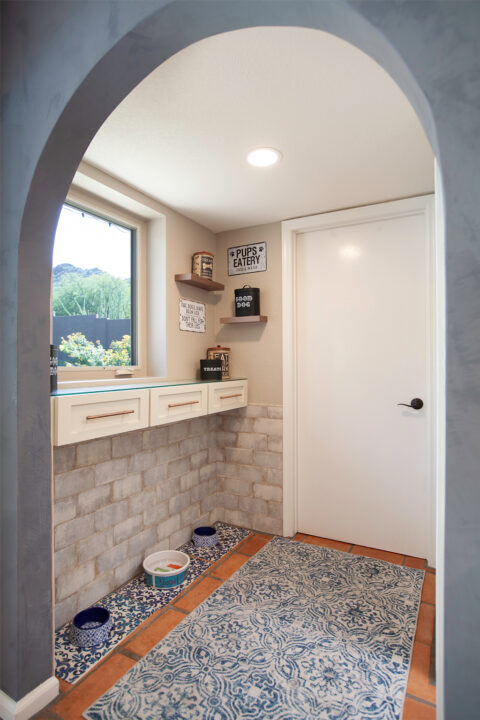
Rather than removing walls entirely, the design introduced a carefully proportioned arched pass-through.
This single change transformed how the home functions.
It creates a visual and social connection between spaces while maintaining the architectural language of the home. The widened doorway to the dining room further improves flow, allowing movement to feel natural rather than restricted.
These changes reflect the principles behind open concept remodeling in Phoenix, where connection is achieved through thoughtful design—not over-demolition.
Bringing Light Into a Traditionally Dark Layout
Galley kitchens in historic homes often feel narrow—not because of size, but because of how they interact with light.
The original finishes absorbed light, reinforcing the sense of enclosure.
The redesign focused on brightness without losing authenticity.
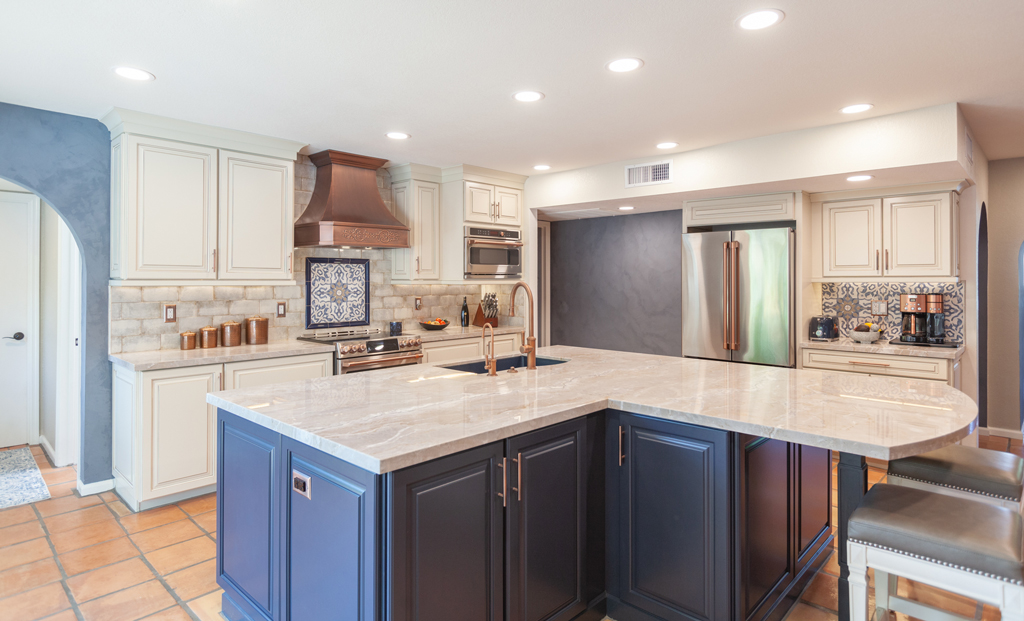
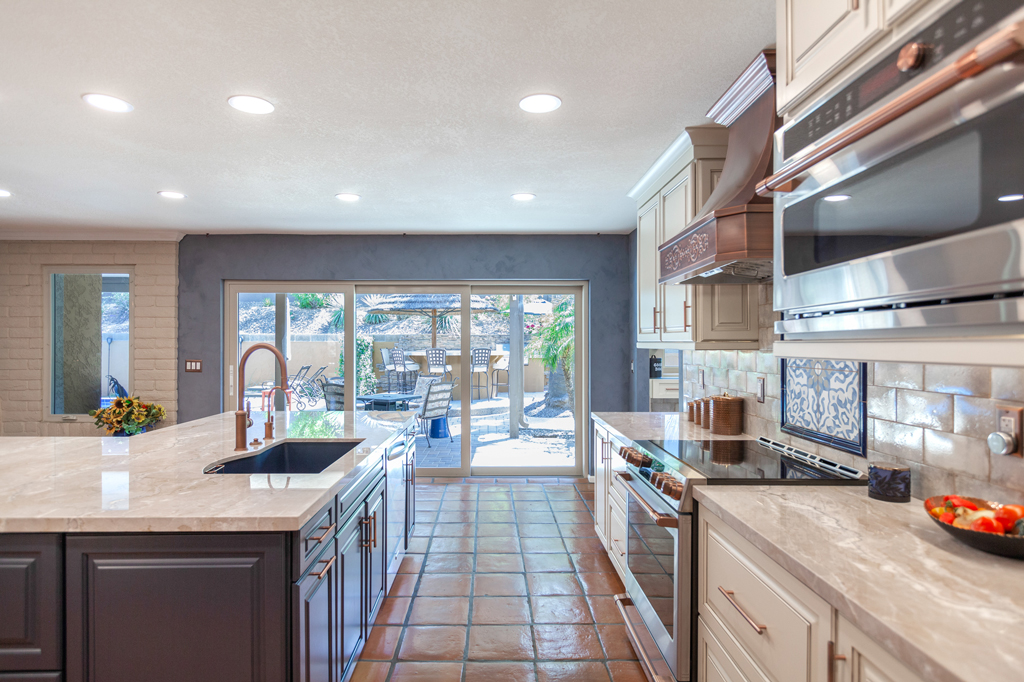
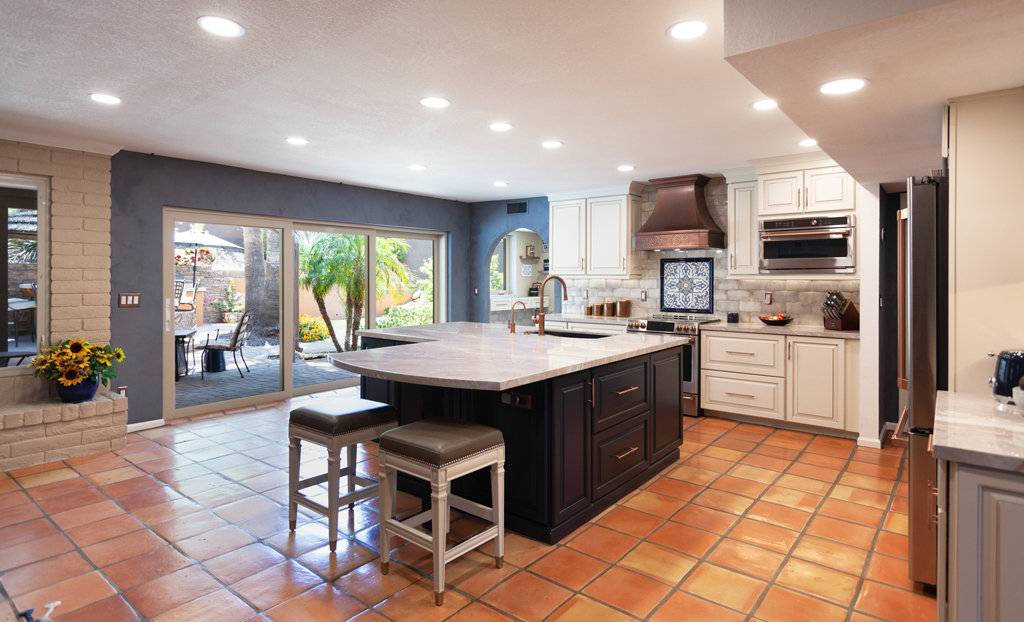
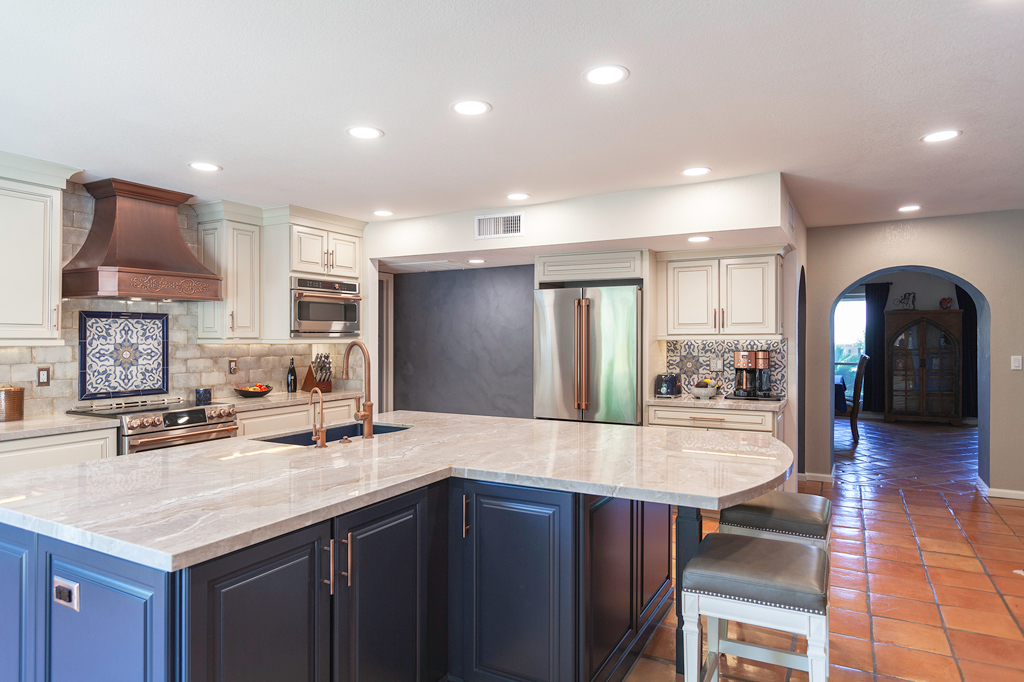
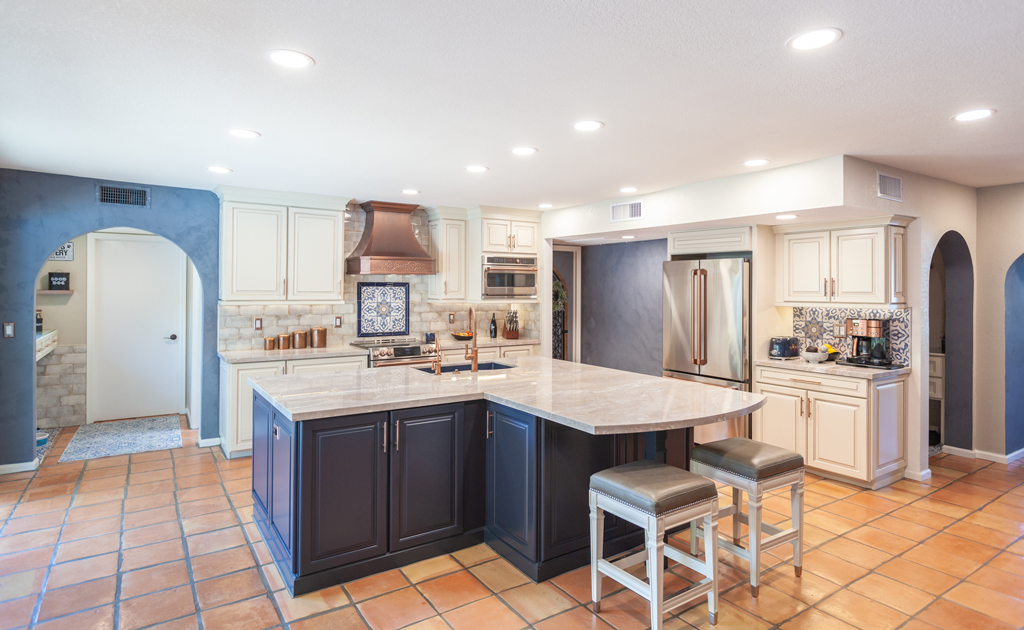
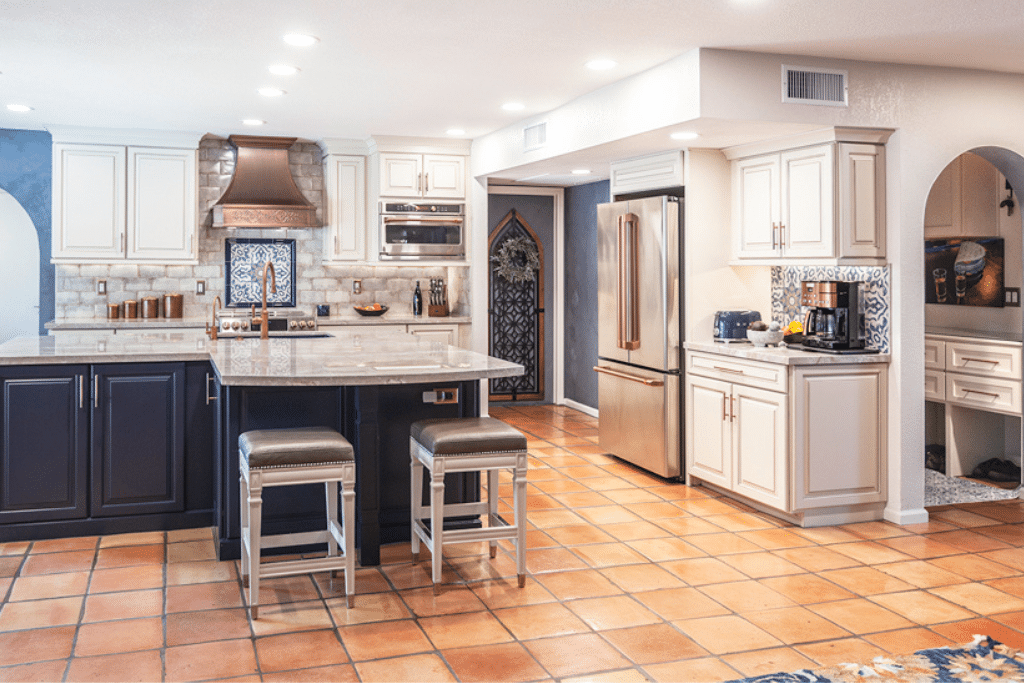
Soft linen-toned shaker cabinetry reflects light while maintaining a timeless character. Extending cabinetry to the ceiling increases storage while eliminating visual clutter. Quartz countertops further amplify natural light, helping the space feel open and inviting.
These changes don’t alter the footprint—but they completely change the experience.
A Stone Backsplash That Grounds the Space
While the overall palette remains light, the backsplash introduces depth.
A stacked stone installation in layered neutral tones creates a focal point that anchors the design. The texture adds richness without overwhelming the space.
Because the backsplash carries visual weight, surrounding materials were intentionally simplified—allowing the kitchen to feel balanced rather than busy.
Details That Preserve the Home’s Era
Historic remodeling succeeds in the details.
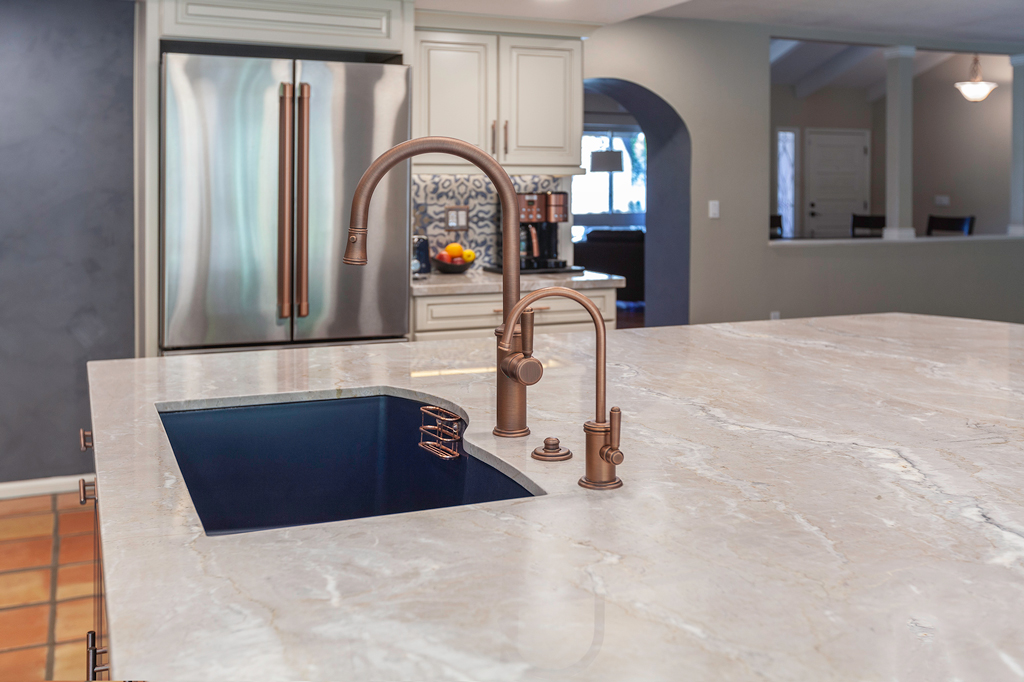
Cabinet hardware was selected to reflect the home’s 1930s character. A wall-mounted faucet with porcelain handles reinforces that authenticity while adding a distinctive focal point.
Millwork profiles were carefully matched to the original construction, ensuring continuity throughout the space.
These elements are subtle—but they are what make the kitchen feel original rather than replaced.
Improving Function Without Expanding the Footprint
Although the kitchen footprint remained unchanged, functionality improved significantly.
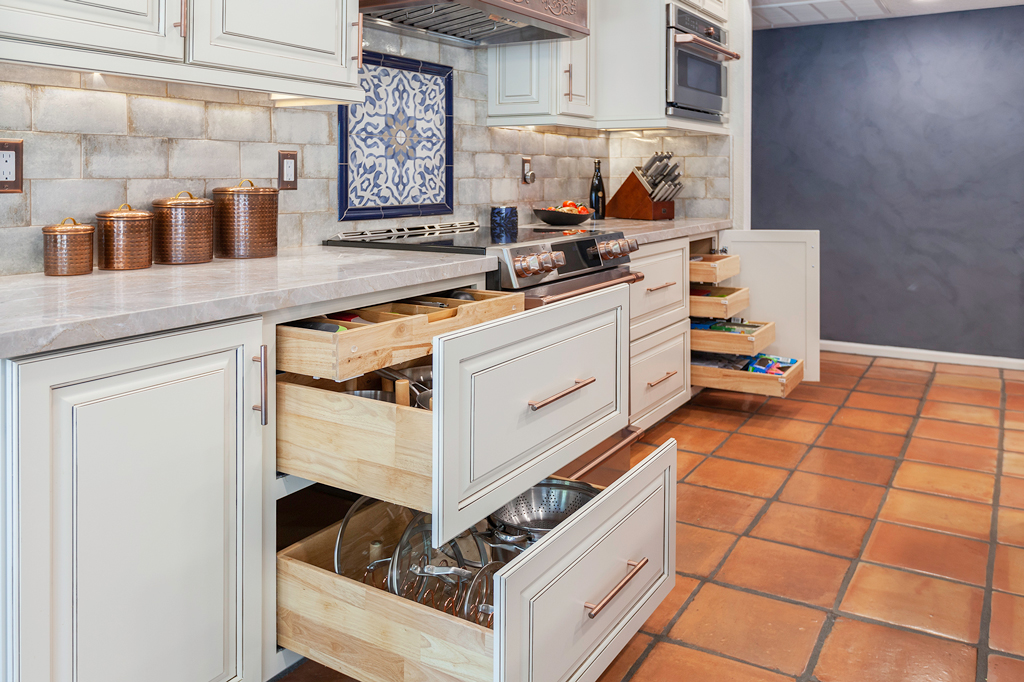
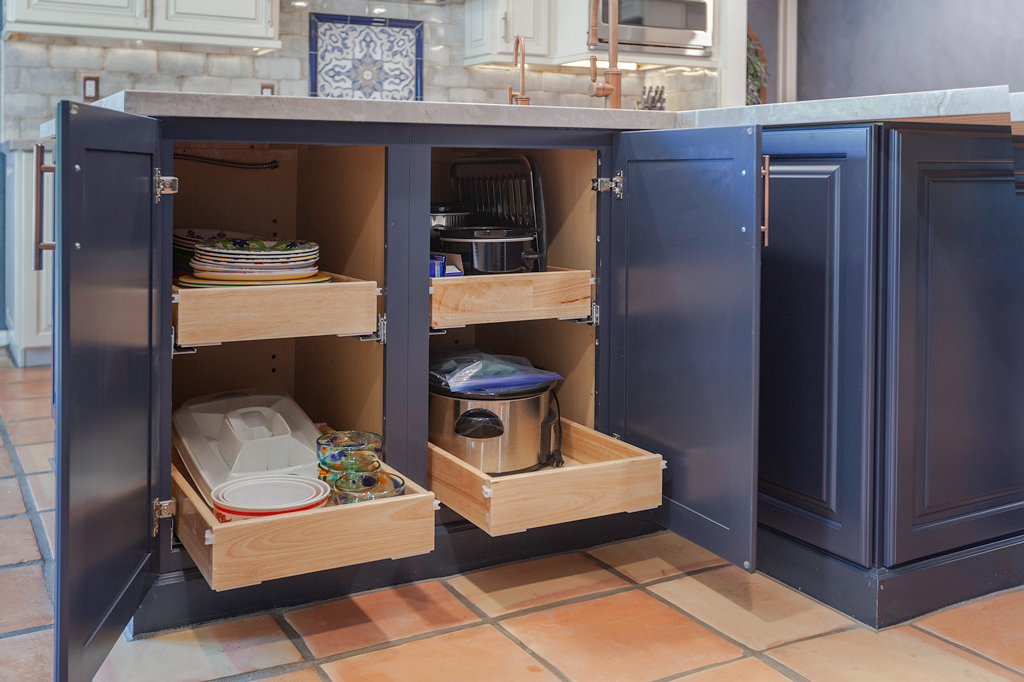
Ceiling-height cabinetry increased storage capacity. Glass-front cabinets provide display space while maintaining openness. A wine refrigerator near the pass-through supports entertaining without disrupting workflow.
Upgraded appliances required infrastructure improvements, including new gas lines and proper ventilation—ensuring the kitchen performs as well as it looks.
This type of thoughtful planning aligns with kitchen remodeling in Phoenix, where efficiency must be built into compact spaces.

Lighting That Transforms the Experience
Lighting played a critical role in reshaping the kitchen.
Under-cabinet LED lighting provides clear task illumination while highlighting the texture of the backsplash. Interior cabinet lighting adds warmth and depth, especially in the evening.
Combined with fixtures that reflect the home’s historic character, the layered lighting approach allows the space to feel both functional and inviting.
Solving Hidden Challenges Behind the Walls
As with many historic homes, the most important work happened behind the scenes.
An outdated electrical system was replaced with a modern panel. Galvanized plumbing was upgraded to copper supply lines. Flooring transitions were carefully integrated to create continuity with adjacent rooms.
These improvements are invisible—but essential.
They ensure the kitchen performs reliably for years to come.
Design-Build Remodeling Insight
Historic kitchens succeed when restraint guides the design.
Rather than introducing competing styles, the most effective approach is to refine what already exists—improving function while reinforcing architectural identity.
When planning, materials, and infrastructure are aligned, the result feels cohesive and natural.
For a deeper understanding of how preparation shapes remodeling outcomes, explore the Homeowner Core Guides.
The Result: A Kitchen That Feels Connected and Complete
Today, the kitchen feels entirely different.
Light moves through the space. The pass-through connects it to the living room. Movement between rooms is effortless. The finishes feel appropriate to the home.
What was once narrow and isolated has become open, welcoming, and highly functional.
What Makes a Historic Kitchen Remodel Successful?
A successful historic kitchen remodel is defined by alignment.
It requires improving function without compromising character, integrating modern systems without disrupting the architecture, and selecting materials that feel appropriate to the home.
When those elements come together, the result feels timeless.
Explore Related Remodeling Possibilities
Homeowners exploring similar projects often continue with:
- Bathroom remodeling in Phoenix
- Whole-home remodeling in Phoenix
- Load-bearing wall removal in Phoenix
Considering a Historic Kitchen Remodel in Phoenix?
Historic homes deserve a thoughtful approach—one that respects their architecture while improving how they function.
At Homework Remodels, we guide homeowners through a design-build process that aligns preservation, planning, and construction from the beginning.
Project Specifications
Project Name: Historic Galley Kitchen Remodel
Project Location: Willo Historic District — Phoenix, Arizona
Home Style: 1938 Historic Willo Home
Project Type: Historic Kitchen Remodel
Remodeling Method: Design-Build Remodeling
Builder: Homework Remodels
Completion Year: 2018
Award: 2018 NARI Contractor of the Year (CotY) Winner
Key Features: Arched pass-through, widened doorway, stacked stone backsplash, ceiling-height cabinetry, quartz countertops, wine refrigerator, upgraded electrical and plumbing systems