
Tempe · Open-concept kitchen
An Island for Five, and Room to Gather
A quartz waterfall island, rich cherry cabinets, and an open layout shaped around cooking and company.
Residential Kitchen $60,001–$100,000Historical award category, not current remodeling pricing.
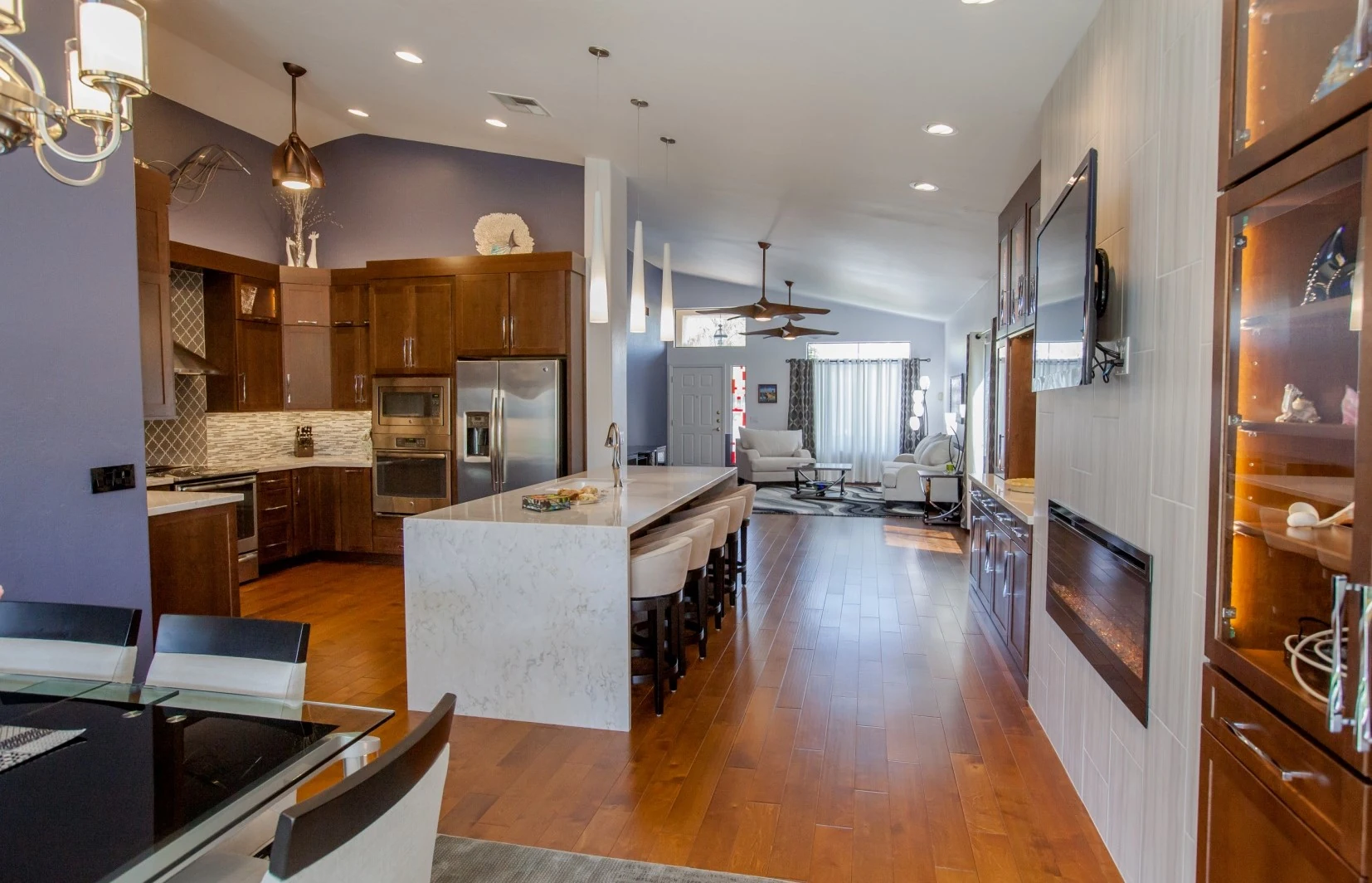
At the first meeting, blue tape on the floor already marked the homeowner’s preferred island location.
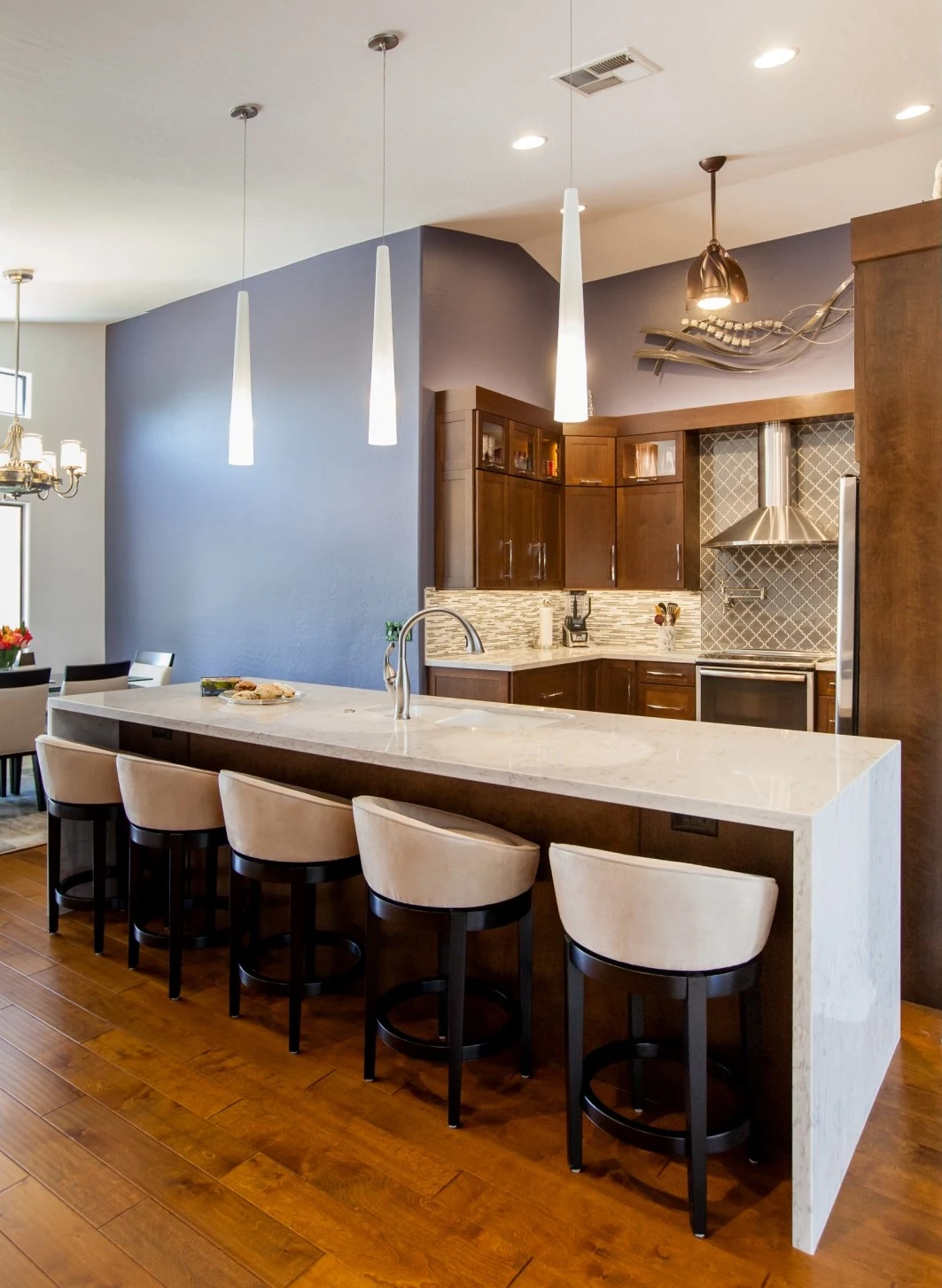
The island was the starting point for this Tempe kitchen remodel. The homeowner wanted five people to sit comfortably for dinner, with enough room to host a larger gathering. She also wanted a kitchen that felt warm and inviting, with rich finishes rather than the industrial atmosphere she associated with work.
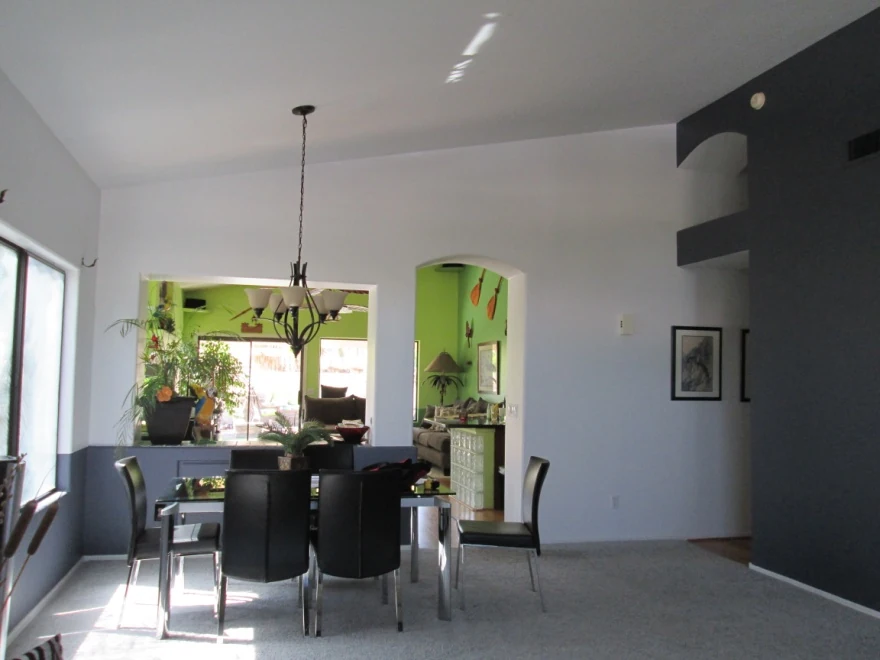
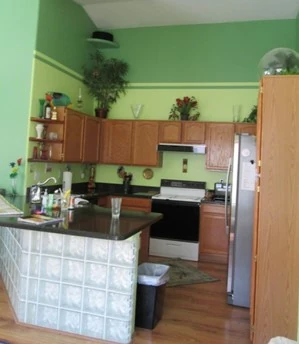
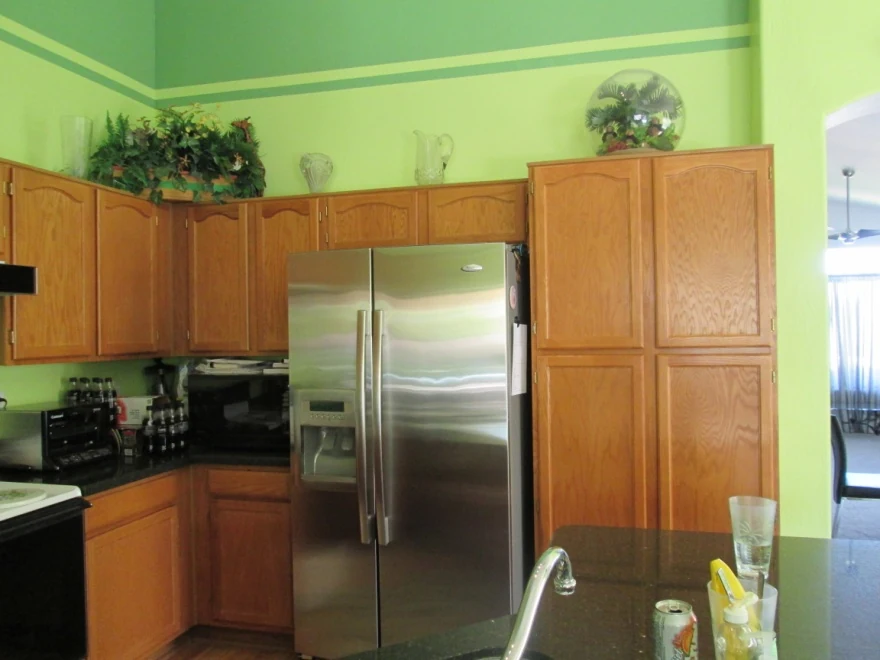
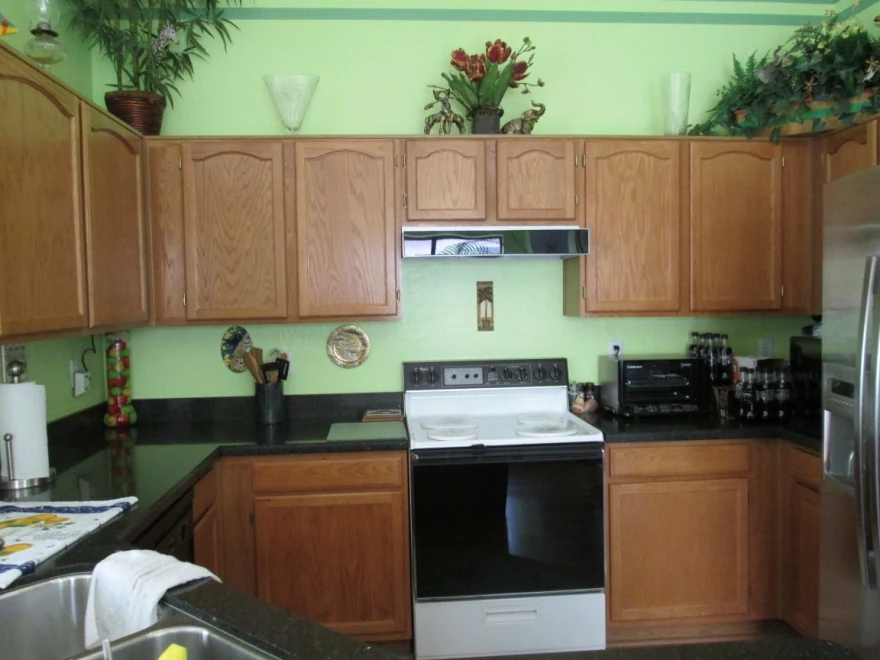
The existing space worked against those goals. A glass-block peninsula confined the kitchen, a dividing wall separated it from the dining room, and the cabinet layout offered limited organized storage. The new plan removed those barriers and developed the cooking, prep, and cleanup areas around the island she had pictured.
Opening the layout
Removing the barriers around the kitchen
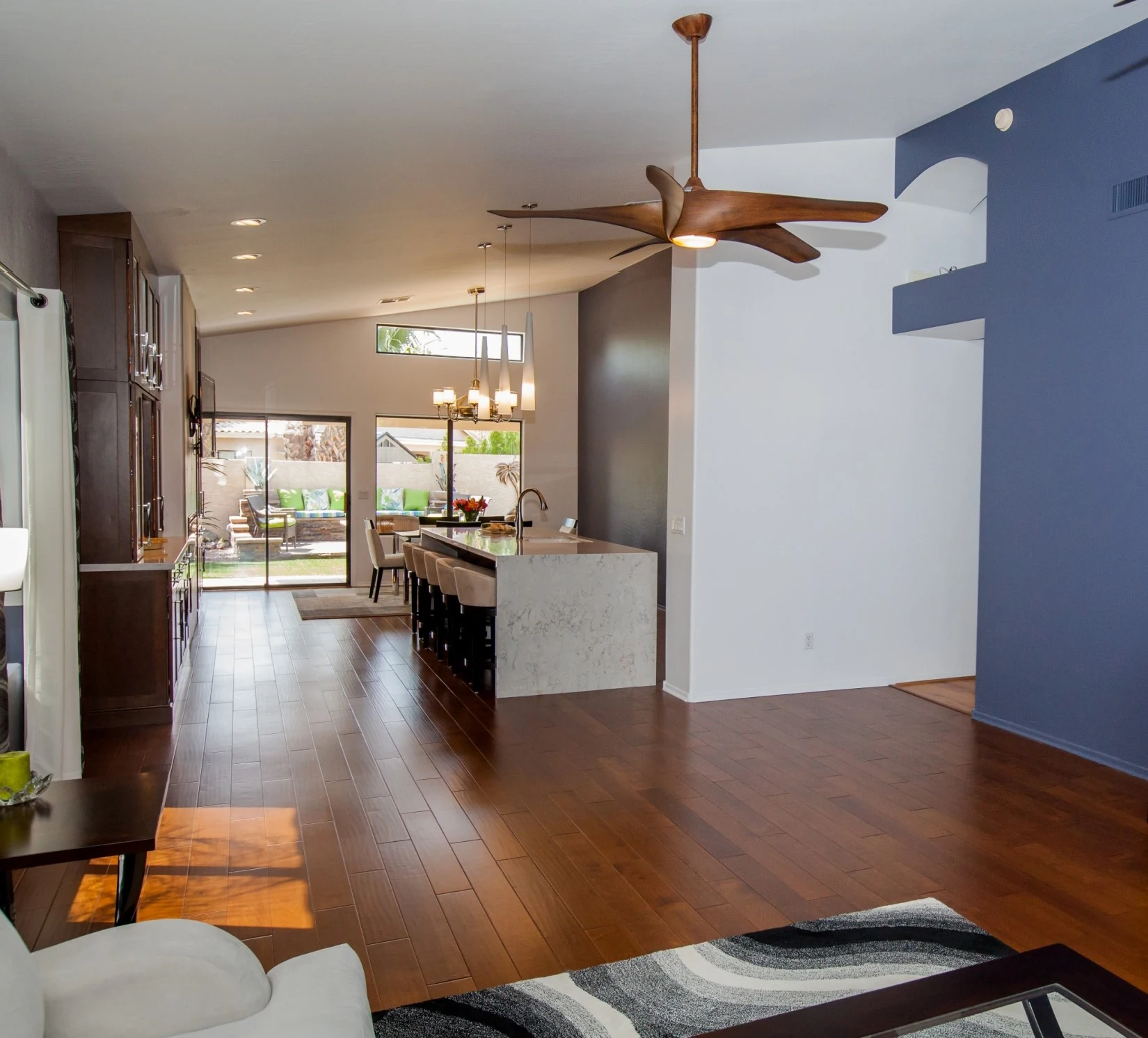
The peninsula and dining-room wall were the main obstacles to an open plan. Removing them created room for a larger island while maintaining routes through the kitchen and into the adjoining living spaces.
The design needed to account for both seated guests and the person working at the sink or preparing food. That meant considering the island’s position together with the perimeter cabinets and appliances, rather than treating it as a piece of furniture added at the end.
Wood flooring carries through the connected spaces, while the elongated island and views toward the backyard give the kitchen a clear relationship to the rest of the home.
The centerpiece
A waterfall island with a seat for everyone
The new island brings serving, dining, and cleanup into one carefully planned element. Its long counter provides seating for five adults, with mitered waterfall ends carrying the quartz down the sides. Hidden outlets and an undercounter charging station add function without interrupting the main surfaces.
Silestone Pulsar quartz gives the island a light, marble-like pattern. The top was planned and fabricated without a seam across its main surface, keeping the pattern uninterrupted. Three dimmable pendant lights mark the island within the open room.
The warmer cabinet finish and upholstered stools keep this gathering area connected to the homeowner’s preferred atmosphere, even as the white quartz and lighting brighten the space.
The working side
Cleanup belongs close to the prep space
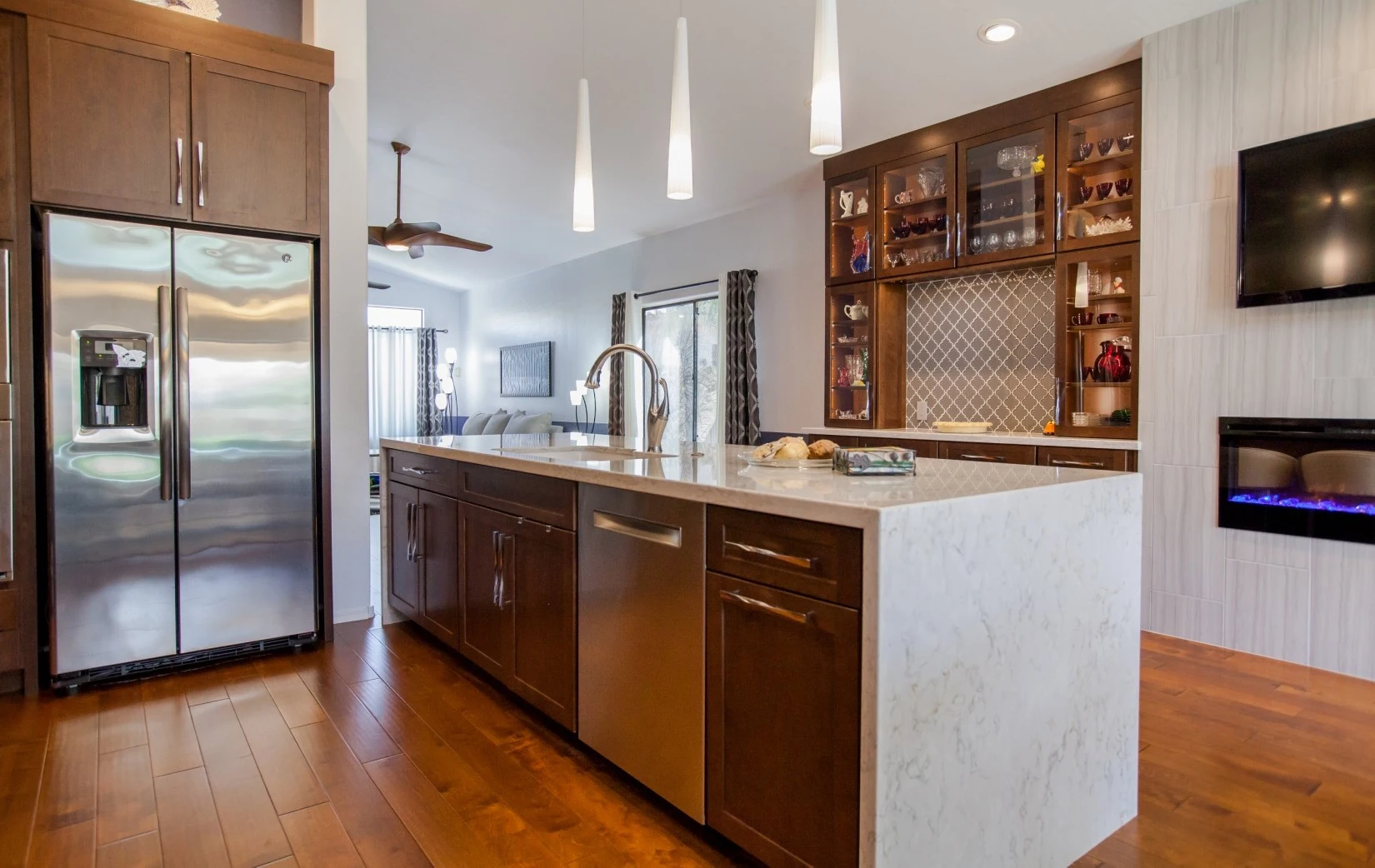
On the kitchen side, an undermount fireclay sink, pull-down faucet, dishwasher, and concealed trash and recycling pullout support the work around the island. The broad counter can serve guests on one side while remaining useful for food preparation and cleanup on the other.
Getting the plumbing in place took investigation during construction. The sink drain tie-in was buried deeper than expected. The project manager and plumbing team scoped the line, located the connection, and completed the plumbing needed for the new island.
Storage under the vault
Using the room’s height more effectively
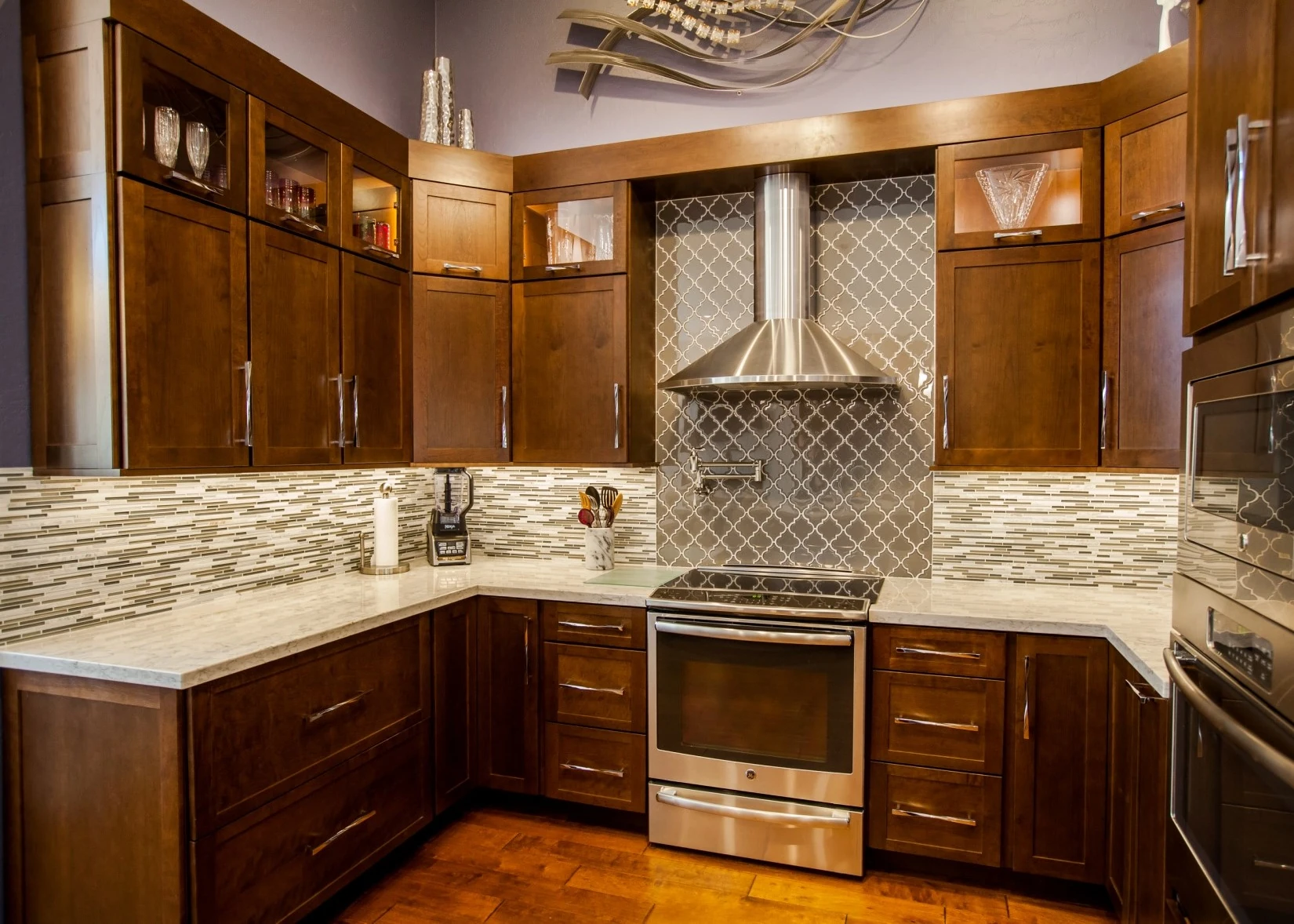
The twelve-foot vaulted ceiling gave the designer room to reconsider storage above the earlier builder cabinets. Stacked cherry cabinets with a Fireside stain and Shaker-style doors make better use of that height, with a mix of closed storage and glass-front display space.
The appliance and cabinet plan also captured room for a larger refrigerator and the planned ovens. A dedicated baking center and additional prep counters give everyday tasks their own places. Glass-front cabinets display pieces the homeowner collected during her travels, with interior lighting to bring them into view.
The deeper cabinet color is balanced by the light quartz counters and the new Stormy Night wall color, replacing the earlier lime-green walls and dark work surfaces.
Cooking and preparation
A clearer work area around the cooktop
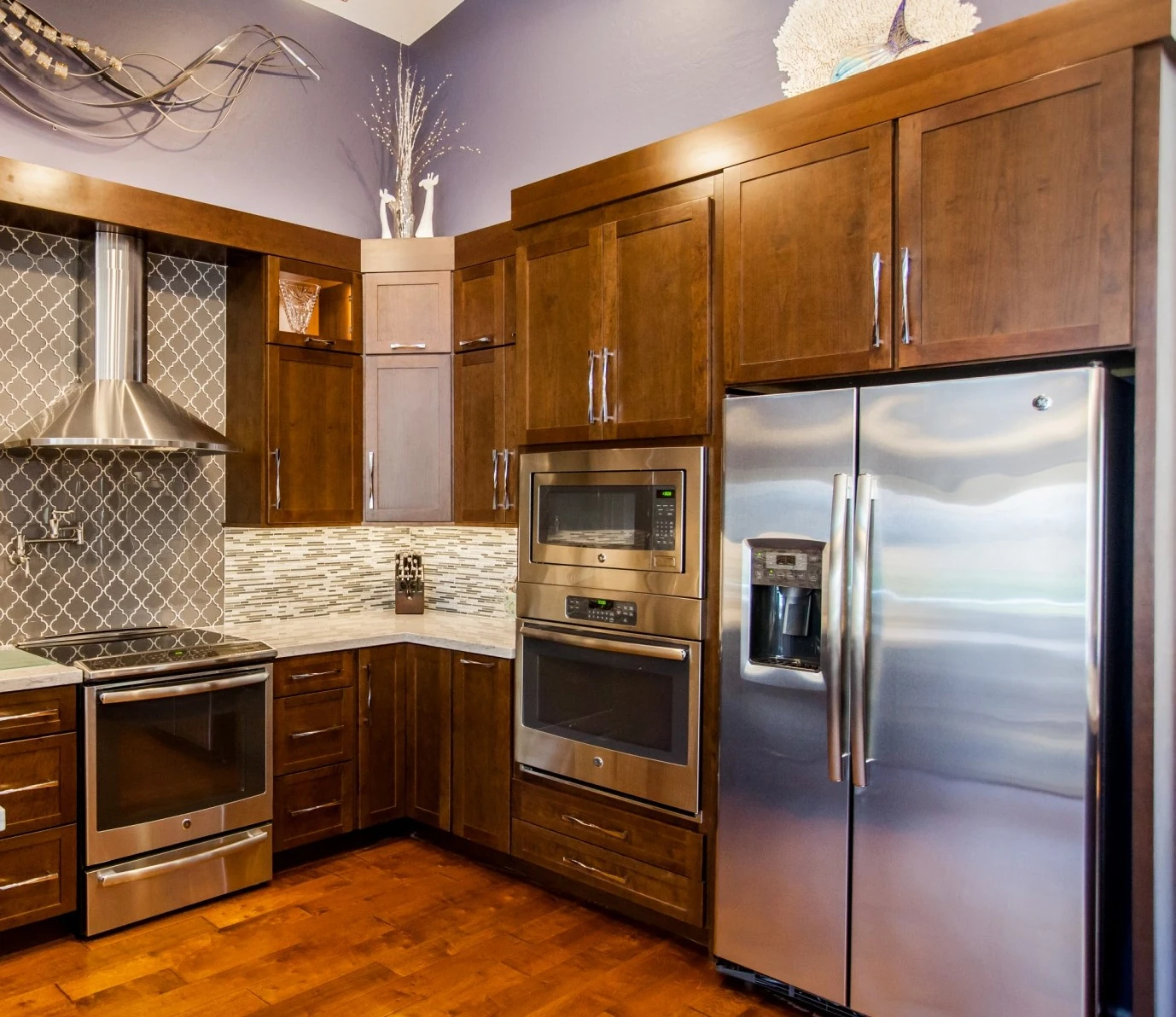
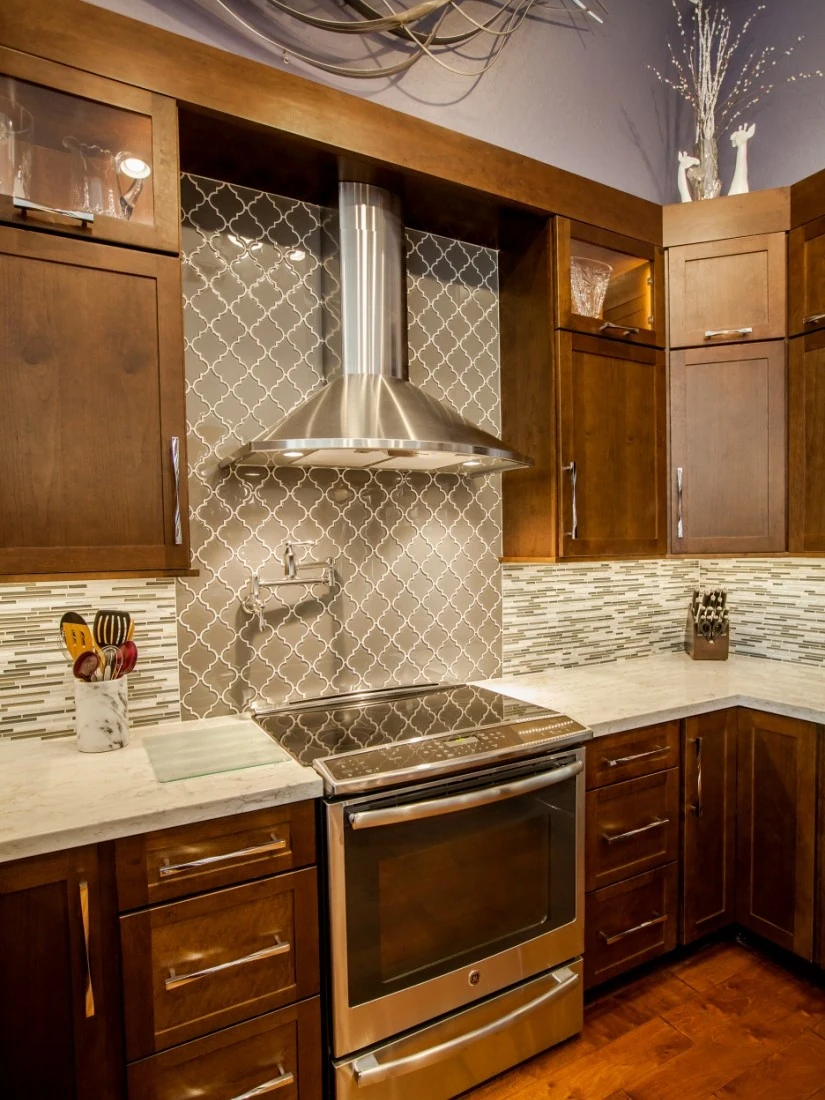
The cooking wall combines generous prep surfaces with storage at the point of use. Light quartz counters replace the earlier dark tops, while the taller cabinet arrangement keeps the main work area visually connected to the island.
The backsplash gives this wall a distinct focal point. Gray arabesque glass tile sits above linear-cut marble, with a wall-mounted pot filler at the cooktop. A wood hood cap allows the crown molding to continue across the top of the kitchen.
Lighting and finish details
Giving each part of the kitchen its own light
The lighting plan goes well beyond the original floodlights. Recessed LED fixtures provide general illumination, while dimmable tape lighting runs under, inside, and above the cabinetry. The island pendants add a separate lighting layer for the main gathering space.
Plug strips under the wall cabinets serve small appliances without filling the backsplash with visible receptacles. A compact fan at the vaulted ceiling helps circulate air. Crown molding, the light rail, and the hood cap give those practical details a consistent finish.
Planning the island
Coordinating the layout before construction
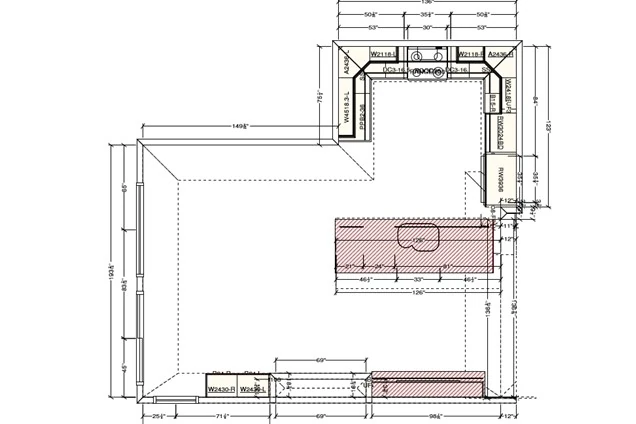
The design began with questions about cooking, storage, appliances, and the size of the homeowner’s gatherings. The island location mattered, but it still had to work with the surrounding cabinets, seating, and walking routes.
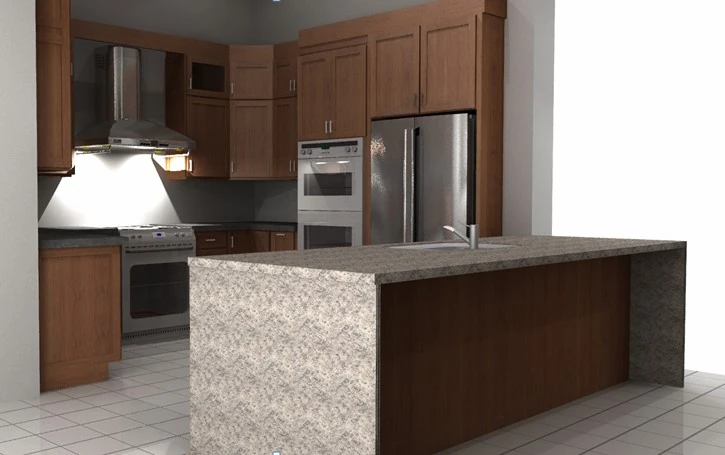
The floor plan, electrical plan, and elevations coordinated those decisions with product selections and trade pricing. Perspective views helped communicate the proposed cabinet and island arrangement. The records below show the design work separately from the finished kitchen photography.
View the floor plan and computer design illustration
The completed kitchen
The homeowner’s island became the center of the room
The result gives the homeowner the seating she requested, with room to cook and entertain around it. The open layout connects the kitchen to the adjoining rooms, while dedicated prep areas, the island cleanup station, and organized cabinetry support daily use.
This project received a 2017 NARI CotY award in the Residential Kitchen $60,001–$100,000 category. That historical award category is not a statement of current remodeling prices.
Planning an open-concept kitchen remodel in Tempe?
A larger island works best when the seating, work areas, storage, and routes through the room are planned together. The right layout begins with how you cook and gather, then accounts for the conditions within your home.
Explore our kitchen remodeling services and open-concept remodeling guide. Our design-build process connects those decisions with construction planning. The Path to Remodeling Clarity™ can help you prepare for the early conversations.
Plan Your Kitchen with Homework Remodels
Tell us how you want your kitchen to work, who gathers there, and what you would like to change. We’ll begin with a conversation about your priorities and your home.