
Ocotillo Lakes · Chandler
A Waterfront Home, Open to Everyday Life
A relocated kitchen, connected living spaces, and room for the work of running a home.
Entire House $250,000–$500,000Historical award category, not current remodeling pricing.
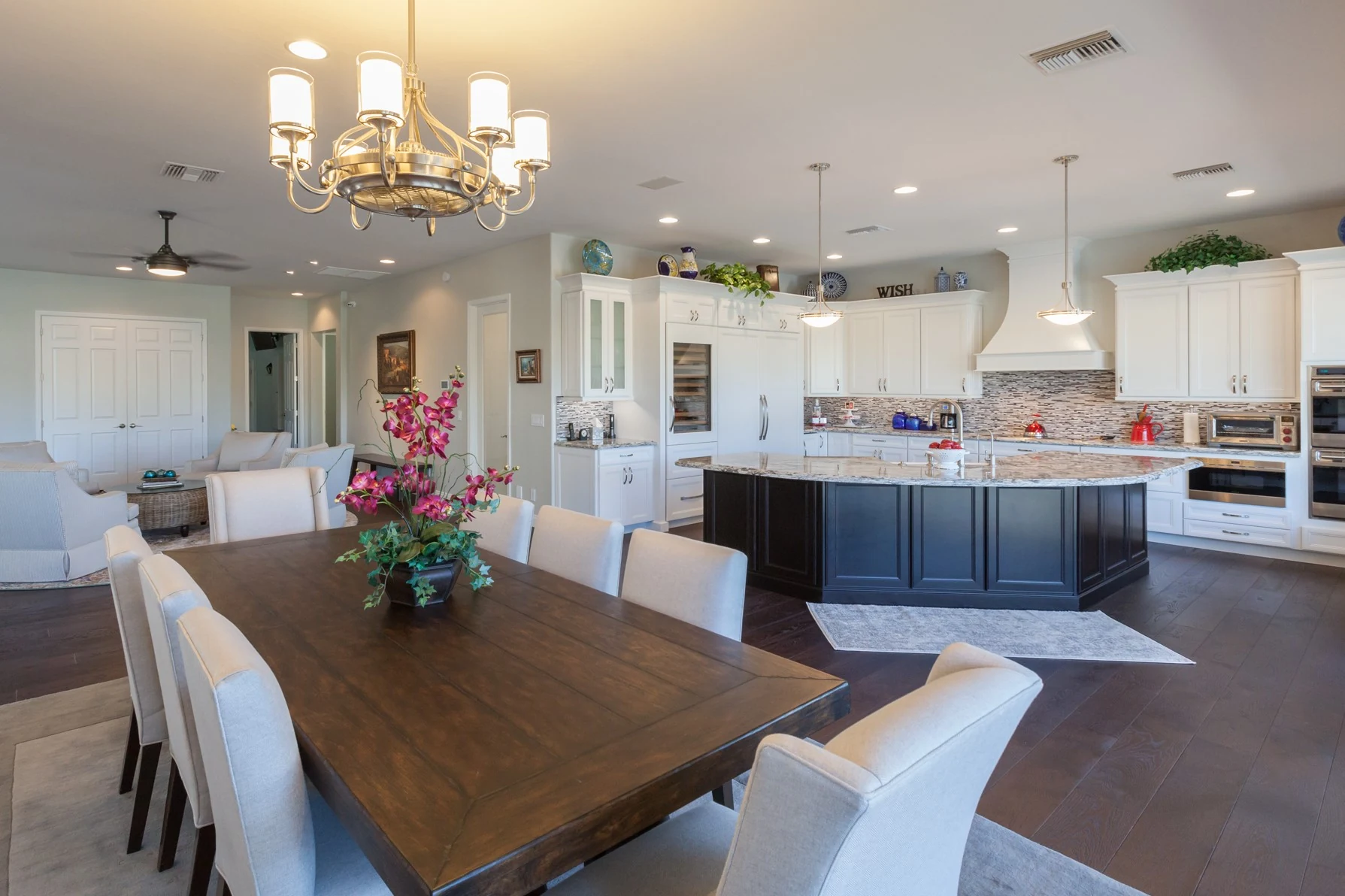
The lake was the reason to stay. The floor plan was the reason to remodel.
After fifteen years in their Ocotillo Lakes home, the homeowners knew what they wanted to keep: the waterfront setting, the neighborhood, and the room to welcome family and friends. What they wanted to change was the experience inside.
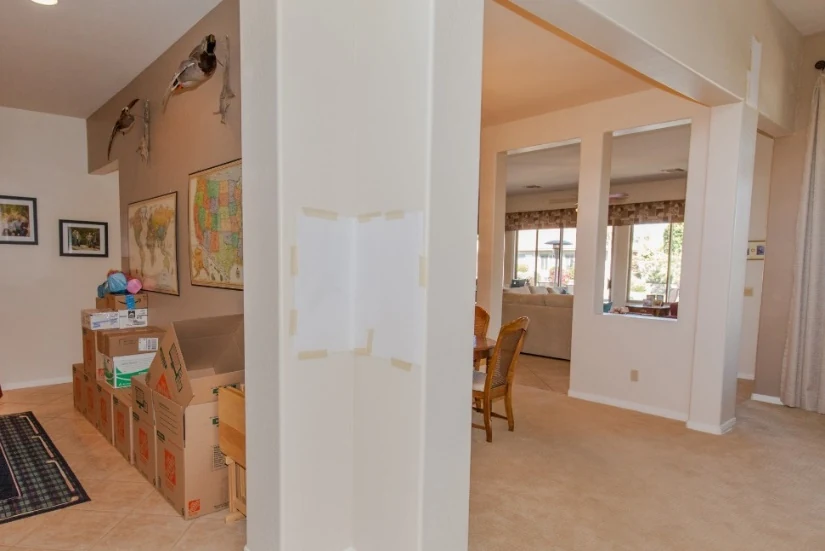
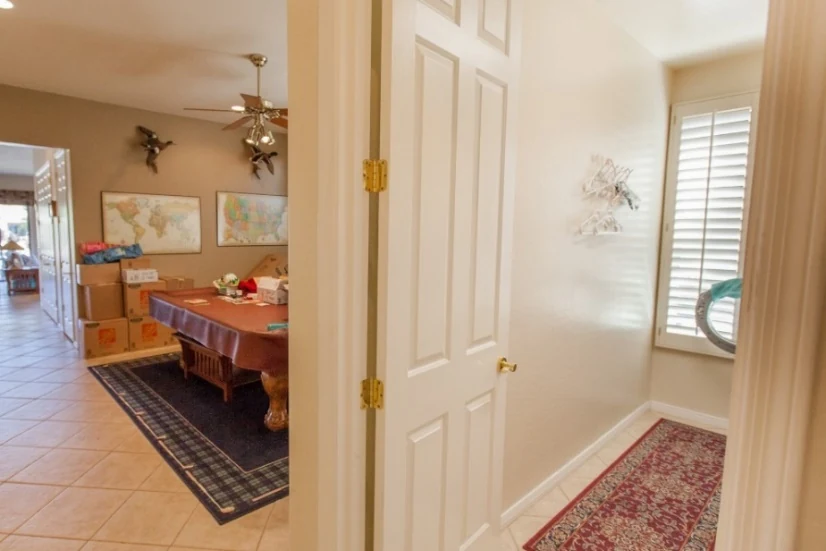
The kitchen sat apart from the main gatherings. Walls around the formal dining room interrupted views and divided guests into separate groups. A seldom-used game room collected laundry and household projects, while the laundry room itself offered little space to fold, hang, or sew.
This Chandler whole-home remodel reorganized those relationships. The design brought the kitchen closer to the waterfront windows, opened the central living areas, and gave everyday tasks a place of their own. A cooler palette of whites and soft blues replaced the warm builder finishes the homeowners were ready to leave behind.
Opening the floor plan
Keeping the cook in the conversation
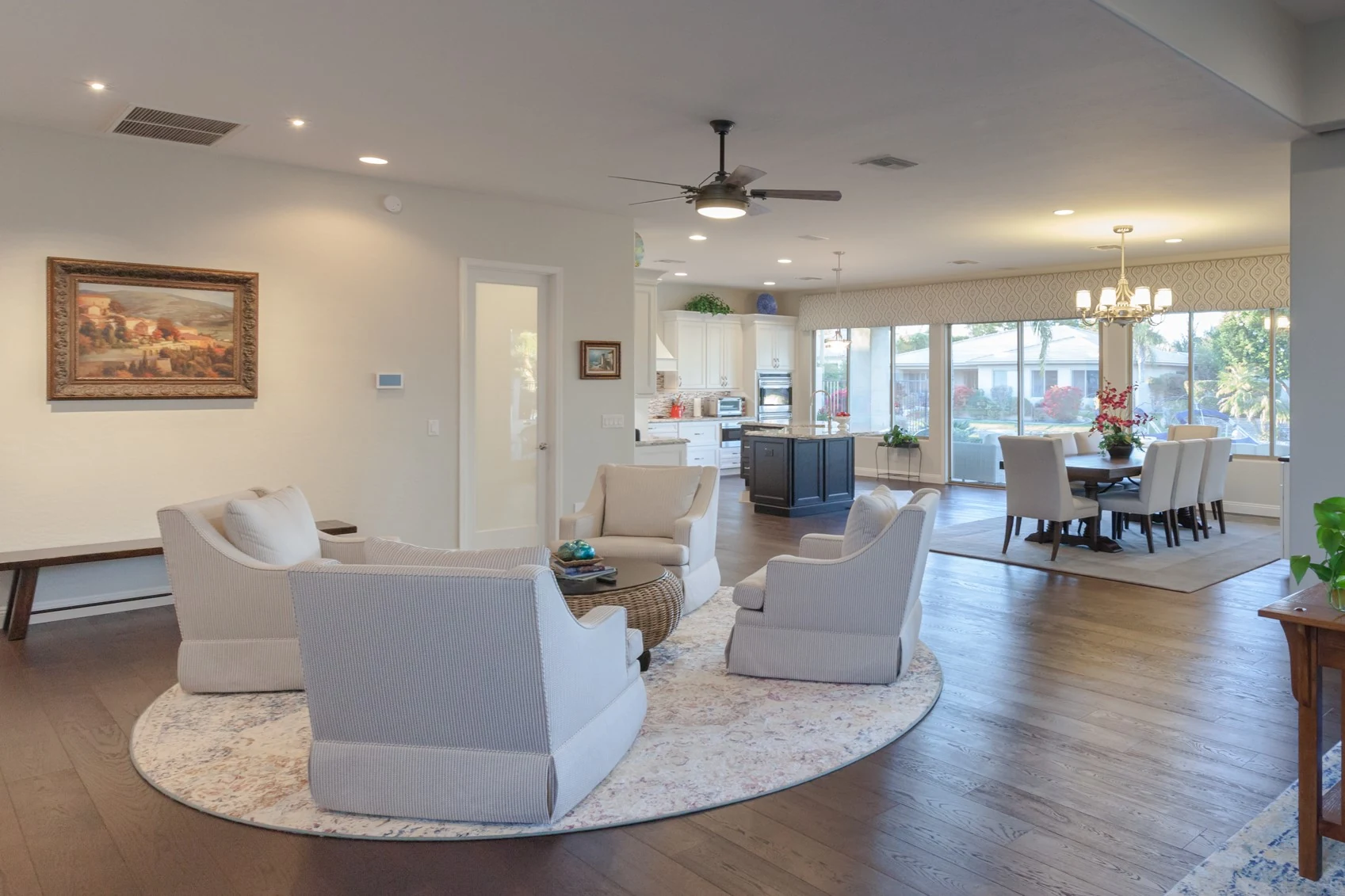
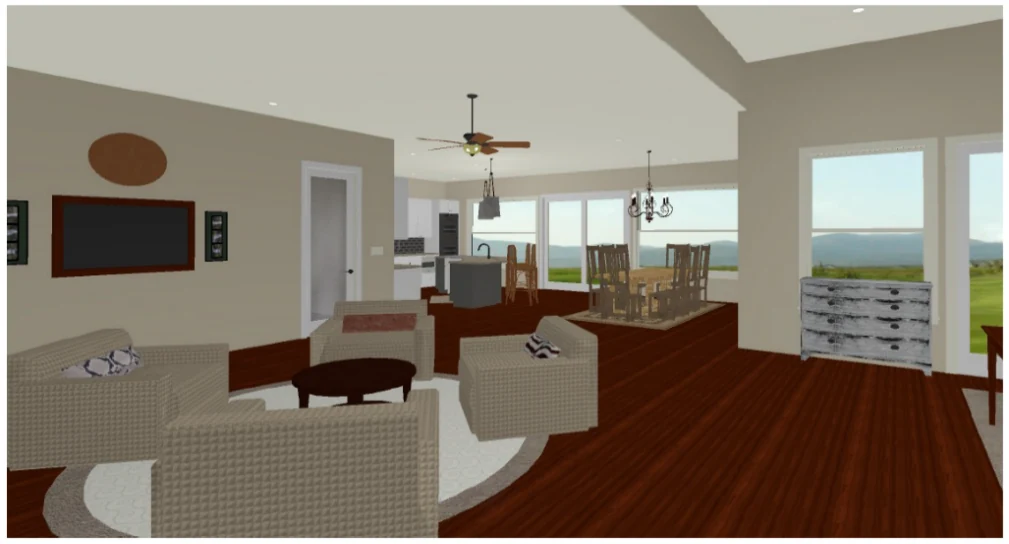
Entertaining drove the main layout changes. The homeowners wanted people cooking, eating, watching television, and playing cards to feel part of the same gathering, with clear views toward the lake.
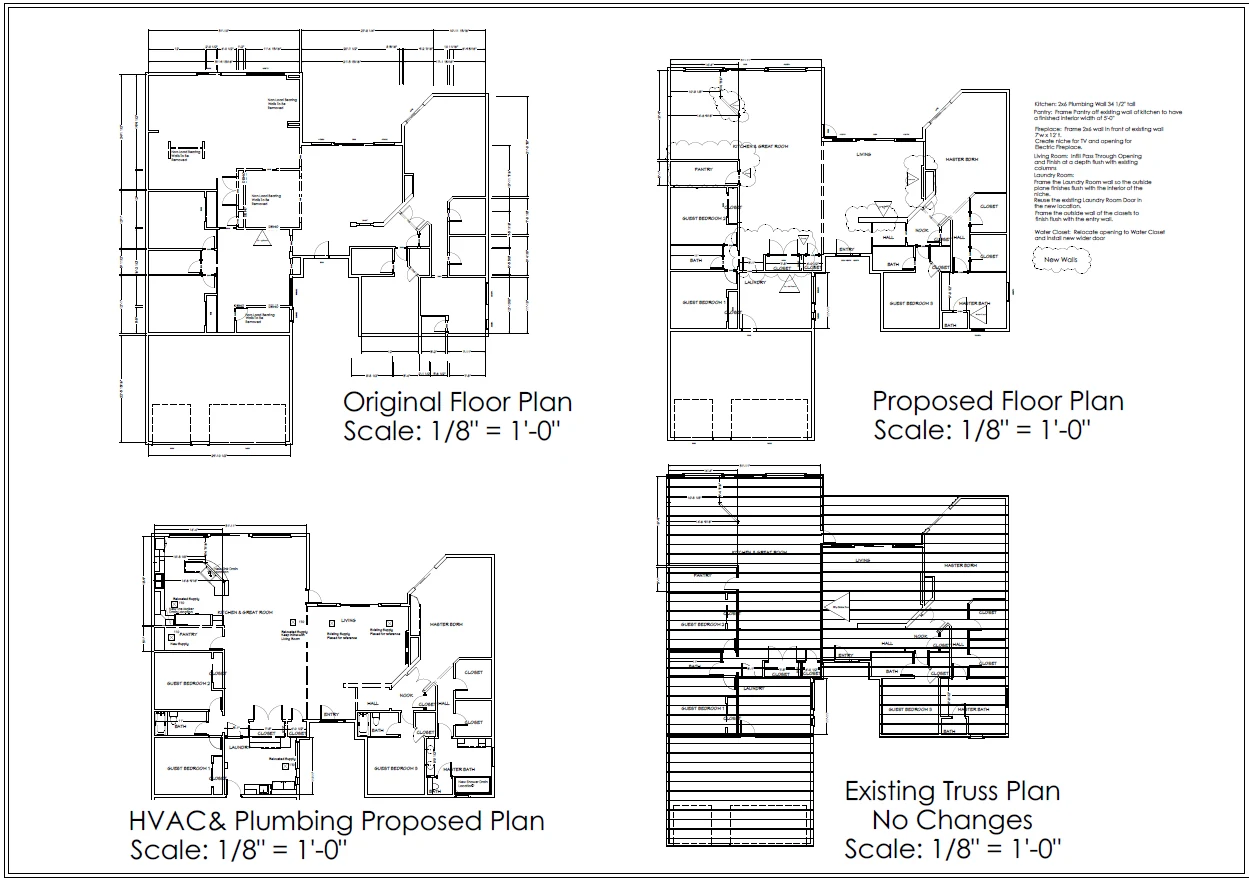
Before removing the walls around the dining room, the team inspected the attic framing. Those walls were found to hang from the ceiling joists rather than carry structural loads. That finding allowed the central enclosure to come out and gave the designer more freedom to place the new pantry, storage closets, and laundry room walls.
With the rooms connected, furniture placement mattered as much as the wall layout. The plan accounted for an everyday dining table, its larger holiday arrangement, and the routes people would use around the seating areas.
Kitchen relocation
An island that works with the room
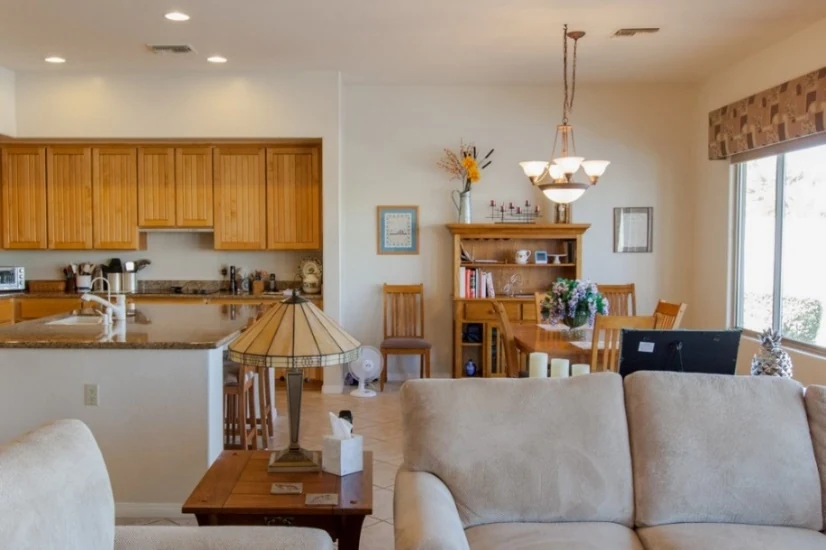
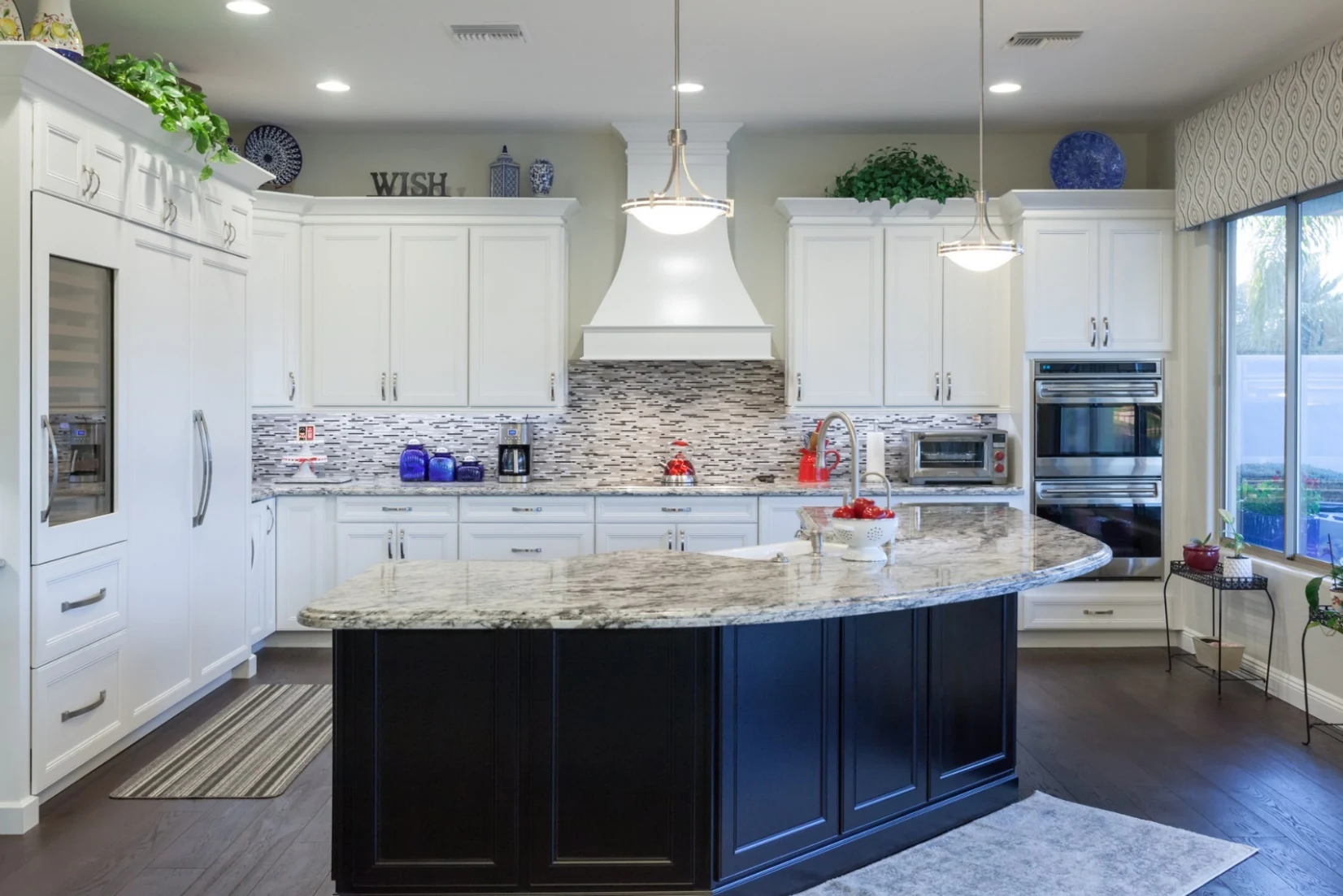
The earlier island was a large, mostly drywall structure with limited cabinet storage. Its position restricted movement and kept the kitchen from working comfortably with the adjoining rooms. Relocating the kitchen and redesigning the island changed both the work area and its connection to guests.
The new angled island combines an apron-front single-bowl sink with drawers, a pullout trash and recycling center, and a generous surface for serving or eating. A beverage filtration system also serves the refrigerator, freezer, and ice maker.
White Shaker-style perimeter cabinetry contrasts with the espresso-stained maple island. Casa Blanca granite and a mixed-stone mosaic backsplash carry the lighter finish direction through the kitchen. Custom appliance panels integrate the refrigeration, beverage drawers, and ice maker; wine refrigeration, double wall ovens, and an induction cooktop complete the cooking and entertaining plan.
Storage beyond the island
A pantry with a place to organize the household
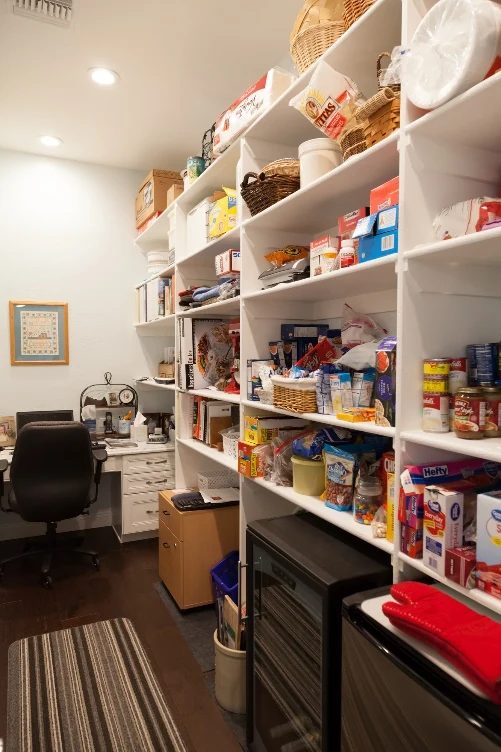
A walk-in pantry occupies a new enclosure along the wall shared with a guest bedroom. Relocating the central vacuum made room for deep shelving and a small desk with dedicated cabinetry, outlets, and a marble-look laminate counter.
The desk gives household paperwork and gathering plans a place outside the kitchen counters. The pantry also puts a useful buffer between the kitchen and the adjoining bedroom. Nearby, a custom dining hutch stores linens, china, and board games, while deep hall closets take care of coats and other items the homeowners wanted out of sight.
Laundry and creative work
Giving the former game room a new purpose
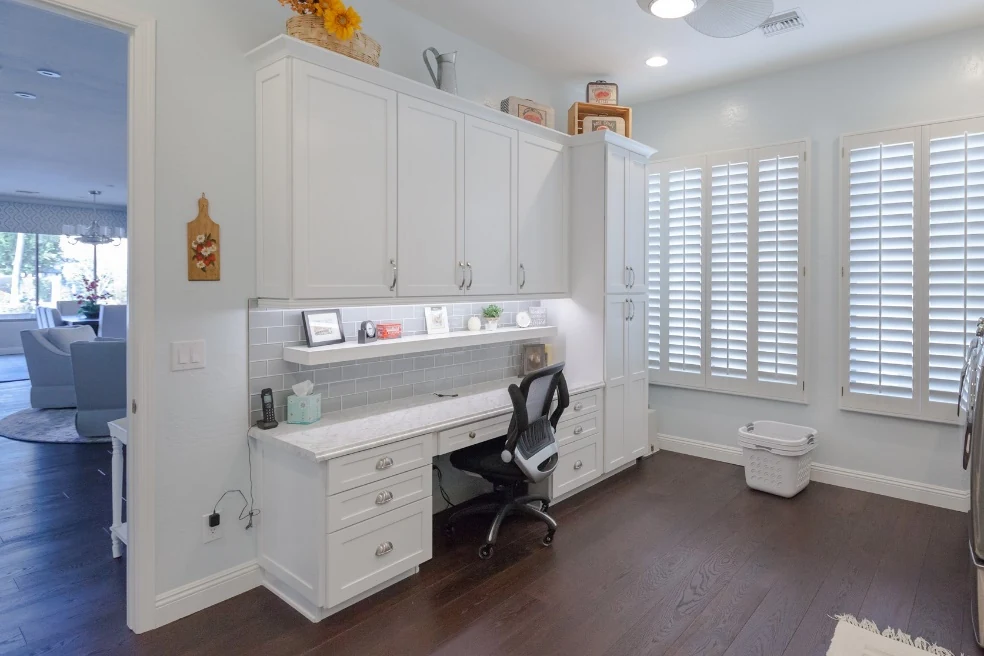
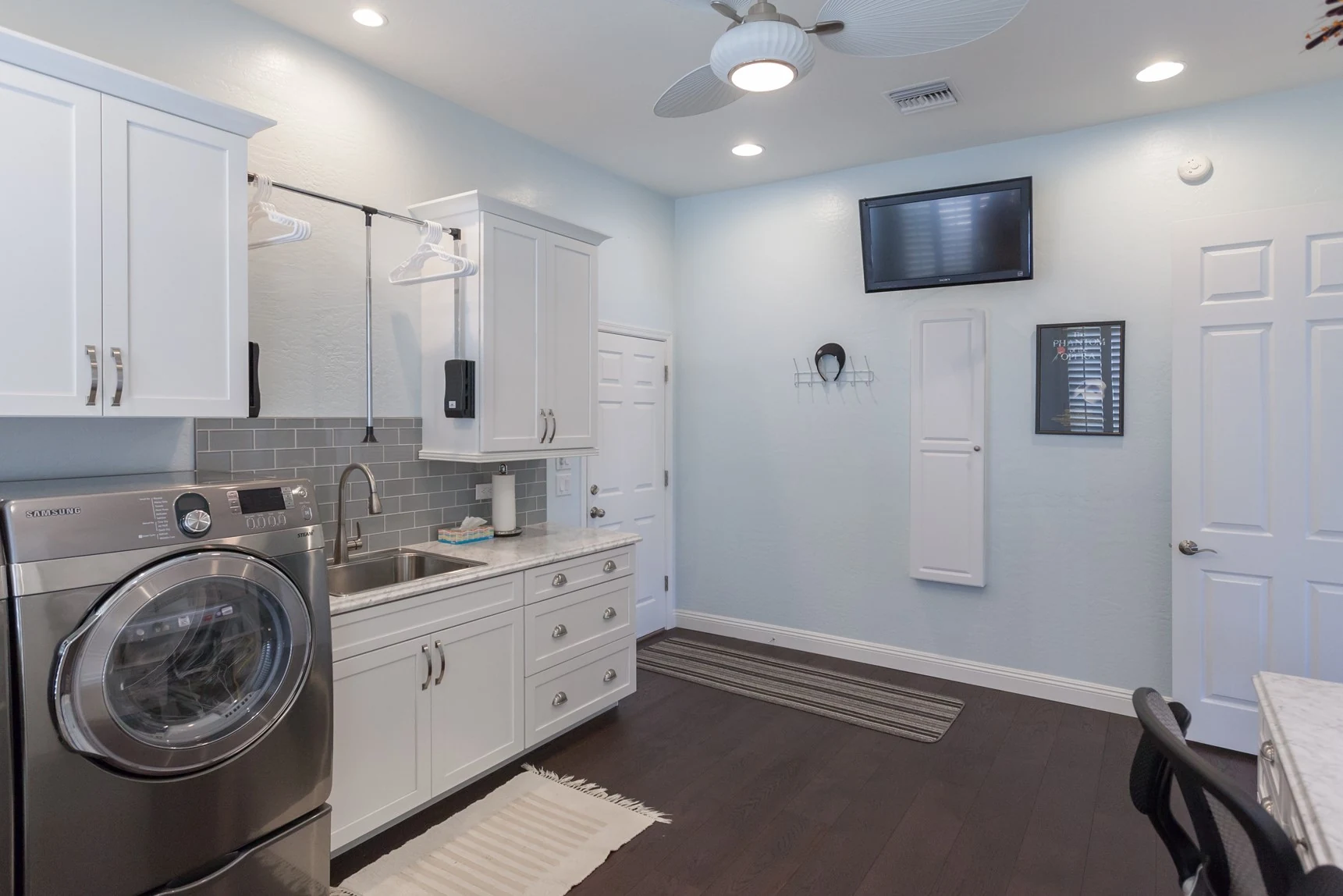
The larger laundry room was one of the homeowners’ strongest reasons for remodeling. Removing the wall between the laundry and game rooms made space for sewing, crafts, folding, and storage. Raising the ceiling helped the combined room feel like a place to work rather than a service corridor.
Each wall has a defined job. Long counters support projects, drawers organize supplies, and an adjustable hanging rail provides a place for clothes. A recessed ironing board folds away, and a charging station sits inside a drawer. The television stayed in its original position even as the room changed around it.
The team selected a simpler cabinet door style and marble-look laminate counters here, reserving more of the finish investment for other areas of the home. Glass tile and LED undercabinet lighting give the work surfaces a finished, well-lit setting.
Living room focal point
A fireplace and television that share the view
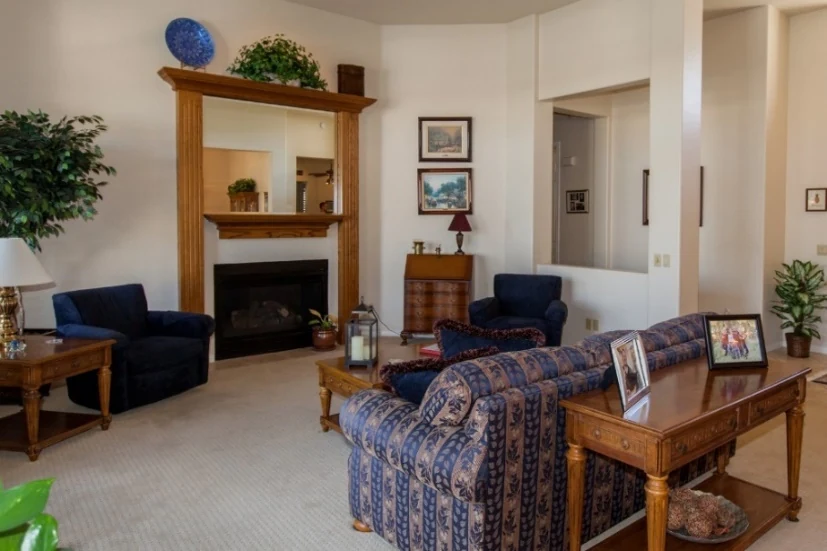
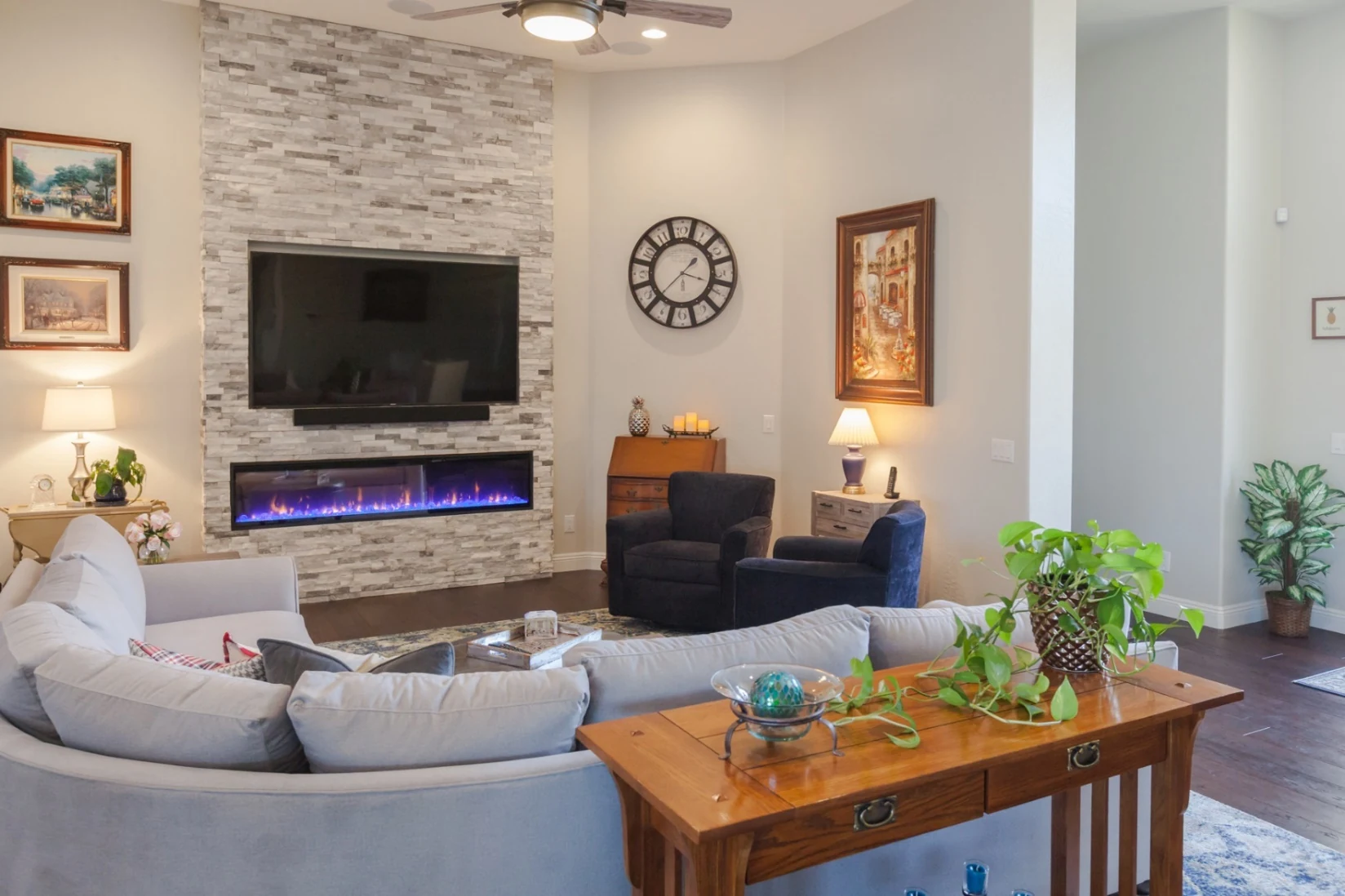
The homeowners wanted the atmosphere of a fireplace during holiday gatherings without depending on wood-burning conditions. A linear electric unit brought that feature into the new living room, with the television mounted above and visible from several seating locations.
The wall also needed to limit sound transfer into the primary bedroom behind it. The team insulated the former fireplace cavity, added sound-dampening drywall across the living room side, and reinforced the television mounting area. A framed projection gives the tiled fireplace surround depth and accommodates the recessed television.
Primary bathroom
Storage and lighting where they are needed
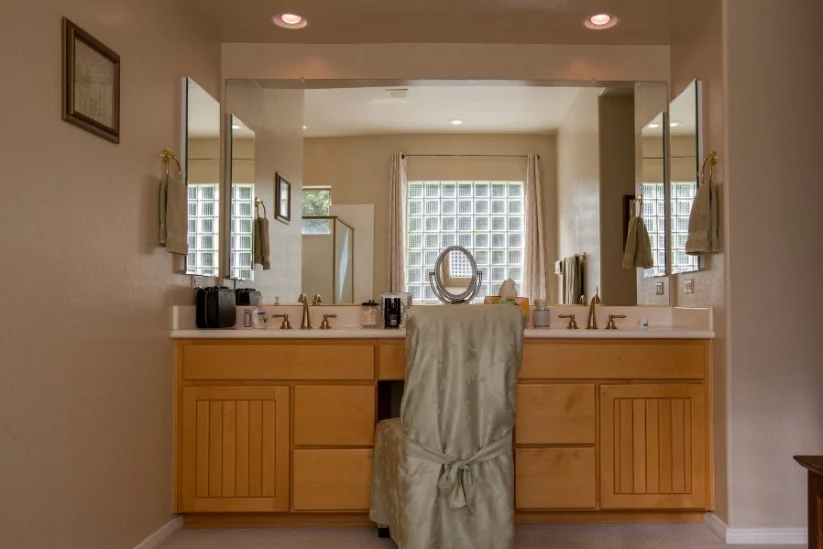
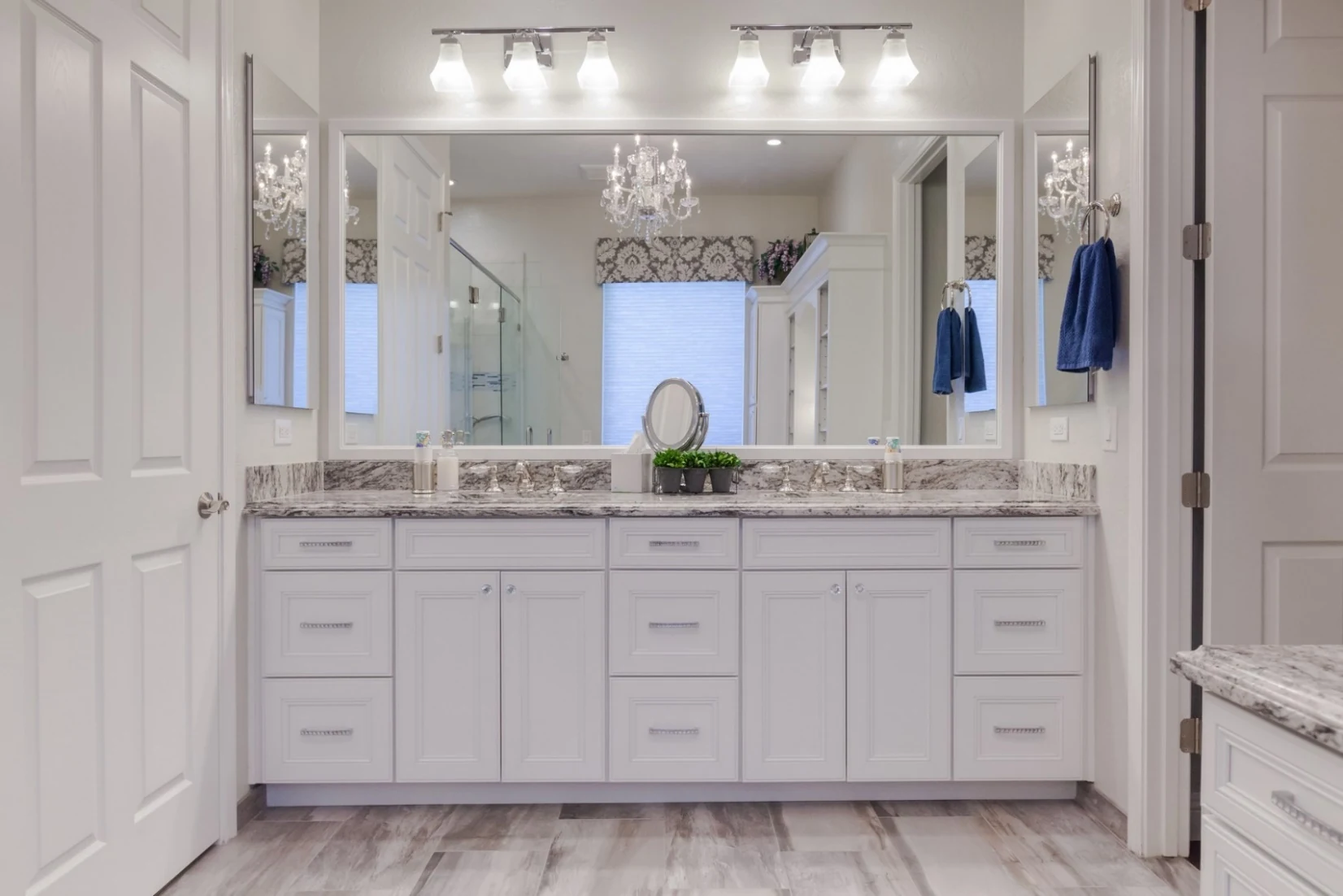
In the primary bathroom, limited drawers had pushed towels and everyday supplies into the bedroom closets. New base cabinets, larger mirrored storage cabinets, and a separate seated vanity bring those items back into the room where they are used.
Removing the dropped soffit allowed a different lighting arrangement above the sinks. Wall sconces and additional recessed lights brighten the vanity area, while a new fixed privacy-glass window and shade screen address the window opening. White cabinetry and the same granite used elsewhere in the remodel connect the suite to the home’s updated finish palette.
Shower and circulation
Replacing the oversized tub with room for two
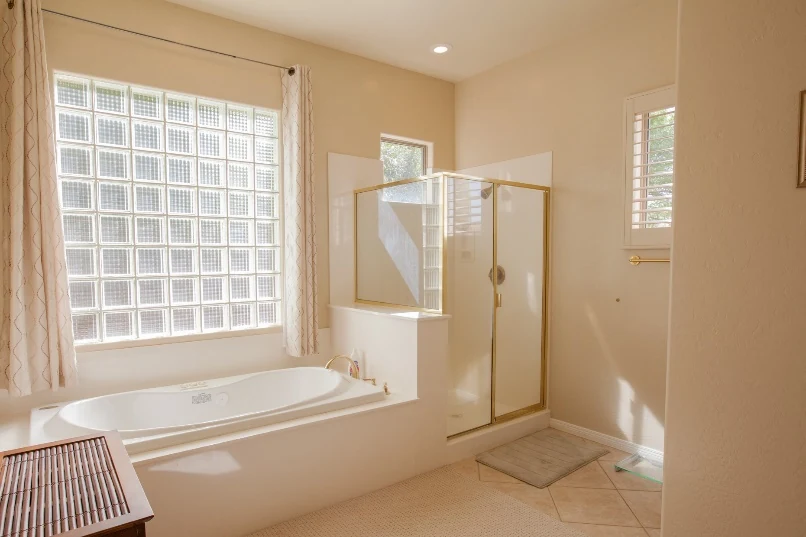
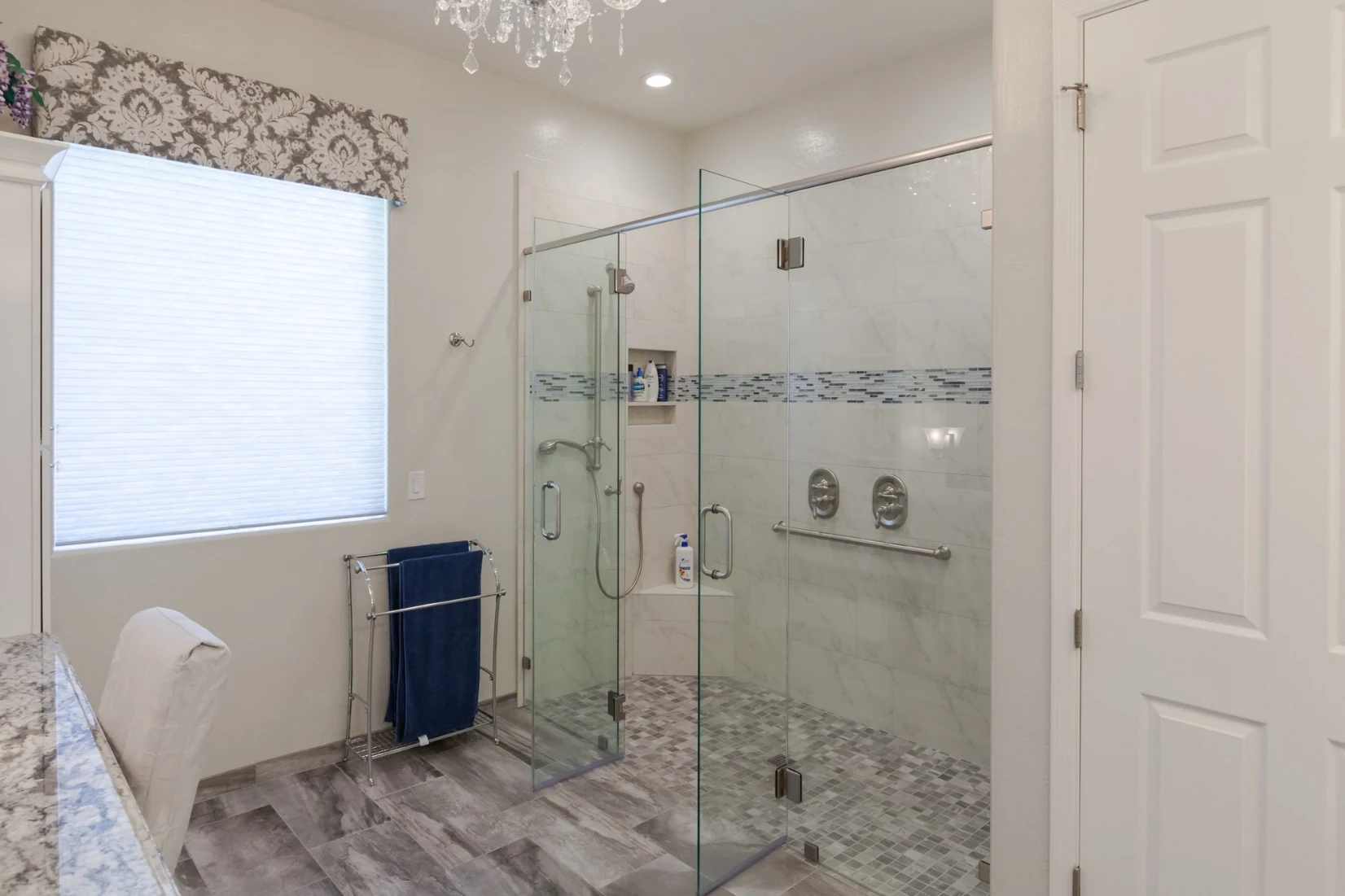
The primary bathroom plan removed the large built-in tub and replaced the confined shower with a larger glass enclosure. Relocating the toilet-room door created a more direct route from the bathroom entry and made room for the new shower arrangement.
The shower has a level entry and two doors that provide a broad opening without requiring one heavy door. Each end includes a fixed shower head, hand shower, and niche. Corner seats leave more of the floor open, and the hand-shower slide bars also serve as grab bars. Blocking was installed for a possible wall-mounted seat later.
Work behind the finishes
A new layout required infrastructure changes
The kitchen appliance plan required more than cabinet space. During the trade-partner walkthrough, the team determined that the existing 200-amp electrical service needed to be upgraded to 400 amps. Dedicated appliance circuits and the revised lighting were coordinated with that work.
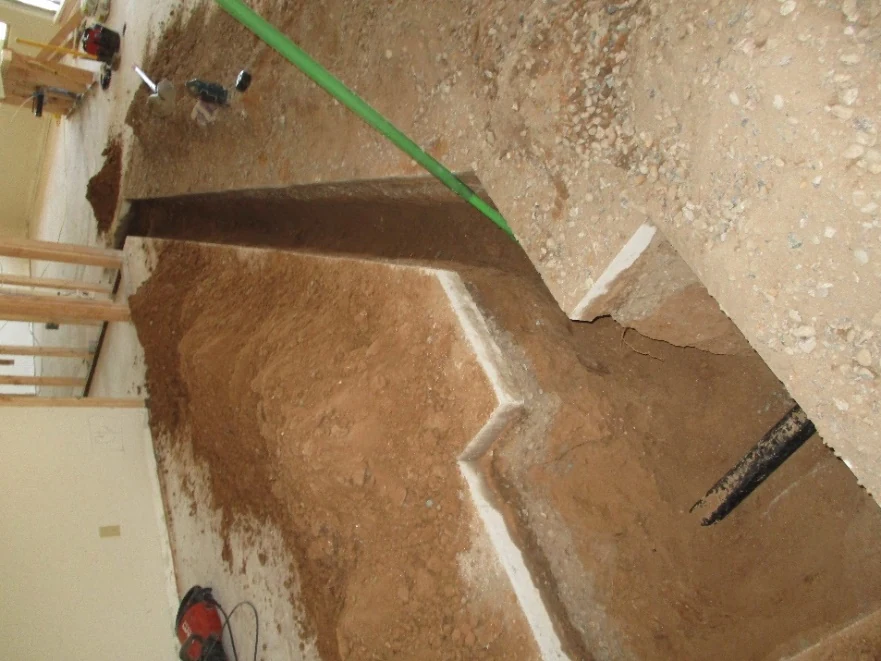
A recurring drain backup also needed investigation. When plumbing work began for the relocated island sink, a video inspection identified a low spot in the drain line. The repair required opening and trenching more than ten feet of floor, replacing the affected pipe, and restoring the floor before finish work could continue.
Raising the laundry ceiling brought another coordination task: rerouting plumbing, electrical, and HVAC services from the former lowered ceiling. These changes were part of making the new room arrangement function, not simply changing its appearance.
Planning the transformation
Drawing the whole home before rebuilding its rooms
No original floor plans were available. The designer and project manager measured the approximately 3,200-square-foot home and documented the existing conditions to develop the new plans. Cabinet and tile elevations communicated the details to the homeowners and trade partners.
Computer perspective illustrations helped the homeowners evaluate the proposed openings, furniture locations, and dining arrangements. The drawing and illustration below are design records, distinct from the completed-project photographs.
View the floor plans and computer design illustration
The completed home
The waterfront setting became part of daily life
The remodel lets the homeowners prepare a meal, host a card game, or sit by the fireplace without dividing the gathering among closed-off rooms. Household work has its own space, and storage is planned into the layout rather than left to spare corners.
This project received 2019 NARI CotY Best of Show recognition in the Entire House $250,000–$500,000 category. The category describes the historical award entry and is not a statement of current remodeling prices.
Planning a whole-home remodel in Chandler?
Start with the relationships between rooms: where people gather, what blocks a view, and which daily tasks need more room. Those decisions help determine whether a new floor plan will serve the way you actually live.
Explore our whole-home remodeling services, kitchen remodeling, and bathroom remodeling. Our design-build process connects planning with construction, while The Path to Remodeling Clarity™ helps you prepare for the early decisions.
Plan Your Whole-Home Remodel
Tell Homework Remodels what you love about your home and what you need it to do better. We’ll begin with your priorities, your setting, and the possibilities within your space.