
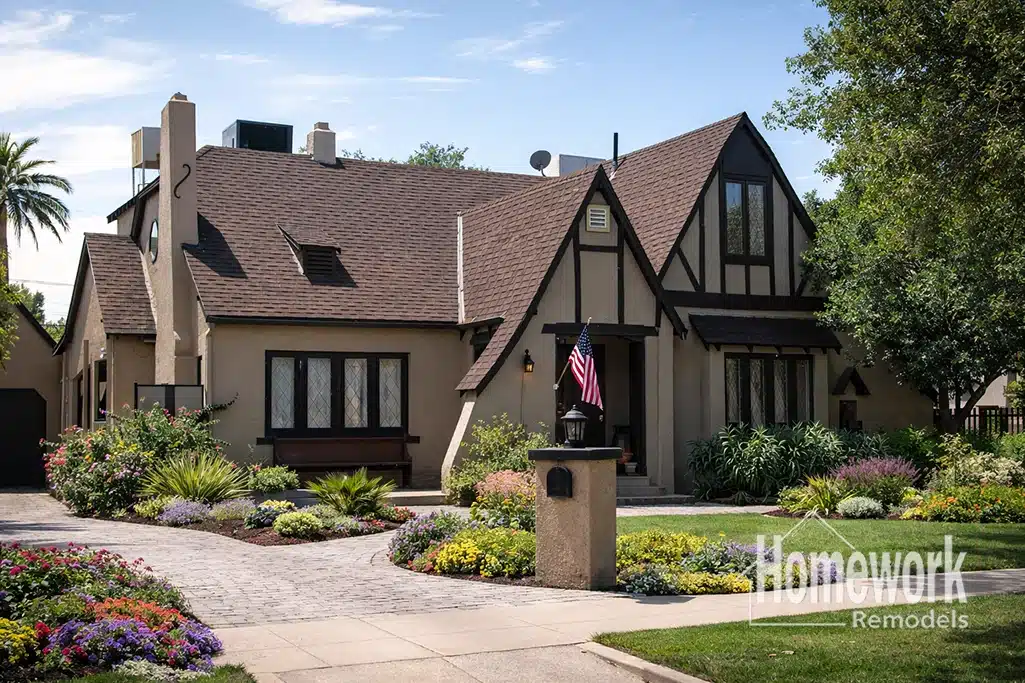
Remodeling a Historic Home While Preserving Willo’s Architectural Integrity
The Willo Historic District is defined by balance. Tree-lined streets, consistent setbacks, and thoughtfully scaled homes create a rhythm that feels intentional rather than accidental. Homeowners who choose Willo are drawn to this sense of cohesion, and remodeling within the neighborhood requires an approach that respects both individual homes and the larger streetscape they contribute to.
Many Willo homes were built in the 1920s and 1930s, an era when kitchens were compact, rooms were clearly defined, and bathrooms were designed for far different expectations. Modern homeowners often want improved functionality, better flow, and updated systems, but successful projects begin with an understanding of what should remain unchanged. Architectural integrity is not preserved by freezing a home in time, but by making improvements that feel consistent with its original intent.
One of the most important principles in Willo remodeling is scale. Homes in the neighborhood tend to be modest in size, with carefully proportioned facades and rooflines. Alterations that ignore these proportions can quickly feel out of place. As a result, exterior changes are typically restrained, with street-facing elevations preserved and most visible modifications occurring toward the rear of the property.
Interior remodeling focuses on refinement rather than reinvention. Kitchens are often reconfigured to improve workflow, storage, and connection to adjacent spaces without becoming oversized or dominant. Bathrooms are expanded modestly where possible, prioritizing comfort and usability while maintaining a sense of proportion. Circulation improvements—such as relocating doorways or aligning openings—can significantly improve how a home functions day to day.
Open-concept design is approached carefully in Willo. While some openness can enhance livability, removing too many walls can undermine the architectural language of these homes. Many homeowners opt for selective openings that preserve room identity while allowing better visual and physical connection. This approach respects the home’s origins while supporting contemporary living.
Additions require particular care. In Willo, a successful addition feels as though it has always been part of the home. Roof pitches, window proportions, materials, and detailing are selected to complement the original structure. Rear-oriented additions are common, allowing homes to gain functional space without disrupting the established streetscape that defines the neighborhood.
Preservation is not just an aesthetic concern—it also affects long-term value. Willo homes are sought after precisely because of their architectural consistency. Remodeling decisions that respect this consistency help protect both individual property value and neighborhood appeal. Homeowners often invest in durable materials, upgraded systems, and thoughtful layouts that will serve them well for decades rather than chasing short-term trends.
Another defining characteristic of Willo remodeling is intention. Homeowners tend to approach projects with clear priorities, focusing on improvements that enhance daily life rather than cosmetic changes alone. Kitchens that support everyday use, bathrooms that feel comfortable and functional, and layouts that adapt to changing family needs are common goals.
Perhaps most importantly, remodeling in Willo is guided by a sense of stewardship. Homeowners understand that their renovation decisions contribute to the ongoing story of the neighborhood. Each thoughtful project reinforces the architectural integrity that makes Willo distinctive, ensuring that it remains a desirable place to live for generations to come.
For homeowners exploring neighborhood-specific design considerations, planning approaches, and preservation-minded strategies, the Willo Historic District Home Remodeling hub provides a comprehensive overview tailored to this historic community.