
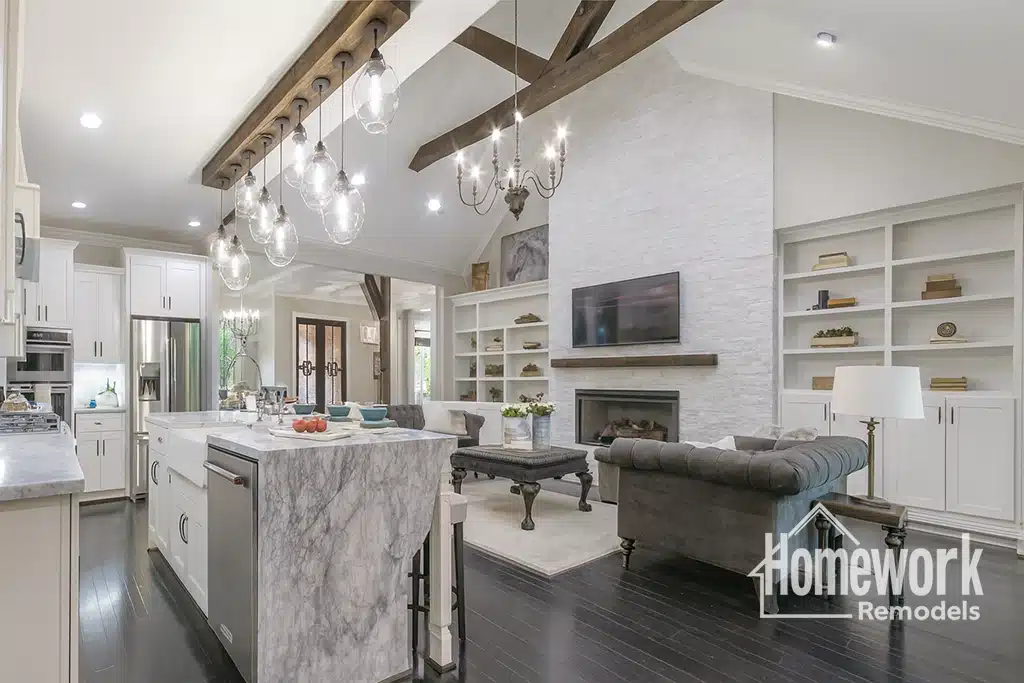
Removing Load-Bearing Walls Safely in Older Homes
Opening up an older home can dramatically improve how it looks and feels—but removing a wall is never just a design decision. In Tempe, many homes were built decades before open-concept living became popular, and their structural systems reflect that reality. Removing a load-bearing wall in these homes requires careful planning, engineering insight, and a clear understanding of how the house is held together.
Done correctly, structural wall removal can transform flow, light, and usability. Done carelessly, it can introduce safety risks, structural damage, and expensive corrections.
Why Older Tempe Homes Rely on Interior Load-Bearing Walls
Homes built in Tempe from the 1940s through the 1980s were designed around compartmentalized layouts. Interior walls often carry roof or ceiling loads because:
- Roof spans were shorter
- Trusses were less common in earlier construction
- Open living concepts were not a priority
As a result, many walls that appear non-structural are actually critical to the home’s stability.
What Makes a Wall Load-Bearing?
A load-bearing wall transfers weight from above—roof, ceiling, or upper framing—down to the foundation.
Indicators a wall may be load-bearing include:
- Orientation perpendicular to ceiling joists
- Alignment with roof ridges or beams
- Location near the center of the home
- Presence of doubled framing members
However, appearances can be misleading. Only proper evaluation confirms a wall’s role.
Why “Just Opening It Up” Is Risky
Removing a wall without proper planning can cause:
- Sagging ceilings
- Cracked drywall
- Misaligned doors and windows
- Long-term structural stress
These issues may not appear immediately, which makes them more dangerous—and more expensive—over time.
Structural Evaluation Comes Before Design
Design inspiration often drives the desire to open space, but structure must be addressed first.
In older Tempe homes, evaluation should include:
- Roof framing type (joists vs. trusses)
- Span distances
- Existing beam locations
- Foundation support points
Structural evaluation sets realistic boundaries for design creativity.
Engineering Is Not Optional
Any load-bearing wall removal requires an engineered solution.
This typically includes:
- Calculating loads
- Designing a replacement beam
- Specifying connections and supports
Engineering ensures that loads are safely redistributed rather than simply relocated.
Temporary Support Is a Critical Phase
Before a wall is removed, temporary supports are installed to carry the load during construction.
This phase often looks alarming to homeowners, but it is essential. Rushing or skipping this step puts the home at risk.
Beams Are Not One-Size-Fits-All
Replacement beams vary widely.
Factors that influence beam selection include:
- Span length
- Load magnitude
- Ceiling height constraints
- Desired visual outcome
Steel, engineered lumber, or built-up wood beams may all be appropriate depending on conditions.
Ceiling Height and Visual Impact Matter
Structural solutions affect aesthetics.
Some homeowners accept dropped beams. Others prefer flush beams integrated into the ceiling. Each approach has structural and cost implications that must be considered early.
Permits and Inspections Protect You
Removing a load-bearing wall requires permits and inspections in Tempe.
These steps:
- Verify engineering compliance
- Ensure proper installation
- Protect future resale value
Unpermitted structural work can create serious problems during appraisal or sale.
Structural Changes Often Trigger Other Upgrades
Once walls are opened, other systems are affected:
- Electrical rerouting
- HVAC duct adjustments
- Lighting redesign
- Flooring continuity
Planning these connections early prevents piecemeal fixes later.
Whole-Home Planning Prevents Structural Regret
Wall removal rarely exists in isolation.
In many cases, it makes sense to evaluate structural changes as part of a broader whole-home strategy—especially in older Tempe homes where multiple systems are already due for updating.
This is why homeowners exploring open layouts often benefit from a coordinated whole-home remodeling approach in Tempe.
Design-Build Reduces Structural Risk
Structural changes require tight coordination between design, engineering, and construction.
The design-build remodeling process allows structural solutions to be tested against design goals and budget constraints early—reducing surprises and rework.
Safety Is the Real Goal of Open-Concept Design
Open layouts succeed when they feel effortless.
That effortlessness comes from:
- Proper load transfer
- Thoughtful beam integration
- Respect for the home’s original structure
Safety enables beauty—not the other way around.
Older Homes Demand Respect, Not Shortcuts
Tempe’s older homes have endured decades of use, weather, and modification.
Respecting their structure means:
- Investigating before demolishing
- Engineering before altering
- Planning before committing
Shortcuts rarely stay hidden for long.
Opening Space the Right Way Pays Off
When done correctly, removing a load-bearing wall:
- Improves flow and natural light
- Supports modern living patterns
- Preserves long-term structural integrity
The key is approaching the change as a structural project—not a cosmetic one.
Let’s Evaluate Structural Changes Before You Commit
If you’re considering opening up your Tempe home and want to understand what’s structurally possible—and what it takes to do it safely—planning comes first. You can schedule a free consultation with our design-build team to discuss options with clarity and confidence.