
Bathroom Remodeling in Willo Homes: Improving Comfort While Preserving Character
Bathrooms in Willo homes were designed for a very different era. Many of these residences—built primarily in the 1920s and 1930s—feature bathrooms with small footprints, limited storage, and layouts that no longer align with modern expectations for comfort, privacy, or accessibility. At the time, bathrooms were utilitarian spaces, not places of retreat or extended daily use. Yet today’s homeowners expect bathrooms to support a wide range of needs, from busy morning routines to long-term aging-in-place considerations.
At the same time, bathrooms in the Willo Historic District are an important part of the home’s historic fabric. Tilework, window placement, proportions, and even plumbing locations reflect the design logic of the era. Remodeling these spaces therefore requires a careful approach—one that improves usability without erasing the architectural qualities that give Willo homes their lasting appeal.
Successful bathroom remodeling in Willo begins with understanding original proportions. These bathrooms were often compact by design, and expanding them is not always the best or most appropriate solution. In many cases, the most effective improvements come from better use of existing space rather than increasing square footage. Reconfiguring fixture placement, improving circulation, and refining layout efficiency can dramatically enhance comfort without altering the home’s architectural balance.
Small changes often deliver outsized results. Relocating a door, adjusting the orientation of a vanity, or replacing a bulky tub with a more space-efficient shower can improve flow and usability while maintaining the room’s original footprint. These refinements preserve the integrity of the historic layout while making the space more livable.
Plumbing upgrades are often central to bathroom remodeling projects in Willo. Many homes still rely on aging supply lines and drainage systems that were never designed to support modern fixtures or water pressure demands. Updating plumbing infrastructure improves reliability, performance, and efficiency while remaining hidden behind walls and floors. When planned carefully, these upgrades preserve visual character while dramatically improving function and long-term durability.
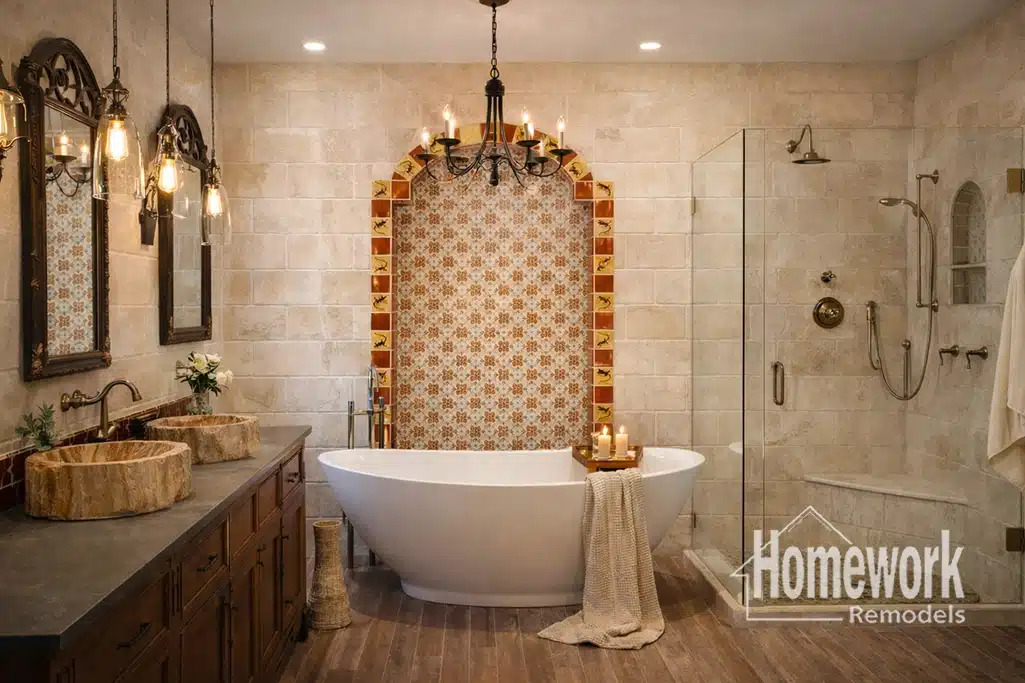
Material selection plays a major role in maintaining historic continuity. Overly modern finishes—such as high-gloss surfaces or ultra-minimalist fixtures—can feel out of place in a Willo home. Instead, many homeowners choose materials that reference traditional styles, such as classic tile patterns, matte finishes, and period-appropriate fixtures. These are often paired with modern construction techniques that improve waterproofing, longevity, and ease of maintenance without compromising appearance.
Storage is another common challenge in historic Willo bathrooms. Original designs rarely included adequate cabinetry, and clutter can quickly overwhelm a small space. Thoughtful storage solutions make a significant difference. Recessed medicine cabinets, built-in shelving, or linen storage integrated into adjacent spaces allow homeowners to gain functionality without crowding the room or introducing bulky furniture.
Lighting and ventilation are frequently improved as part of a remodel and have a major impact on daily comfort. Many historic bathrooms relied on a single overhead fixture and limited natural light. Introducing layered lighting—ambient, task, and accent—enhances usability and visual comfort while remaining unobtrusive. Upgraded ventilation systems protect finishes, reduce moisture-related damage, and improve indoor air quality, contributing significantly to long-term durability.
For homeowners considering how bathroom projects fit into broader historic planning, the Willo Historic District Home Remodeling hub provides neighborhood-specific insight into preservation-minded remodeling strategies, planning priorities, and architectural considerations unique to Willo homes.
Safety and accessibility considerations are increasingly important, particularly for homeowners planning to remain in their homes long term. Subtle upgrades—such as curbless showers, improved lighting, non-slip flooring, and better circulation—can be integrated without making the bathroom feel clinical or out of character. When handled thoughtfully, accessibility improvements blend seamlessly into historic interiors.
Another important aspect of bathroom remodeling in Willo is restraint. Rather than transforming the space into a contemporary spa that feels disconnected from the rest of the home, successful remodels focus on compatibility. Fixtures, finishes, and layouts are selected to feel appropriate to the home’s era, allowing the bathroom to feel like a natural extension of the original design.
Ultimately, bathroom remodeling in Willo is about enhancing comfort while respecting architectural integrity. These projects succeed when they balance modern expectations with historic stewardship—improving daily life while preserving the qualities that make Willo homes enduringly desirable.
For a broader view of how bathroom remodeling aligns with long-term stewardship and preservation in this neighborhood, the Willo Historic District Home Remodeling hub offers comprehensive guidance tailored specifically to historic homes.