
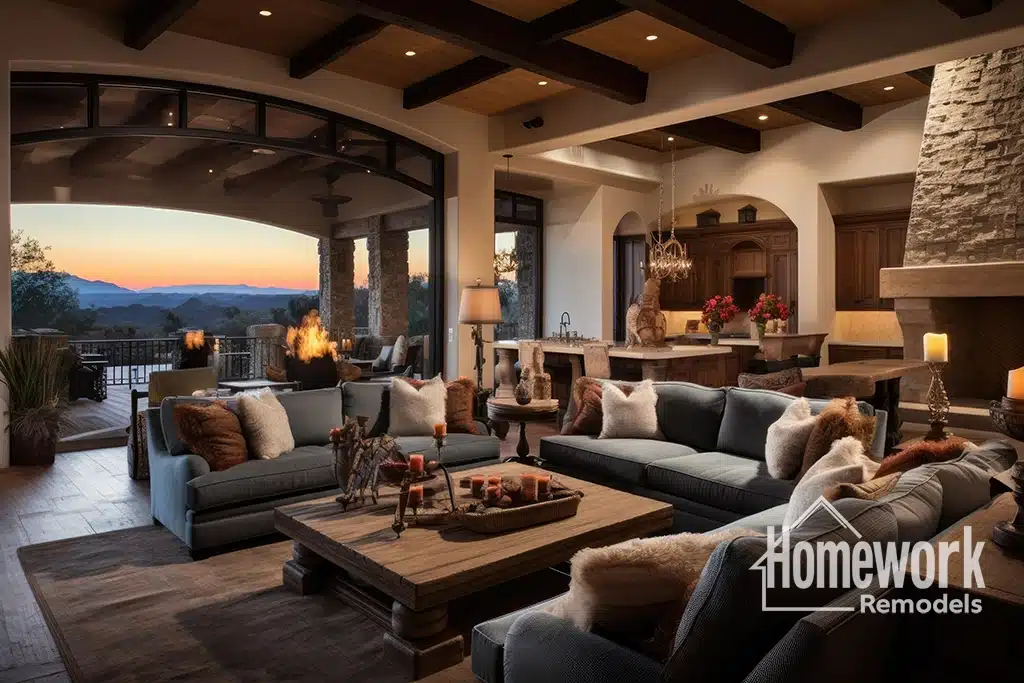
The Benefits of 3D Design in Home Remodeling
For many Scottsdale homeowners, the most stressful part of remodeling isn’t construction—it’s uncertainty. Floor plans can feel abstract, elevations are difficult to interpret, and written descriptions often leave too much room for interpretation. This is where 3D design becomes a powerful tool.
Understanding the benefits of 3D design in home remodeling starts with one simple truth: people make better decisions when they can clearly see what they’re committing to. In a city like Scottsdale, where homes often involve complex layouts, architectural character, and significant investment, clarity matters.
Why traditional plans often fall short
Two-dimensional drawings are essential for construction, but they’re not always intuitive for homeowners. Interpreting scale, spatial relationships, and sightlines requires experience that most homeowners don’t have—and shouldn’t need.
As a result, many people approve plans without fully visualizing how spaces will feel. Misunderstandings may not surface until construction begins, when changes are more disruptive and expensive.
3D design bridges this gap by translating technical information into something immediately understandable.
Seeing the space before it exists
One of the most valuable benefits of 3D design is the ability to experience a space before it’s built. Layout changes, ceiling heights, window placement, and circulation paths become clear when viewed three-dimensionally.
For Scottsdale homes—where natural light, indoor-outdoor connection, and flow are central to daily living—this visualization helps homeowners evaluate how design decisions will function in real life, not just on paper.
A common remodeling problem—and how 3D design solves it
A frequent issue in remodeling occurs when homeowners realize mid-construction that something feels “off.” The problem usually isn’t poor craftsmanship—it’s a disconnect between expectation and reality.
In one Scottsdale remodel, a proposed open layout looked appealing on paper but felt unbalanced once visualized in 3D. The solution involved adjusting wall placement and ceiling transitions during the design phase. The outcome was a space that felt proportionate, comfortable, and intentional—without costly changes during construction.
This problem–solution–outcome sequence illustrates why many homeowners appreciate how a design-build remodeling process integrates 3D design early, when refinements are still easy to make.
Better decision-making with less pressure
3D design reduces decision fatigue. Instead of imagining multiple options abstractly, homeowners can compare scenarios visually.
This clarity helps people make choices confidently rather than second-guessing later. In Scottsdale remodels involving kitchens, bathrooms, or whole-home reconfigurations, this confidence often translates into smoother construction and fewer change requests.
Improving communication across the entire team
3D design doesn’t just benefit homeowners—it improves communication across designers, builders, and trade partners. Everyone works from the same visual reference, reducing misinterpretation.
This shared understanding is especially important in complex remodels where structural changes, cabinetry, lighting, and finishes must align precisely. Clear visualization supports accuracy and efficiency throughout the project.
Evaluating light, scale, and proportion
In desert environments like Scottsdale, light plays a major role in how spaces feel. 3D design allows homeowners to evaluate how light enters a room, how shadows move, and how materials interact with sunlight.
Proportions that feel acceptable in plan view may feel very different when rendered in three dimensions. Adjusting these elements during design helps avoid spaces that feel too tight, too open, or visually unbalanced.
Reducing risk before construction begins
Every change made during construction carries cost and disruption. 3D design helps reduce these risks by identifying concerns early.
By resolving questions about layout, sightlines, and spatial relationships before permits are pulled, homeowners gain greater confidence that what’s being built aligns with their expectations.
This proactive approach is particularly valuable for Scottsdale homeowners investing in long-term remodeling projects.
Supporting long-term satisfaction
Remodeling isn’t just about completing a project—it’s about living with the result. Homes designed with clarity tend to feel better long after construction is finished.
3D design supports long-term satisfaction by helping homeowners fully understand and commit to design decisions. When expectations match reality, regret is far less likely.
Reviewing examples of Scottsdale home remodeling services can help homeowners see how visualization tools support thoughtful, well-coordinated remodels.
Planning as the foundation for success
3D design is most effective when used as part of a comprehensive planning process. It’s not a marketing add-on—it’s a decision-making tool.
When combined with experienced design and construction insight, 3D visualization helps homeowners move forward with clarity rather than uncertainty.
Moving forward with confidence
The benefits of 3D design in home remodeling ultimately come down to trust—trust in the plan, trust in the process, and trust in the outcome. For Scottsdale homeowners, that confidence can make the entire remodeling experience feel calmer and more controlled.
If you’re considering a remodel and want to understand how design decisions are visualized and refined before construction begins, learning what to expect during your first remodeling consultation can help you decide whether this planning-first approach feels right for your home.