
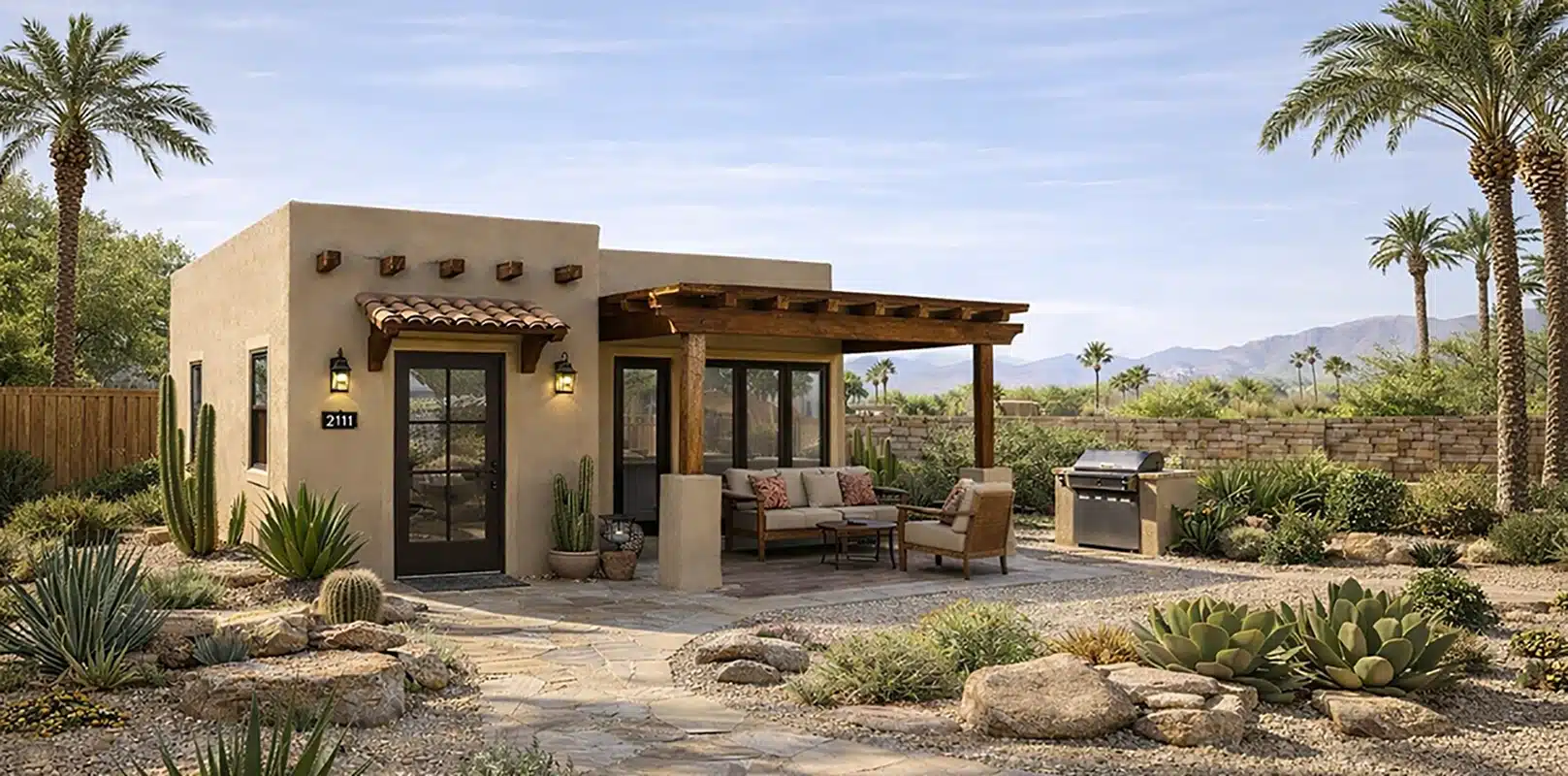
For many homeowners, the idea of building a casita or ADU is exciting—until permitting enters the conversation. Questions multiply quickly: What’s allowed? How long will approval take? Why do two similar projects get different outcomes? In Scottsdale, the permitting process for casitas and ADUs is not simply administrative. It actively shapes what can be built, where it can be placed, and how smoothly the project moves forward.
Understanding this process early transforms permitting from an obstacle into a planning tool. Homeowners who approach permitting strategically tend to experience fewer redesigns, clearer timelines, and more predictable outcomes.
Why Permitting Deserves Early Attention
Permitting affects more than paperwork. It influences:
- Maximum size and height
- Placement on the lot
- Utility connections
- Fire and safety requirements
Waiting to address permits until after design decisions are finalized often forces compromises. Early awareness allows design to work with regulations rather than against them.
Casitas and ADUs Are Not Always Treated the Same
One of the most common sources of confusion is the assumption that “casita” and “ADU” mean the same thing.
In practice, definitions matter. How the structure is classified can affect:
- Setback requirements
- Parking obligations
- Utility separation
- Allowed uses
Clarifying classification early prevents misalignment between design intent and regulatory reality.
Zoning Sets the Framework
Zoning is the first gate. Scottsdale zoning designations influence whether a secondary structure is allowed and under what conditions.
Key zoning-related considerations include:
- Lot size and coverage limits
- Distance from property lines
- Relationship to the main residence
Zoning does not dictate design—but it establishes boundaries that design must respect.
Setbacks and Placement Shape Design
Setbacks determine how close a casita or ADU can be to property lines, easements, or other structures.
These requirements often shape:
- Building footprint
- Orientation
- Outdoor space relationships
A design that fits beautifully on paper may become impractical if setback constraints are not considered early.
Height and Massing Controls
Height limits are particularly important in Scottsdale neighborhoods where privacy and view corridors matter.
Height restrictions influence:
- Roof design
- Ceiling heights
- Window placement
Designing within these limits early helps maintain neighborhood compatibility and avoids late-stage revisions.
Utility and Infrastructure Requirements
Casitas and ADUs require careful coordination of utilities.
Permitting may involve review of:
- Electrical load capacity
- Water and sewer connections
- Gas service
- Drainage and grading
Upgrading infrastructure can add cost and time—but discovering these needs early allows homeowners to plan intentionally.
Fire and Life Safety Reviews
Safety requirements are a critical part of the permitting process.
These may include:
- Fire separation distances
- Construction assemblies
- Emergency egress
- Access for emergency services
While these requirements can feel restrictive, they are predictable when addressed early—and costly when discovered late.
Parking Requirements Can Influence Scope
In some cases, additional parking may be required for ADUs.
This can affect:
- Driveway layout
- Hardscape design
- Overall site planning
Parking considerations often ripple across the entire property, making them important to resolve before finalizing design.
Design Review and Neighborhood Context
Certain areas may involve additional design review considerations—formal or informal.
Projects that align with neighborhood scale and character often move through review more smoothly. Those that appear oversized or out of context may encounter additional scrutiny.
Permitting is not purely technical; it reflects community standards.
Timelines Are Shaped by Preparation
Permitting timelines vary, but preparation makes a significant difference.
Projects with:
- Clear documentation
- Complete drawings
- Early code alignment
tend to move more predictably through review. Incomplete or inconsistent submissions often trigger multiple review cycles.
Time lost to revisions is rarely recovered.
Common Permitting Pitfalls
Most permitting delays stem from avoidable issues:
- Designing beyond zoning allowances
- Incomplete utility coordination
- Misclassification of the structure
- Late changes that trigger re-review
Each pitfall adds time and cost.
Why DIY Navigation Is Risky
Some homeowners attempt to manage permitting independently to save time or money. While possible, this approach carries risk.
Without experience, it’s easy to:
- Miss critical requirements
- Submit incomplete information
- Misinterpret feedback
Small errors early can create significant delays later.
How Design-Build Simplifies Permitting
A coordinated design-build remodeling process integrates permitting considerations into design from the start.
This approach:
- Aligns design with code early
- Anticipates review comments
- Reduces revision cycles
Permitting becomes part of planning—not a separate hurdle.
Permits Protect Long-Term Value
While permitting can feel frustrating, it serves important purposes:
- Ensures safety
- Protects property value
- Supports resale and financing
Unpermitted structures can create complications years later—especially during resale.
Proper permits are an investment in peace of mind.
Flexibility Within Constraints
Permits define constraints, but they do not eliminate creativity.
When designers understand the regulatory framework, they can explore creative solutions that fit comfortably within it—often producing better results than unrestricted design.
Constraints clarify priorities.
Planning for Approval, Not Just Construction
Successful casita and ADU projects plan for approval as intentionally as they plan for construction.
This mindset shifts the question from “Can we get this permitted?” to “How do we design this so approval is straightforward?”
That shift saves time and stress.
Confidence Comes From Clarity
When homeowners understand the permitting process, uncertainty decreases.
Clear expectations allow better budgeting, realistic timelines, and fewer surprises. Permitting becomes a known phase—not a looming unknown.
Let’s Clarify Permitting Before You Design
If you’re considering a casita or ADU and want clarity around Scottsdale’s permitting requirements before design decisions are locked in, early planning makes all the difference. You can schedule a free consultation with our design-build team to discuss zoning, permitting, and design strategies tailored to your property.