
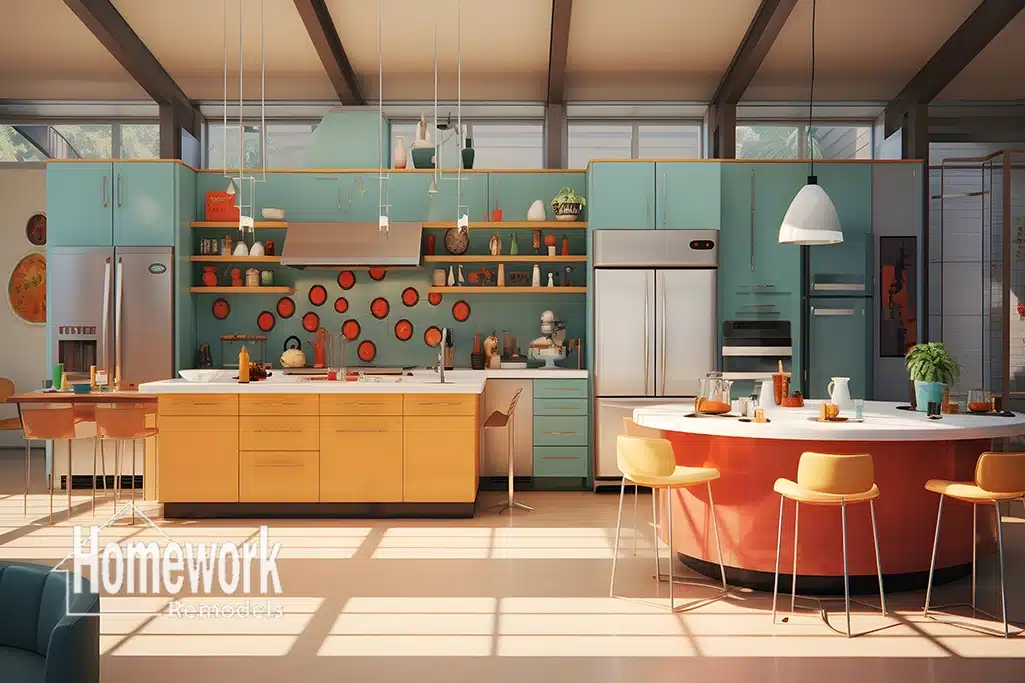
Why Mid-Century Modern Homes Demand a Different Remodeling Approach
Mid-century modern homes continue to attract homeowners who appreciate clarity, restraint, and architectural honesty. Built primarily from the 1940s through the 1970s, these homes were never meant to be decorative showpieces. They were designed around function, proportion, and connection to the outdoors.
Because of that, remodeling a mid-century modern home requires a fundamentally different approach than updating a traditional or contemporary house. What works in one style can easily undermine the integrity of another. For homeowners exploring mid-century modern home remodeling, understanding this distinction early is critical.
Mid-Century Architecture Is Structural, Not Decorative
Unlike many traditional homes where ornamentation carries visual weight, mid-century homes rely on structure for identity. Rooflines, post-and-beam systems, clerestory windows, and long horizontal planes do the visual work.
When remodeling ignores these elements, the home can quickly lose its character. Adding decorative features that don’t respect original proportions often feels forced rather than elevated.
Successful mid-century remodeling begins by understanding how the home was designed to work—not by layering new ideas on top of it.
Original Layouts Often Make More Sense Than Expected
Many mid-century homes feel outdated at first glance, but once studied carefully, their layouts often reveal thoughtful logic. Circulation paths, sightlines, and relationships between indoor and outdoor spaces were intentionally planned.
Rather than discarding layouts entirely, remodeling often involves refining them. Selective adjustments—rather than wholesale reconfiguration—tend to preserve what works while improving livability.
This philosophy is central to thoughtful mid-century ranch modernization in Phoenix, where restraint often produces the most authentic results.
Open Concept Requires More Nuance in Mid-Century Homes
Many mid-century homes already lean toward openness, but that doesn’t mean every wall should be removed. Over-opening a mid-century home can flatten spatial rhythm and eliminate moments of compression and release that define the architecture.
When layout changes are needed, they must be surgical. Removing or modifying walls requires careful study of both structure and proportion. This is especially true in homes featured in mid-century ranch home remodeling in Phoenix and Scottsdale, where structure and design are deeply intertwined.
Performance Upgrades Matter More Than Visual Changes
One of the most impactful aspects of mid-century remodeling happens behind the scenes. Electrical systems, insulation, glazing, plumbing, and HVAC often need modernization to meet current expectations.
These upgrades dramatically improve comfort and efficiency while leaving architectural character intact. In fact, many homeowners find that once performance issues are addressed, fewer visual changes are needed to make the home feel complete.
A remodel that looks beautiful but performs poorly misses the point of modernization.
Materials Must Respect Simplicity and Honesty
Mid-century homes pair best with materials that feel authentic. Natural woods, stone, concrete, terrazzo, and matte finishes complement original architecture without overpowering it.
Highly patterned surfaces, excessive color variation, or ornate detailing often clash with the simplicity of the home. Choosing fewer materials—and executing them exceptionally well—aligns more closely with mid-century design intent.
Material discipline is one of the hallmarks of successful mid-century modernization.
Kitchens and Bathrooms Set the Modern Baseline
While preserving architecture is important, kitchens and bathrooms are where modern expectations are most evident. Updating these spaces is often essential for daily comfort.
Mid-century-appropriate kitchen and bath remodels focus on:
- Streamlined cabinetry
- Integrated appliances
- Simple hardware
- Balanced lighting
Rather than attempting to recreate a museum-perfect mid-century look, these spaces are modernized thoughtfully while respecting the home’s overall language.
Why Design-Build Is Especially Important for Mid-Century Homes
Mid-century homes leave little margin for error. Structural systems, architectural rhythm, and material choices must work together. This level of coordination is difficult when design and construction are separated.
The design-build process allows homeowners to explore ideas while understanding real-world implications early. Structural feasibility, cost, and design integrity are evaluated together rather than in isolation.
This approach is why many homeowners pursuing mid-century modernization gravitate toward integrated planning rather than piecemeal decision-making.
Remodeling With Respect for the Original Vision
The goal of mid-century remodeling isn’t to freeze a home in time—it’s to allow it to live well today without losing its soul. The best projects feel inevitable, as if the home naturally evolved rather than being transformed.
When preservation, performance, and planning are aligned, mid-century homes become even more compelling than when they were first built.
If you’re considering an update and want an approach that honors architectural intent, learning more about mid-century modern home remodeling through a design-build process is a smart next step.