
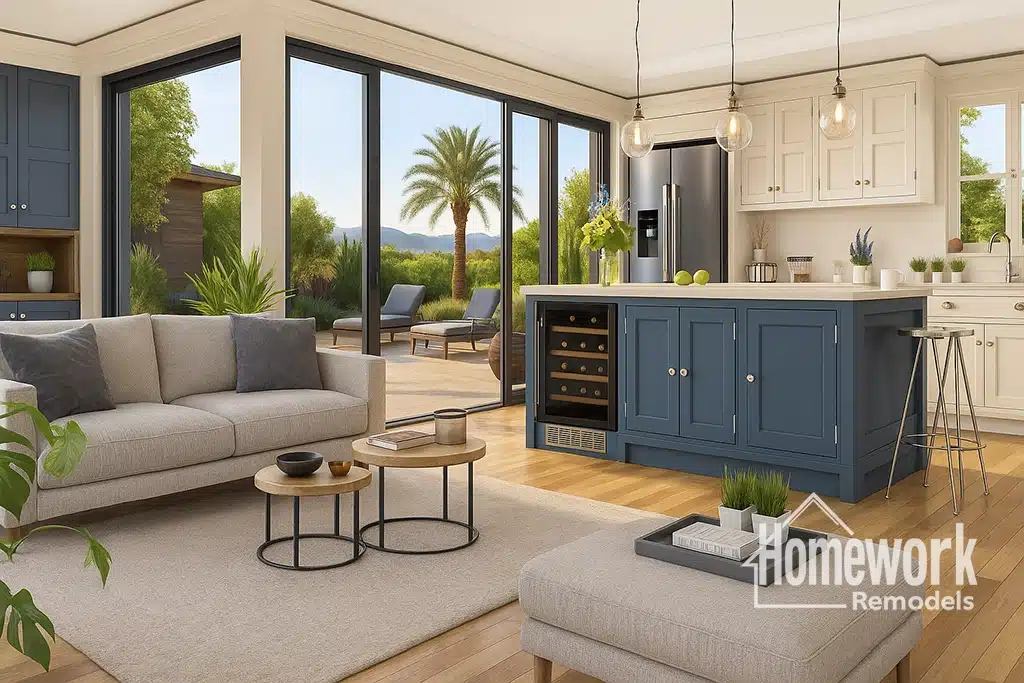
Why Open-Concept Layouts Work in Desert Homes
Open-concept layouts are often described as a lifestyle preference, but in desert climates they function as a practical design response. In Tempe, where heat, light, and airflow shape how homes perform year-round, open layouts can significantly improve comfort—when they’re designed with climate realities in mind.
The key is understanding why openness works in desert homes and where it can fail if applied without restraint.
Desert Living Demands Efficient Airflow
In hot climates, stagnant air is uncomfortable air.
Open layouts improve:
- Air circulation across living spaces
- Distribution of cooled air
- Reduction of hot pockets in isolated rooms
When airflow moves freely, mechanical systems don’t have to work as hard to maintain comfort.
Light Distribution Matters More Than Light Quantity
Desert homes receive abundant sunlight, but uncontrolled light can increase heat and glare.
Open layouts allow:
- Daylight to travel deeper into the home
- Reduced reliance on artificial lighting
- Better balance between light and shade
When paired with proper shading and glazing strategies, openness improves comfort rather than overheating.
Fewer Interior Walls Mean More Flexible Cooling Zones
Older Tempe homes often rely on compartmentalized layouts that trap heat.
Open-concept designs allow:
- More even temperature distribution
- Simplified HVAC zoning
- Reduced temperature swings between rooms
This consistency improves comfort throughout the day.
Structural Planning Makes Openness Possible
Open layouts often require structural modification.
In many homes, this includes evaluating walls that carry roof or ceiling loads. Thoughtful projects—sometimes involving removing load-bearing walls safely in Tempe homes—replace separation with engineered support that maintains structural integrity.
Openness should be enabled by structure, not forced against it.
Open Layouts Support Indoor-Outdoor Living
Desert climates encourage outdoor use during much of the year.
Open-concept interiors:
- Align more naturally with patios and yards
- Encourage cross-ventilation
- Support seasonal lifestyle shifts
When indoor and outdoor spaces are aligned, homes feel larger without added square footage.
Scale and Proportion Prevent Overheating
Bigger isn’t always better.
Successful open layouts maintain:
- Appropriate ceiling heights
- Controlled room dimensions
- Defined gathering zones
Oversized spaces can feel uncomfortable and harder to cool.
Shading and Orientation Are Non-Negotiable
Open layouts expose more interior space to solar gain.
Effective designs incorporate:
- Overhangs and shade structures
- Thoughtful window placement
- Landscape-based shading
Openness without solar control undermines comfort.
Acoustic Comfort Still Matters
Open spaces amplify sound.
In desert homes designed for openness, comfort includes:
- Acoustic softening through materials
- Strategic furniture placement
- Ceiling treatments that absorb sound
Comfort is thermal and acoustic.
Open Layouts Support Modern Living Patterns
Families today spend more time together across shared spaces.
Open layouts:
- Improve visibility between activities
- Support multitasking
- Encourage connection without confinement
This social flexibility is especially valuable in active households.
Lighting Strategy Is Essential in Open Plans
Lighting defines zones in open layouts.
Layered lighting:
- Prevents glare
- Adds depth
- Supports multiple uses
Lighting design should reinforce comfort rather than flatten space.
Open Layouts Age Better When Planned Holistically
Homes designed with climate-aware openness adapt more easily over time.
Understanding how open layouts fit within the broader Tempe home remodeling context helps homeowners avoid short-lived trends and focus on durable design.
Whole-Home Planning Maximizes Climate Benefits
Open layouts perform best when coordinated with systems, structure, and finishes.
A comprehensive whole-home remodeling strategy in Tempe ensures that openness improves performance rather than creating new challenges.
Design-Build Aligns Climate, Structure, and Comfort
Open-concept remodeling in desert climates requires integration.
The design-build remodeling process aligns climate response, structural planning, and construction execution—reducing costly adjustments later.
Openness Works When It’s Purposeful
In desert homes, open layouts succeed when they respond to environment—not fashion.
When designed with airflow, light, and shade in mind, openness becomes a comfort strategy rather than a stylistic choice.
Let’s Design an Open Layout That Works With the Desert
If you’re considering opening up your Tempe home and want a layout that improves comfort in a desert climate, thoughtful planning makes the difference. You can schedule a free consultation with our design-build team to explore options with confidence and clarity.