
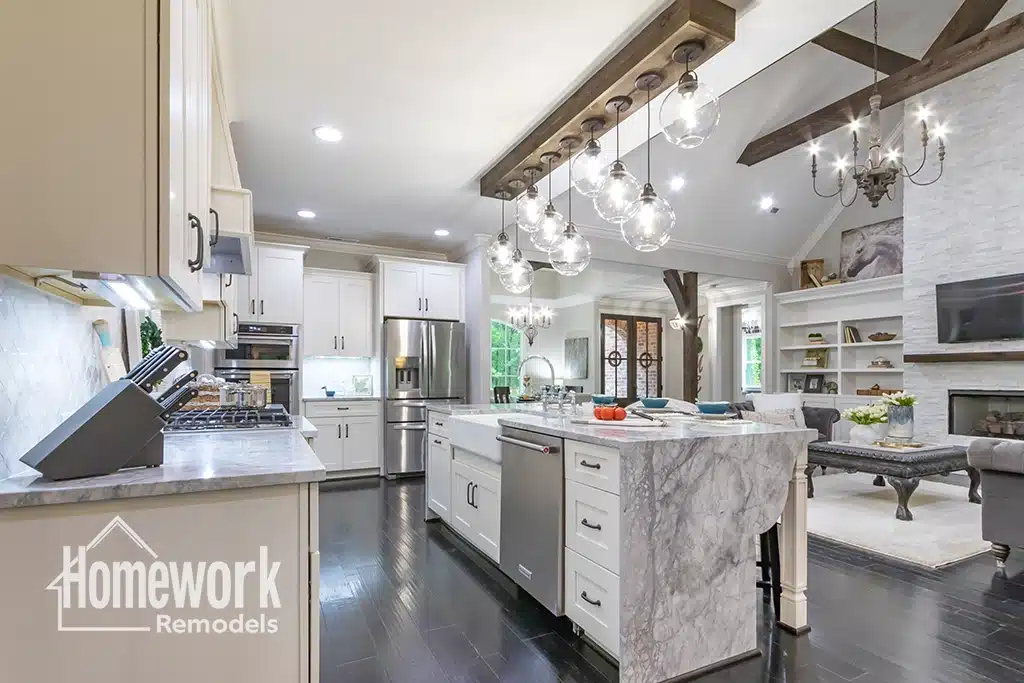
Paradise Valley Estate Kitchens: When Size Stops Adding Value
In Paradise Valley, kitchen size is rarely the limiting factor. Many estate homes already feature expansive footprints, generous ceiling heights, and multiple work zones. Yet homeowners increasingly discover an unexpected truth during remodel planning: beyond a certain point, size stops adding value.
In luxury homes, the challenge is not how large a kitchen can be—but how well it works. Oversized kitchens often introduce inefficiencies that quietly erode daily enjoyment, entertaining ease, and long-term satisfaction.
Why Bigger Kitchens Feel Impressive—At First
Large kitchens create immediate visual impact. Long islands, multiple prep zones, and expansive appliance walls signal luxury and abundance.
But once the novelty fades, daily use reveals friction. Excessive distances between tasks, underutilized zones, and visual clutter begin to surface.
The core decision tension is perceived luxury versus lived efficiency.
Scale Changes How Kitchens Are Used
In estate homes, kitchens often serve dual roles: family workspace and entertaining hub. When scale isn’t carefully calibrated, these roles collide.
Oversized layouts can separate hosts from guests or fragment activity across too much space. Paradoxically, kitchens that are too large often feel less connected.
Multiple Islands Don’t Always Improve Flow
Adding islands is a common instinct in luxury kitchens. Yet multiple islands frequently interrupt circulation rather than enhance it.
When islands are spaced too far apart—or too close together—they create bottlenecks or dead zones that diminish functionality.
Staffing and Maintenance Are Often Overlooked
Large kitchens assume a certain level of staffing or maintenance. Cleaning, organization, and upkeep increase with scale.
Homeowners who cook daily without staff often find oversized kitchens require more effort without delivering proportional benefit.
Storage Abundance Can Create Decision Fatigue
Excessive storage sounds appealing, but too much dispersed storage can slow down cooking and create organizational challenges.
Well-designed kitchens prioritize proximity and clarity over sheer capacity.
Ceiling Height Magnifies Both Strengths and Weaknesses
High ceilings enhance grandeur but also amplify poor proportions. Lighting, acoustics, and material choices become more critical as volume increases.
Without careful planning, large kitchens can feel cavernous rather than comfortable.
Entertaining Zones Should Support—not Compete
In Paradise Valley homes, entertaining often extends beyond the kitchen into dining areas, patios, and outdoor living spaces.
Kitchens that try to absorb every function can weaken the overall entertaining experience.
Understanding how whole-home remodeling in Phoenix balances zones helps homeowners distribute functions intelligently.
Cost Escalation Is Often Invisible at First
In luxury projects, incremental increases—custom cabinetry, additional appliances, complex lighting—compound quickly.
Oversizing multiplies these costs without always improving daily use.
Designing for restraint often delivers better long-term value.
Kitchen Scale Should Reflect How the Home Is Lived In
Estate homes vary widely in how they’re used. Some prioritize daily family life; others host large gatherings only occasionally.
Aligning kitchen scale with actual patterns prevents overbuilding.
Whole-Home Flow Matters More Than Kitchen Dominance
When kitchens grow too large, they can overpower adjacent spaces, disrupting balance across the home.
Evaluating kitchen size in relation to dining, living, and outdoor areas preserves proportional harmony.
Why Design-Build Is Essential for Estate Kitchens
Design-build remodeling integrates lifestyle analysis, spatial planning, and cost evaluation from the start.
In Paradise Valley, this approach helps homeowners identify when enough is enough—and where refinement matters more than expansion.
Learning how the design-build remodeling process works supports confident decision-making at estate scale.
The Core Decision Tension: More Square Footage or Better Experience
In Paradise Valley, the most successful estate kitchens are not the largest—they are the most deliberate.
When scale is calibrated to use, kitchens feel luxurious not because of size, but because they work effortlessly.
Let’s Design a Kitchen That Serves How You Actually Live
If you’re planning an estate kitchen remodel in Paradise Valley, thoughtful restraint can deliver greater satisfaction than unchecked expansion. With a design-build approach and experience in luxury homes, clarity comes early.
We invite you to schedule a free remodeling consultation to explore kitchen strategies tailored to your lifestyle.