
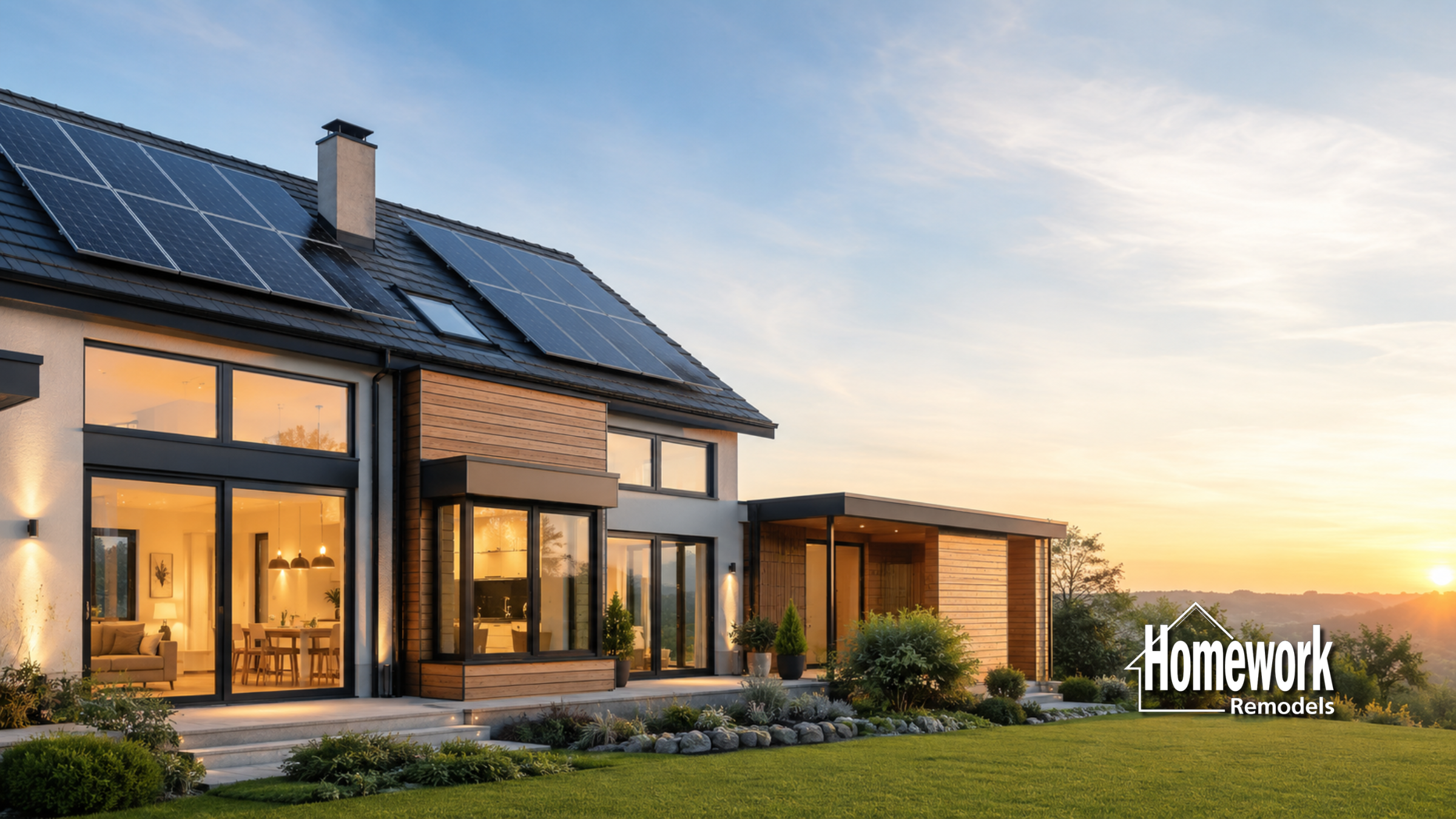
Solar energy is no longer a fringe consideration for homeowners in Tempe. With abundant sunshine and rising energy awareness, many remodels now include the same question early in planning: Should solar be part of this project—and if so, how do we integrate it without creating design or performance problems later?
The answer is rarely as simple as adding panels. Solar performs best when it’s coordinated with the home itself—its roof, systems, layout, and long-term goals. When solar is treated as an add-on, opportunities are missed. When it’s planned as part of a remodel, results tend to be cleaner, more efficient, and more resilient.
Solar Works Best When It’s Planned Early
One of the most common missteps homeowners make is deciding on solar after remodeling plans are complete. At that point, roof forms are fixed, electrical paths are constrained, and aesthetic compromises are more likely.
Planning solar early allows homeowners to:
- Evaluate roof orientation and shading
- Coordinate structural readiness
- Align electrical upgrades with future loads
- Minimize visible conduit and surface-mounted equipment
Early planning doesn’t force installation—it preserves options.
The Core Decision: Remodel First or Solar First
Homeowners often ask which should come first: the remodel or the solar system.
The better question is whether they can be planned together.
Remodeling changes rooflines, electrical panels, and mechanical demand. Solar capacity and performance depend on those same elements. Treating them separately often leads to rework or underperformance.
Integrated planning ensures each decision supports the other.
Roof Design Matters More Than Panel Count
Solar success in Tempe depends heavily on roof conditions. Orientation, pitch, shading, and surface continuity all influence output.
Complex rooflines, dormers, or poorly oriented slopes can limit usable area—even if total roof size is generous. Simple, well-oriented planes often outperform larger but fragmented roofs.
Remodeling is the ideal time to evaluate whether roof adjustments can improve long-term solar performance without sacrificing architectural balance.
Electrical Readiness Is Often the Limiting Factor
Many Tempe homes—especially older ones—lack the electrical capacity to support both modern living and solar integration.
Panel upgrades, load calculations, and future demand planning are critical. Homes adding electric vehicles, enhanced HVAC systems, or home automation must consider how solar fits into a larger electrical strategy.
Coordinating these upgrades during a remodel avoids opening walls later and reduces overall disruption.
Battery Storage: Independence vs. Complexity
As solar adoption grows, homeowners increasingly ask about battery storage. Batteries can improve resilience and reduce grid dependence—but they also introduce cost, space requirements, and system complexity.
The decision isn’t simply “yes” or “no.” It’s about how much independence makes sense for your lifestyle and priorities.
Designing space and infrastructure for future storage—even if batteries aren’t installed immediately—keeps options open without overcommitting.
Aesthetics and Neighborhood Fit Still Matter
Solar systems are visible. In Tempe neighborhoods with strong character or HOA oversight, visibility can influence acceptance and satisfaction.
Integrated planning helps minimize visual impact by:
- Aligning panels with roof geometry
- Reducing exposed conduit
- Coordinating placement with other exterior changes
Solar that feels intentional tends to be embraced more readily than systems that feel tacked on.
Solar Changes How Homes Use Energy
Adding solar isn’t just about generation—it changes how energy is used. Homes often benefit most when efficiency upgrades accompany solar planning.
Improving insulation, upgrading windows, and optimizing HVAC systems can reduce overall demand—allowing a smaller solar system to deliver greater impact.
Solar works best as part of a holistic energy strategy.
For homeowners evaluating these tradeoffs, understanding how solar fits into broader planning is easier when viewed alongside home remodeling in Tempe, AZ.
Planning for the Long Term
Solar systems last decades. Remodels should support that lifespan.
Design decisions made today—roof materials, access pathways, electrical routing—affect how easily systems can be maintained or upgraded later.
Homes that plan for serviceability tend to experience fewer headaches over time.
Solar as a Remodeling Opportunity
When integrated thoughtfully, solar enhances more than energy efficiency. It supports comfort, resilience, and long-term value.
The key is coordination—aligning solar decisions with the broader goals of the remodel rather than treating them as separate initiatives.
Let’s Plan Your Remodel with Clarity
If you’re considering solar as part of a remodel in Tempe, the most valuable first step is a clear, pressure-free conversation. Understanding how your roof, systems, and long-term goals interact before design begins helps avoid costly surprises and ensures solar works with your home—not against it.
If you’d like to explore your options, you can schedule a free remodeling consultation with our design-build team. We’ll help you evaluate possibilities, constraints, and next steps so you can move forward with clarity.