
Mid-century modern homes are admired not only for individual design features but also for the way every element works together as a cohesive architectural composition. From the exterior lines and window placement to interior materials and spatial relationships, these homes were designed with consistency in mind. Across Phoenix neighborhoods such as Arcadia Lite, Village Grove, Windsor Square, Marlen Grove, and Paradise Gardens, homeowners continue to invest in renovations that improve functionality while preserving the architectural integrity that makes these homes so distinctive.
Bathrooms often present unique remodeling challenges because homeowners naturally want modern amenities, improved storage, enhanced comfort, and updated finishes. However, when bathroom renovations ignore the architectural language of the rest of the home, the results can feel disconnected and out of place. The most successful remodels create bathrooms that feel like a natural extension of the home’s original design rather than a separate design project altogether.
A thoughtful remodeling strategy focuses on improving performance while maintaining continuity in materials, proportions, and visual simplicity. Homeowners often begin the planning process by exploring the Homework Remodels Resources Center and reviewing the Design-Build Remodeling Explained guide to better understand how integrated planning supports cohesive design outcomes.
Why Architectural Consistency Matters
One of the reasons mid-century homes remain so appealing decades after construction is their commitment to design unity. Materials, finishes, lighting, and spatial organization were typically selected to support a larger architectural vision rather than function as isolated design statements.
When bathrooms are remodeled without considering the rest of the home, visual continuity can be lost. Oversized decorative elements, highly ornate finishes, and trend-driven materials may feel disconnected from the simplicity that defines mid-century architecture.
Maintaining consistency does not mean every room must look identical. Instead, it means each space should feel related through shared design principles such as clean lines, thoughtful proportions, restrained detailing, and material harmony.
Homeowners interested in preserving these relationships often review the Mid-Century Modern Home Remodeling Guide before beginning renovation planning.
Choosing Materials That Support the Home’s Design Language
Material selection is one of the most important aspects of preserving architectural consistency. Mid-century homes often rely on a limited palette of carefully chosen materials that create warmth and visual balance.
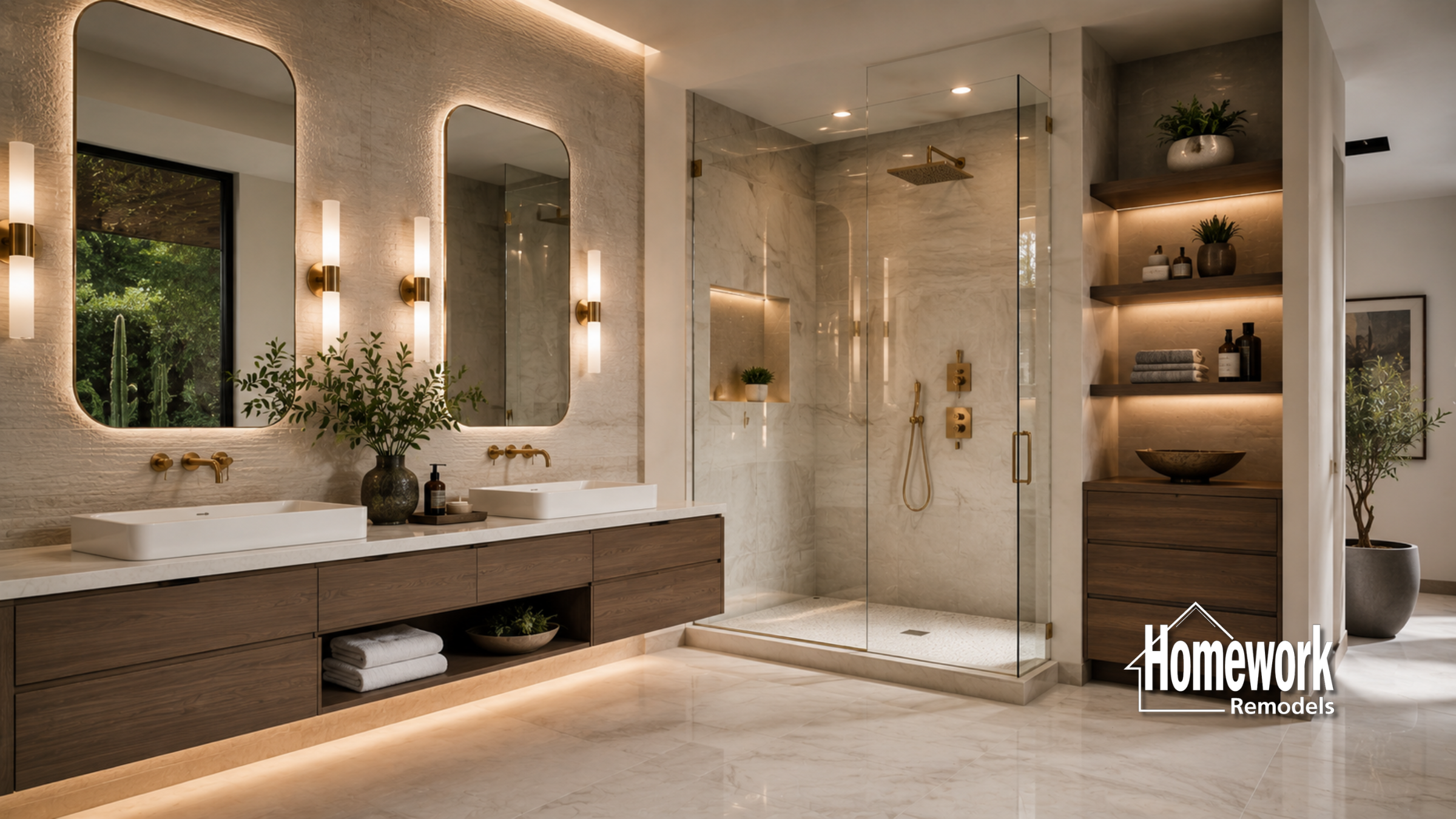
Natural wood vanities, simple tile patterns, matte finishes, and understated stone surfaces frequently complement the architecture without overwhelming it. Rather than introducing multiple competing textures and colors, many homeowners focus on creating continuity with adjacent spaces.
Hardware and fixtures should also support the overall design language. Clean-lined faucets, minimal shower hardware, and simple lighting fixtures often feel more appropriate in mid-century homes than highly decorative alternatives.
A thoughtfully planned bathroom remodeling project can incorporate modern materials while preserving the visual simplicity that defines the home’s character.
For inspiration, homeowners frequently explore Bathroom Remodeling Ideas and Whole-Home Remodeling Ideas during the design process.
Preserving Proportion and Simplicity
Architectural consistency extends beyond materials. Proportion, scale, and spatial organization also play important roles in how a bathroom relates to the rest of the home.
Mid-century architecture often emphasizes openness and visual clarity. Bathrooms that become overly segmented or visually crowded can disrupt the flow established throughout the property. Many successful renovations focus on creating calm, functional environments that maintain clear sightlines and efficient layouts.
Walk-in showers, floating vanities, and integrated storage solutions frequently support this goal by reducing visual clutter and improving usability. These features can provide modern convenience while remaining consistent with mid-century design principles.
Homeowners considering larger remodeling projects often review Planning a Remodel and Universal Design Explained to better understand how long-term functionality can be integrated into preservation-focused renovations.
Connecting Bathroom Design to the Rest of the Home
The most successful bathroom remodels recognize that every room contributes to the overall architectural experience. Design decisions made in the bathroom should support the broader character of the home rather than compete with it.
Maintaining continuity in wood species, flooring transitions, color palettes, and lighting approaches can help strengthen these connections. Even subtle details such as trim profiles, cabinet proportions, and hardware finishes can influence how cohesive the final result feels.
Many homeowners coordinate bathroom renovations with broader remodeling efforts to ensure consistency throughout the property. This approach often creates more harmonious outcomes than treating individual rooms as separate projects.
Resources such as How Remodeling Adds Long-Term Value Beyond Resale and The Remodeling System That Works can help homeowners better understand how integrated planning contributes to long-term success.
Design Insight from a Design-Build Remodeler
Architectural consistency is often what separates a renovation that feels timeless from one that quickly feels dated. In mid-century homes, every remodeling decision should be evaluated not only on its own merits but also on how it contributes to the overall character of the home. Bathrooms that respect original proportions, materials, and design principles tend to feel more authentic and cohesive. The goal is not to recreate the past exactly but to allow modern improvements to exist comfortably within the architectural framework that already makes the home special.
As interest in mid-century homes continues to grow throughout Phoenix and surrounding communities, homeowners increasingly recognize the value of preservation-minded remodeling. Bathrooms provide an opportunity to improve comfort and functionality while reinforcing the design continuity that contributes to long-term architectural value.
By focusing on simplicity, material harmony, and thoughtful planning, homeowners can create bathrooms that serve contemporary needs while remaining true to the enduring principles of mid-century modern design.
Homework Remodels is a Phoenix-based design-build remodeling company specializing in mid-century modern home renovations, bathroom remodeling, whole-home transformations, and architectural preservation throughout Phoenix and surrounding communities. Our team helps homeowners modernize historic and mid-century homes while respecting the design principles that make them unique.